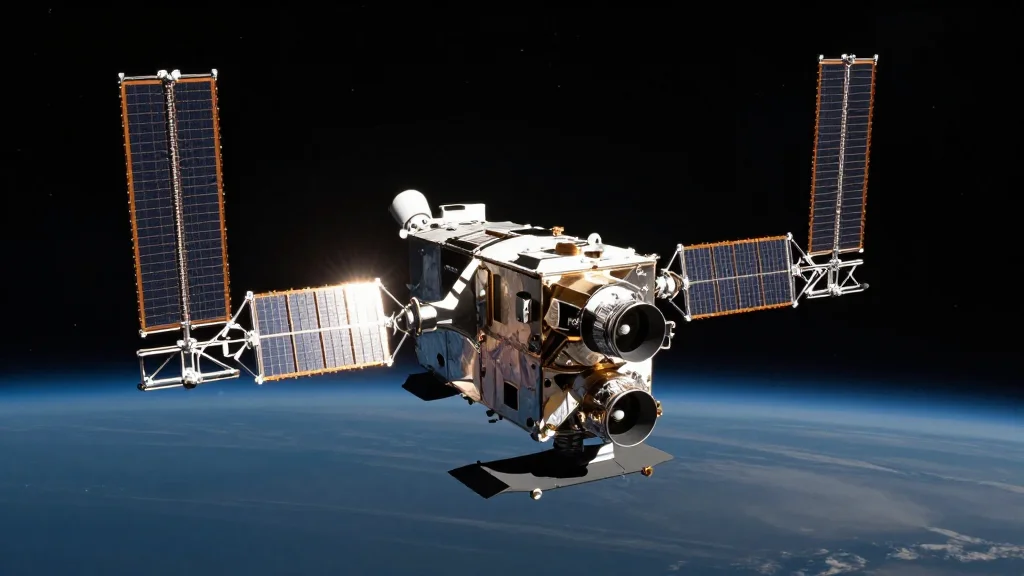
CHEOPS Space Mission Extended
Why It Matters
Extending CHEOPS deepens the exoplanet catalog, accelerating target selection for upcoming flagship missions like NASA’s Roman Space Telescope and ESA’s ARIEL, and strengthens Europe’s leadership in precision photometry.
Key Takeaways
- •ESA adds €30 million (~$32.5 M) to fund CHEOPS extension
- •Mission now runs through December 2029, adding two years
- •300 extra exoplanet candidates slated for observation
- •Software upgrade boosts photometric precision by 15%
- •Data will feed planet‑selection pipelines for Roman and ARIEL
Pulse Analysis
The CHEOPS mission’s extension underscores Europe’s commitment to exoplanet science at a time when the global community is gearing up for a new generation of space telescopes. By securing an additional €30 million, ESA not only prolongs the satellite’s operational life but also enhances its scientific return through a software overhaul that sharpens photometric accuracy. This upgrade is crucial for detecting the subtle dimming of stars caused by Earth‑size planets, a capability that complements larger missions focused on atmospheric characterization.
From a market perspective, the extended timeline translates into more data for commercial entities developing next‑generation instrumentation and data‑analytics platforms. Companies specializing in machine‑learning‑driven light‑curve analysis can now tap into a richer dataset, accelerating product development cycles. Moreover, the additional 300 exoplanet candidates expand the pool of high‑value targets for follow‑up observations, creating new opportunities for collaborations between academic institutions, private observatories, and aerospace firms.
Strategically, CHEOPS serves as a bridge between the discovery phase of missions like TESS and the detailed atmospheric studies planned for NASA’s Roman Space Telescope and ESA’s ARIEL. The extended mission ensures a continuous flow of precisely measured planetary radii and masses, which are essential inputs for atmospheric modeling. This continuity bolsters Europe’s scientific influence and positions CHEOPS as a critical data source in the competitive exoplanet discovery ecosystem.
CHEOPS Space Mission Extended
Comments
Want to join the conversation?
Loading comments...