China Charts High‑Quality Space Development in 2026‑2030 Plan

Why It Matters
The high‑quality development agenda marks a strategic pivot from sheer launch volume to value‑added capabilities, signaling that China intends to compete not just on the number of rockets but on the sophistication of its space ecosystem. By formalizing legal and regulatory structures, the government reduces risk for private firms, encouraging domestic startups and foreign joint ventures to enter the market. Globally, the policy could intensify competition for satellite‑internet users, lunar exploration contracts and asteroid‑defense collaborations. If China successfully integrates AI and digital manufacturing into its space supply chain, it may set new cost and speed benchmarks that force other spacefaring nations to accelerate similar reforms.
Key Takeaways
- •CNSA Administrator Shan Zhongde announced a high‑quality development roadmap for 2026‑2030.
- •The plan calls for new legal frameworks covering space resources, traffic management and environmental governance.
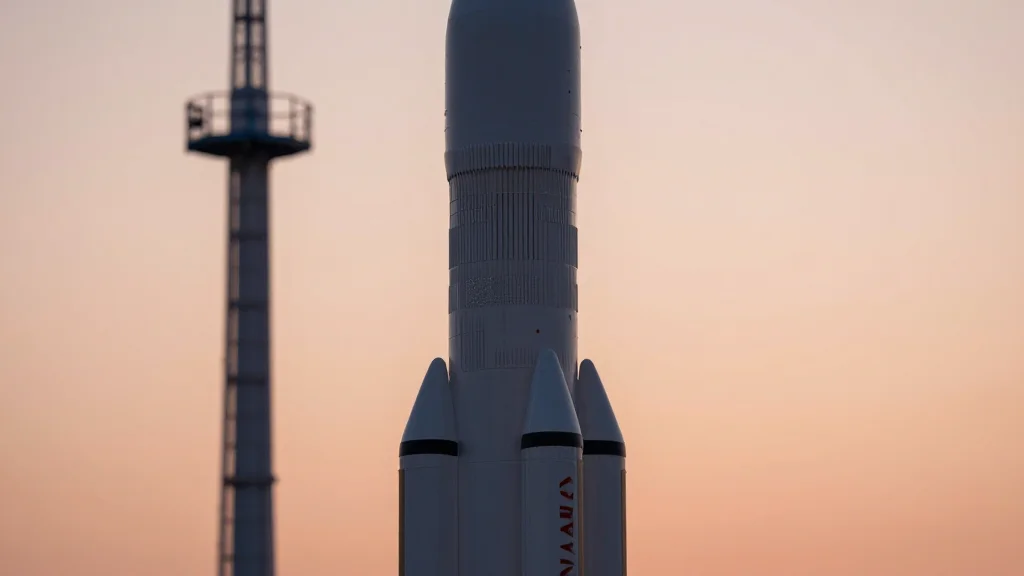
- •China will develop reusable heavy‑lift launch vehicles and a national satellite‑internet constellation by 2030.
- •Commercial space will be guided by safety standards while market forces drive new business models.
- •China pledges to deepen UN‑based space governance and provide data services to Belt and Road partners.
Pulse Analysis
China’s new policy reflects a maturation of its space strategy. In the 2000s and early 2010s, the focus was on achieving milestones—first manned flight, lunar orbit, and a modular space station. Today, the emphasis has shifted to creating a sustainable, high‑value ecosystem that can generate revenue and technological spillovers. The legal reforms are particularly noteworthy; historically, ambiguous regulations have deterred private investment, as seen in the early years of the commercial launch market. By codifying rules for resource extraction and debris mitigation, China is lowering entry barriers for startups and foreign partners.
The commercial thrust aligns with global trends where satellite‑internet constellations and on‑orbit servicing are becoming profit centers. China’s plan to blend sensing, communications and computing across domains mirrors the integrated services offered by companies like SpaceX and OneWeb. If Chinese firms can leverage state‑backed AI and digital manufacturing, they could achieve cost efficiencies that challenge existing Western pricing models.
Internationally, the outreach to Belt and Road nations serves a dual purpose: it builds geopolitical goodwill while creating a captive market for Chinese space services. This could reshape data‑flow geopolitics, especially in regions where Western satellite coverage is limited. However, the success of this agenda hinges on execution—regulatory clarity must translate into tangible incentives, and the ambitious hardware timelines must survive budgetary and technical hurdles. The next two years will be a litmus test for whether China can move from policy proclamation to operational reality.
China Charts High‑Quality Space Development in 2026‑2030 Plan
Comments
Want to join the conversation?
Loading comments...