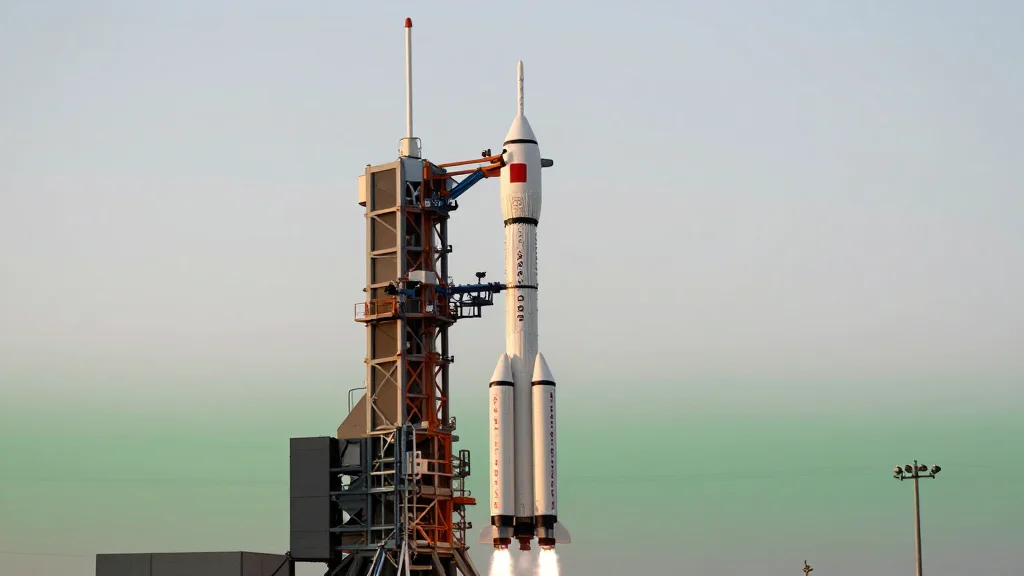
China Launches High‑precision Greenhouse‑gas Monitoring Satellite on Long March‑4C

Why It Matters
The satellite’s dual‑mode sensing architecture fills a critical gap in the global climate‑monitoring network, where most existing platforms rely on either active lidar or passive spectrometers, but not both simultaneously. By delivering three‑dimensional atmospheric profiles, the data can improve the accuracy of climate models, inform policy decisions on emissions reductions, and enable more precise verification of national pledges. Beyond scientific value, the launch signals China’s strategic intent to become a leading provider of climate data, a role traditionally dominated by the United States and Europe. Access to high‑quality, China‑originated observations could shift the balance of data sovereignty, prompting new collaborations or competition in the burgeoning market for climate‑service products.
Key Takeaways
- •Long March‑4C lifted a greenhouse‑gas monitoring satellite from Jiuquan on April 17, 2026 (638th Long March flight).
- •Satellite carries five instruments, including lidar and hyperspectral sensors, enabling first dual‑mode active/passive monitoring.
- •Orbit: 700 km sun‑synchronous, providing global coverage for CO₂, CH₄, aerosols and cloud observations.
- •Developed by Shanghai Academy of Spaceflight Technology, showcasing China’s domestic Earth‑observation expertise.
- •Data expected to support global climate models, Paris Agreement verification, and China’s environmental diplomacy.
Pulse Analysis
China’s launch marks a watershed in the commercialization of climate‑monitoring services from state‑run space agencies. Historically, the United States’ NASA and the European Space Agency have supplied the bulk of high‑resolution greenhouse‑gas data through missions like OCO‑2 and Sentinel‑5P. By fielding a satellite that merges active lidar with passive hyperspectral imaging, China not only narrows the technology gap but also creates a proprietary data stream that can be monetized through subscription services to governments, NGOs, and private firms. This could catalyze a new revenue stream for the Chinese space sector, encouraging further investment in next‑generation sensors.
The launch also has geopolitical ramifications. As climate data becomes a cornerstone of international negotiations, the ability to provide independent, high‑quality observations enhances a nation’s diplomatic leverage. China’s willingness to share data—if it chooses to do so—could foster partnerships with developing countries lacking their own observation infrastructure, thereby expanding its soft power. Conversely, skeptics may question data transparency, prompting calls for third‑party validation and potentially spurring a competitive market for cross‑verified climate datasets.
Looking forward, the satellite’s success will likely influence China’s roadmap for a constellation of climate‑focused platforms. A network of similar satellites could deliver near‑real‑time global monitoring, reducing latency in emissions reporting and enabling rapid response to extreme events. Such capability would not only solidify China’s position in the SpaceTech arena but also reshape the global climate‑data ecosystem, where speed, accuracy, and accessibility are becoming as valuable as the raw observations themselves.
China launches high‑precision greenhouse‑gas monitoring satellite on Long March‑4C
Comments
Want to join the conversation?
Loading comments...