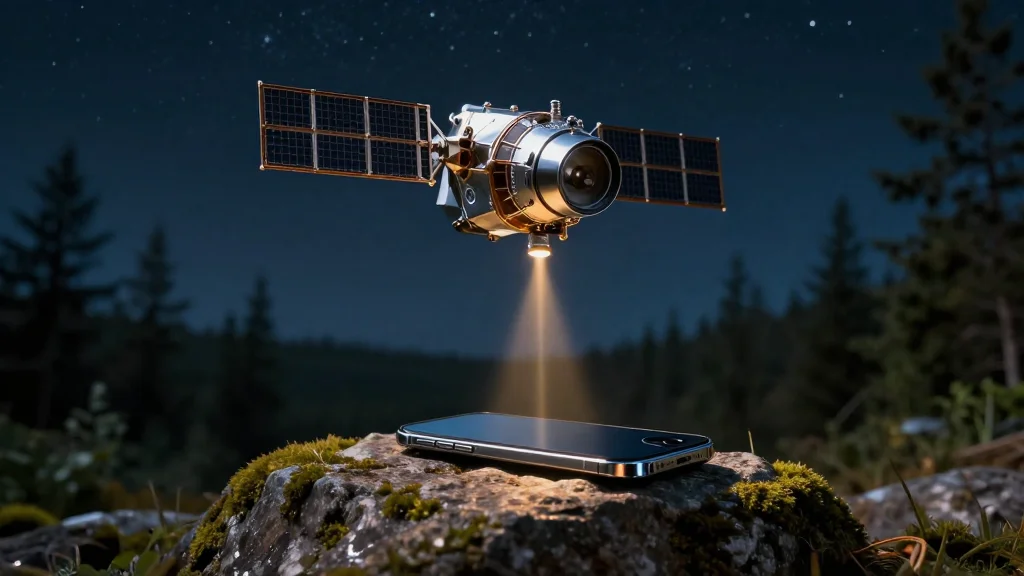
China Launches Satellite to Test Cell-to-Satellite Communications
Companies Mentioned
Why It Matters
Successful cell‑to‑satellite connectivity could reshape mobile broadband, giving operators a new tool for coverage in underserved areas and intensifying competition in the satellite communications sector.
Key Takeaways
- •China launched a dedicated cell‑to‑satellite test satellite on a Long March 2D
- •Direct mobile broadband via satellite could reduce reliance on terrestrial networks
- •Launch used hypergolic fuel, raising environmental and safety concerns
- •SpaceX still dominates global launch market with 64 missions in 2026
- •China's 31 launches place it second, narrowing gap with U.S. competitor
Pulse Analysis
On May 31, 2026, China’s Xichang Spaceport saw the liftoff of a Long March 2D carrying a purpose‑built satellite designed to demonstrate direct broadband connectivity between mobile phones and orbiting platforms. The experiment, often described as cell‑to‑satellite communication, aims to bypass traditional ground‑based towers, delivering high‑speed data to users in remote or underserved regions. While the payload’s technical specifications remain classified, the launch underscores Beijing’s ambition to integrate satellite links into the next generation of 5G‑plus networks, a move that could reshape connectivity strategies across Asia and beyond. The test also evaluates power consumption and antenna design for handheld devices. The launch arrives amid an intensifying global race for orbital access.
According to industry tallies, SpaceX led 2026 with 64 missions, outpacing China’s 31, Russia’s 8 and Rocket Lab’s 7. Although China remains second in sheer launch count, the gap reflects divergent business models: SpaceX leverages commercial rideshare demand, while China’s state‑driven program focuses on strategic capabilities such as navigation, Earth observation and now telecom‑grade satellite links. Maintaining a robust cadence of launches not only validates launch vehicle reliability but also signals Beijing’s intent to compete for future commercial payloads. Future missions may carry commercial payloads from European and Asian firms.
If cell‑to‑satellite broadband proves viable, telecom operators could extend 5G coverage to mountainous, maritime and disaster‑struck zones without costly infrastructure. The technology also dovetails with emerging low‑Earth‑orbit constellations, offering lower latency than geostationary alternatives. However, regulatory hurdles, spectrum allocation and the environmental impact of hypergolic propellants remain challenges. Success would position China as a key player in the nascent satellite‑mobile market, potentially attracting partnerships with global carriers seeking diversified backhaul solutions. Industry analysts forecast a multi‑billion‑dollar market by 2035.
China launches satellite to test cell-to-satellite communications
Comments
Want to join the conversation?
Loading comments...