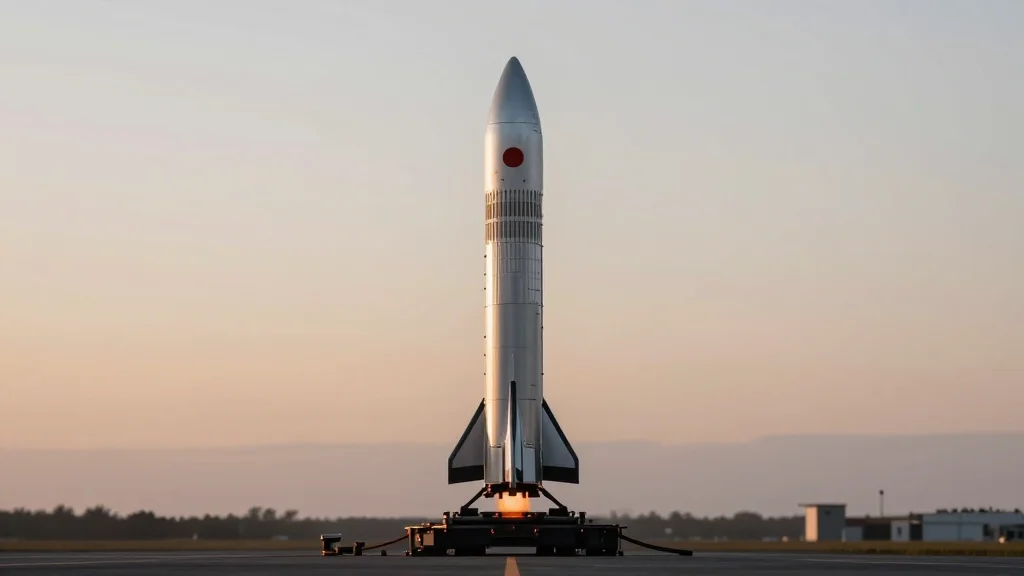
China Launches Three Astronauts to Its Tiangong-3 Space Station
Companies Mentioned
Why It Matters
The mission underscores China’s accelerating human‑spaceflight cadence and its use of crewed flights for geopolitical signaling, while intensifying competition with private launch providers.
Key Takeaways
- •China launched three crew members to Tiangong‑3 via Long March 2F.
- •Docking expected 3.5 hours after launch; mission may extend to one year.
- •One astronaut is from Hong Kong, highlighting political symbolism.
- •China's 2026 launch cadence hits 29, second only to SpaceX.
- •Hypergolic boosters' landing sites undisclosed, raising environmental safety questions.
Pulse Analysis
China’s Tiangong‑3 crewed launch marks a pivotal step in its long‑term orbital habitat strategy. The Long March 2F, a workhorse since the early Shenzhou flights, has demonstrated remarkable reliability, enabling a rapid 3.5‑hour rendezvous that mirrors the efficiency of past Russian and American missions. Extending the crew’s stay to a year would test the station’s life‑support systems and provide valuable data for future deep‑space endeavors, positioning China as a credible partner for international research collaborations.
The inclusion of a Hong Kong astronaut carries clear diplomatic weight, signaling Beijing’s intent to showcase national unity and soft power through space achievements. As China logs 29 launches this year, it narrows the gap with SpaceX’s dominant 60‑launch tally, highlighting a shifting launch market where state‑run programs compete with commercial giants. This dynamic pressures other providers to innovate while offering China leverage in negotiating bilateral space agreements and technology transfers.
Technical considerations remain under scrutiny, especially the use of hypergolic propellants in the rocket’s strap‑on boosters. The lack of disclosed recovery zones raises environmental and safety questions that could attract regulatory attention domestically and abroad. Nonetheless, the mission’s potential duration and the data it will generate are likely to fuel China’s next generation of modular stations and lunar gateway concepts, opening avenues for commercial payloads, tourism, and scientific research in low Earth orbit.
China launches three astronauts to its Tiangong-3 space station
Comments
Want to join the conversation?
Loading comments...