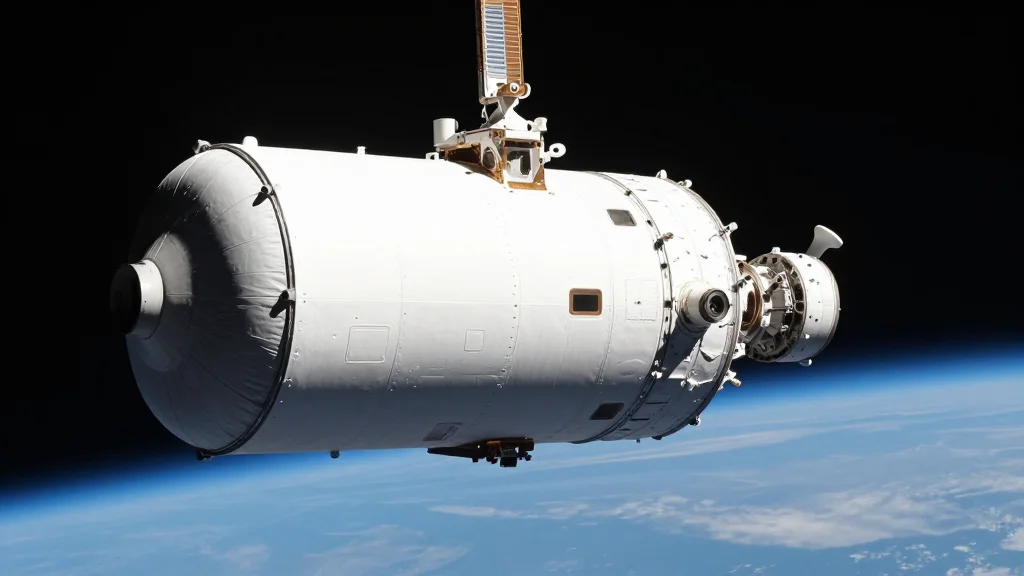
China Launches Tianzhou-10 Cargo Craft to Resupply Tiangong Space Station

Companies Mentioned
Why It Matters
Tianzhou‑10’s successful launch and docking demonstrate that China now possesses a fully indigenous, end‑to‑end logistics chain for its space‑station program. This capability reduces dependence on foreign launch services, lowers operational costs, and enhances the nation’s strategic autonomy in orbit. It also positions China as a viable partner for international scientific collaborations, especially as access to the International Space Station becomes increasingly constrained. The mission’s payload mix—combining crew life‑support, propulsion and scientific experiments—signals a shift from purely demonstrative flights to a sustainable research platform. As China expands Tiangong with additional laboratory modules, the logistics backbone established by Tianzhou will be critical for supporting longer crew stays, commercial activities, and potential commercial‑to‑government payload services, thereby influencing the broader LEO market dynamics.
Key Takeaways
- •Tianzhou‑10 launched at 8:14 a.m. Beijing time on May 11, 2026, from Wenchang, Hainan
- •The Long March‑7 Y11 rocket placed the cargo craft into orbit within ten minutes
- •Tianzhou‑10 docked autonomously with the Tianhe core module, delivering an EVA suit, consumables, propellant and scientific payloads
- •This marks the fifth cargo resupply mission for Tiangong and the 641st flight of the Long March series
- •China’s domestic logistics chain now rivals Western commercial resupply services in capacity and cost
Pulse Analysis
China’s rapid development of an autonomous LEO logistics chain reshapes the competitive landscape for space‑flight services. By mastering both launch and cargo delivery with the Long March‑7 and Tianzhou series, Beijing sidesteps the high‑price, high‑demand market that Western providers currently dominate. The cost advantage—while not publicly disclosed—has been hinted at in state media, suggesting a per‑kilogram launch price well below that of comparable U.S. vehicles. This price pressure could force commercial operators to innovate or consolidate, especially as demand for LEO payloads grows with the rise of satellite constellations and in‑orbit manufacturing.
Strategically, the Tianzhou‑10 mission underscores China’s intent to transition Tiangong from a national showcase to a functional research hub capable of hosting international experiments. The inclusion of scientific payloads signals an opening for foreign research institutions, albeit under Chinese oversight. If Beijing can demonstrate reliable, low‑cost resupply, it may attract partnerships from countries excluded from the ISS program, creating a parallel ecosystem of orbital research.
Looking forward, the upcoming Tianzhou‑11 and crewed missions will test the scalability of this logistics model. Success could pave the way for commercial payload services, such as satellite deployment or in‑orbit servicing, leveraging the same launch infrastructure. In a market where launch frequency, cost, and reliability are paramount, China’s self‑sufficient approach could become a decisive factor in shaping the next decade of LEO activity.
China Launches Tianzhou-10 Cargo Craft to Resupply Tiangong Space Station
Comments
Want to join the conversation?
Loading comments...