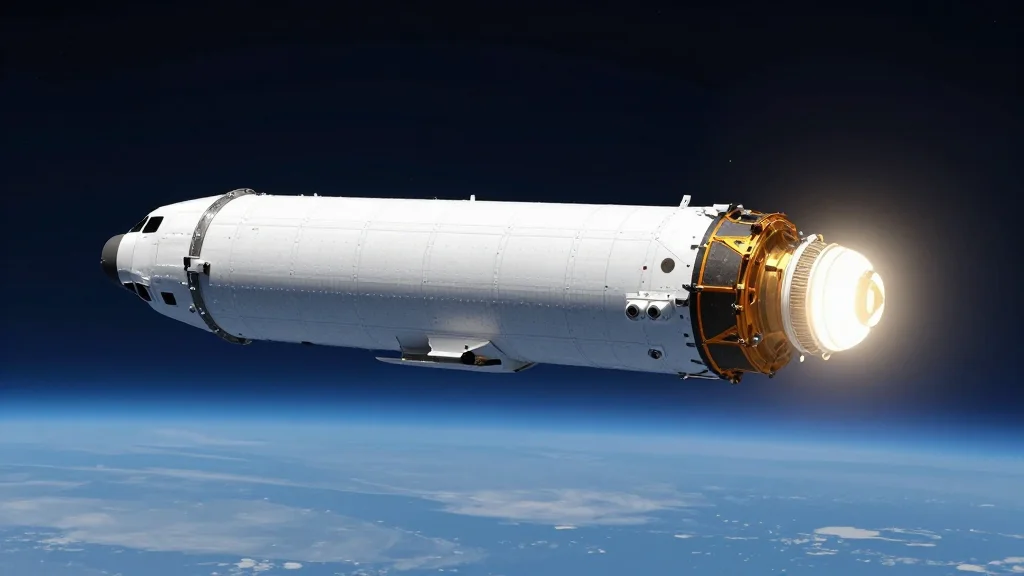
China Launches Tianzhou Freighter to Tiangong-3 Station
Companies Mentioned
Why It Matters
A year‑long freighter stay cuts launch costs and bolsters Tiangong‑3’s research capacity, sharpening China’s competitive edge in the crowded low‑Earth‑orbit market.
Key Takeaways
- •Tenth Tianzhou cargo ship launched on Long March 7 from Wenchang
- •Mission aims for a year-long orbital stay to cut annual launches
- •China's total 2026 launches rise to 24, trailing SpaceX's 55
- •Extended freighter duration supports Tiangong‑3's growing research capabilities
- •Reduced cargo flights lower operational costs and improve station logistics
Pulse Analysis
China’s latest Tianzhou launch marks a milestone in its autonomous resupply program. By deploying the tenth cargo vehicle on a Long March 7, Beijing demonstrates confidence in the reliability of its launch infrastructure and the modular design of Tiangong‑3. A year‑long orbital presence not only reduces the number of required missions but also allows continuous scientific experiments, technology demonstrations, and crew support without the logistical bottlenecks of frequent dockings. This approach mirrors commercial trends toward longer‑duration payloads that maximize return on investment.
Globally, the launch cadence in 2026 highlights a widening gap between the United States and other spacefaring nations. SpaceX’s 55 launches dwarf China’s 24, reflecting the private sector’s agility and the growing demand for satellite constellations. Yet China’s strategy focuses on strategic autonomy rather than sheer volume, emphasizing high‑value cargo deliveries that sustain a permanent orbital outpost. By extending mission lifespans, China can allocate more launch slots to its burgeoning satellite fleet, positioning itself as a credible alternative to Western launch services for both domestic and allied customers.
Looking ahead, the extended Tianzhou mission could pave the way for deeper international cooperation. A reliable, long‑duration cargo platform makes Tiangong‑3 an attractive partner for joint experiments in microgravity, Earth observation, and space manufacturing. Moreover, the operational efficiencies gained may lower the cost threshold for commercial payloads, encouraging private firms to consider Chinese launch options. As the station’s capabilities expand, China is poised to transition from a regional player to a central hub in the emerging low‑Earth‑orbit economy.
China launches Tianzhou freighter to Tiangong-3 station
Comments
Want to join the conversation?
Loading comments...