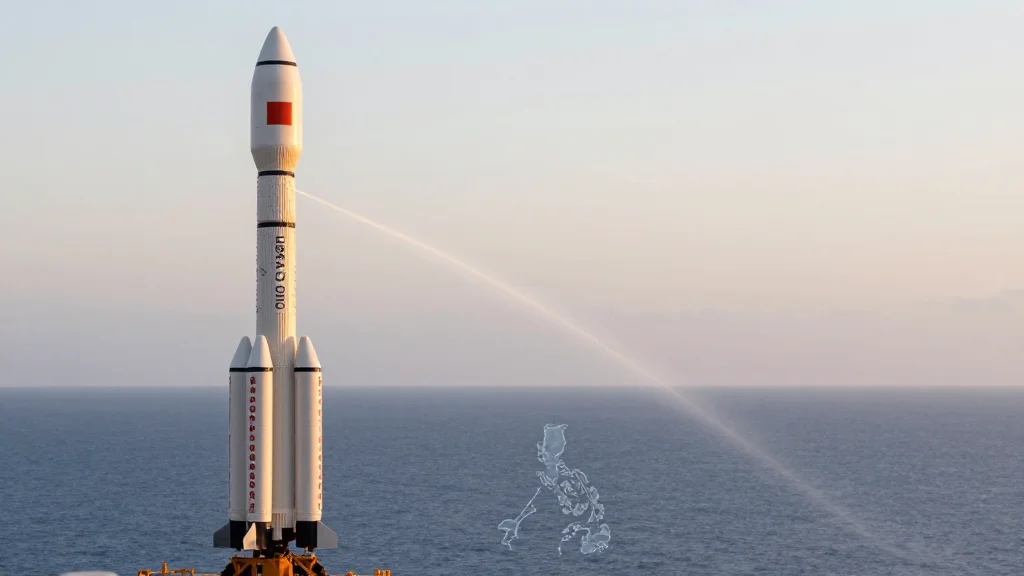
China Rocket Debris: Drop Zones Within Philippine Exclusive Economic Zone
Why It Matters
The incident highlights emerging space‑related security and safety challenges in Southeast Asia, prompting regional authorities to monitor foreign launch activities more closely. It also underscores the need for coordinated space traffic management as China ramps up launch frequency from Wenchang.
Key Takeaways
- •Long March 5 launch created two debris drop zones in Philippine EEZ
- •PhilSA issued NOTAM alerts to aviation and maritime authorities
- •Debris could threaten ships, aircraft, and fishing vessels near drop zones
- •Wenchang spaceport plans to increase annual launches, raising regional debris frequency
Pulse Analysis
China’s June 11 Long March 5 launch from the Wenchang Space Launch Site marks another milestone in the country’s accelerating commercial space agenda. The booster’s unburned stages are slated to re‑enter over two pre‑designated drop zones that sit squarely inside the Philippines’ Exclusive Economic Zone. Philippine officials, through the space agency PhilSA, have already circulated a Notice to Airmen (NOTAM) and briefed maritime agencies, reflecting a growing awareness that space activities now have direct terrestrial implications for neighboring states.
The safety dimension is immediate and tangible. Although the debris is not projected to land on populated areas, it can still endanger vessels navigating the busy waters of the Luzon Strait, as well as aircraft following regional flight paths. PhilSA’s advisory warns against retrieving any fragments, citing the risk of exposure to residual rocket propellants and other hazardous materials. Such guidance mirrors global best practices, where spacefaring nations are urged to mitigate debris impact on civilian infrastructure and the environment.
Beyond the immediate risk, the episode signals a broader shift in regional space dynamics. Wenchang’s ramp‑up plans aim to increase launch cadence, potentially multiplying the frequency of debris overflight in Southeast Asian airspace and seas. This trajectory underscores the urgency for a multilateral framework on space traffic management and debris mitigation, especially among nations sharing maritime zones. As China expands its launch capabilities, neighboring countries like the Philippines are likely to enhance monitoring capacity and diplomatic engagement to safeguard their economic zones and maintain a stable, cooperative space environment.
China Rocket Debris: Drop Zones Within Philippine Exclusive Economic Zone
Comments
Want to join the conversation?
Loading comments...