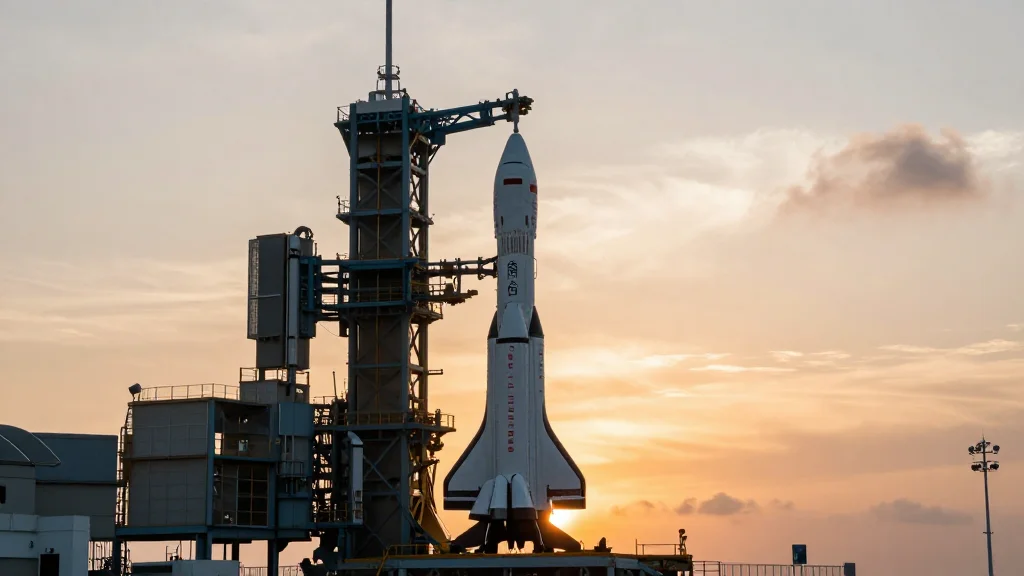
China Space Breakthroughs Forecast
Companies Mentioned
Why It Matters
The program accelerates China’s bid for leadership in space science, commercial satellite services, and lunar exploration, reshaping global competition and supply chains.
Key Takeaways
- •Chang'e-7 to map lunar south‑pole water ice resources
- •Xuntian telescope will join global astrophysics network, rival Hubble
- •Hundreds of Guowang satellites aim to deliver nationwide broadband
- •Tiangong station upgrades include advanced robotic arms for external tasks
- •China targets crewed lunar landing, potentially second nation after US
Pulse Analysis
China’s space agenda is entering a decisive phase, with the Chang’e‑7 mission slated for launch this year to investigate water ice at the lunar south pole. The probe’s findings will inform future crewed landings and underline Beijing’s long‑term lunar strategy. Parallel to the lunar push, the Xuntian space telescope, comparable to the Hubble, will broaden China’s astrophysical reach, offering high‑resolution observations that could rival Western facilities. Together, these projects signal a coordinated effort to cement scientific credibility while expanding operational experience beyond low‑Earth orbit.
Beyond exploration, China is leveraging its launch capacity to build the Guowang broadband constellation, planning hundreds of satellites that promise nationwide high‑speed internet. This commercial thrust could challenge incumbent providers and reshape the global satellite‑internet market, especially as the United States and private firms vie for similar coverage. The Tiangong space station’s upcoming module additions and enhanced robotic arms will enable more complex external experiments and logistics, effectively turning the station into a versatile orbital laboratory. Such capabilities not only support domestic research but also open avenues for international payloads, potentially attracting foreign investment.
However, the ambitious timeline carries technical and geopolitical risks. Developing a new crewed spacecraft and ensuring reliable Long March‑5B launches demand rigorous testing, while international scrutiny over space debris and technology transfer persists. If successful, China could become the second nation to land astronauts on the Moon, a milestone that would shift the balance of prestige and influence in space. U.S. agencies and commercial players will need to assess partnership opportunities and competitive responses, as the expanding Chinese presence reshapes the economics and politics of the final frontier.
China Space Breakthroughs Forecast
Comments
Want to join the conversation?
Loading comments...