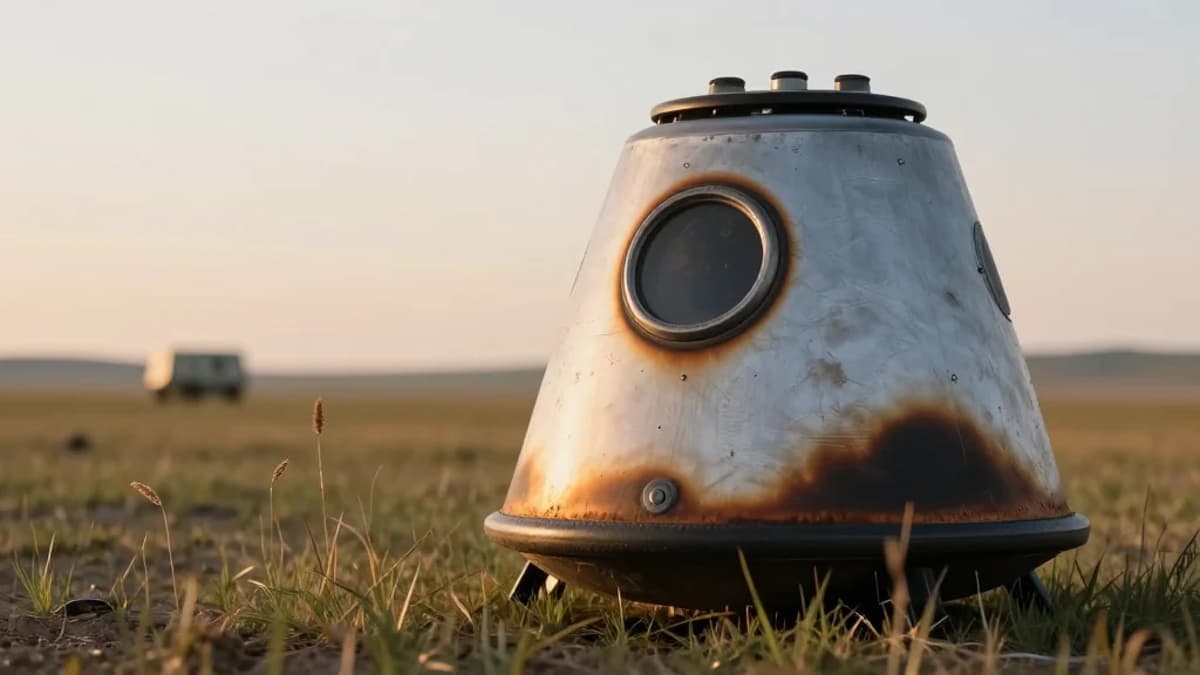
China’s Damaged Shenzhou-20 Manned Capsule Successfully Returned Unmanned Today
•January 19, 2026
0
Why It Matters
The episode highlights potential safety vulnerabilities in China’s rapidly expanding crewed launch schedule and raises questions about transparency that could affect international confidence in its space operations.
Key Takeaways
- •Shenzhou-20 capsule landed in Inner Mongolia unmanned
- •China claims debris damaged capsule window during mission
- •Limited images fuel speculation about true cause of damage
- •Recovery crew focused on damaged window during retrieval
- •Transparency concerns raise questions on China's space safety protocols
Pulse Analysis
China’s Shenzhou-20 mission, its first long‑duration crewed flight since the Tiangong space station became operational, concluded with an unexpected twist. While the crew returned safely aboard a separate rescue capsule, the primary descent module touched down empty, prompting state media to showcase only distant photographs. The images reveal a compromised window, which Beijing attributes to micrometeoroid or orbital debris impact—a claim that aligns with standard risk assessments for low‑Earth‑orbit operations.
The scarcity of detailed visuals has ignited a wave of analysis among space observers. Critics argue that the lack of clear evidence could indicate an internal structural flaw, such as material fatigue or manufacturing defects, rather than an external collision. This debate is more than academic; it touches on the robustness of China’s next‑generation crewed spacecraft, which are slated for lunar and deep‑space missions. Transparency—or the lack thereof—affects not only domestic confidence but also international partnerships, as agencies weigh data reliability when collaborating on joint experiments or ISS‑style platforms.
Looking ahead, the incident may prompt the China National Space Administration to refine its post‑flight inspection protocols and communication strategy. Greater openness about anomaly investigations could bolster the credibility of its burgeoning commercial launch sector and reassure investors in the global space economy. As China accelerates its cadence of crewed flights, balancing operational secrecy with the industry’s demand for safety data will be pivotal for sustaining momentum and securing a leading role in the next era of human space exploration.
China’s damaged Shenzhou-20 manned capsule successfully returned unmanned today
0
Comments
Want to join the conversation?
Loading comments...