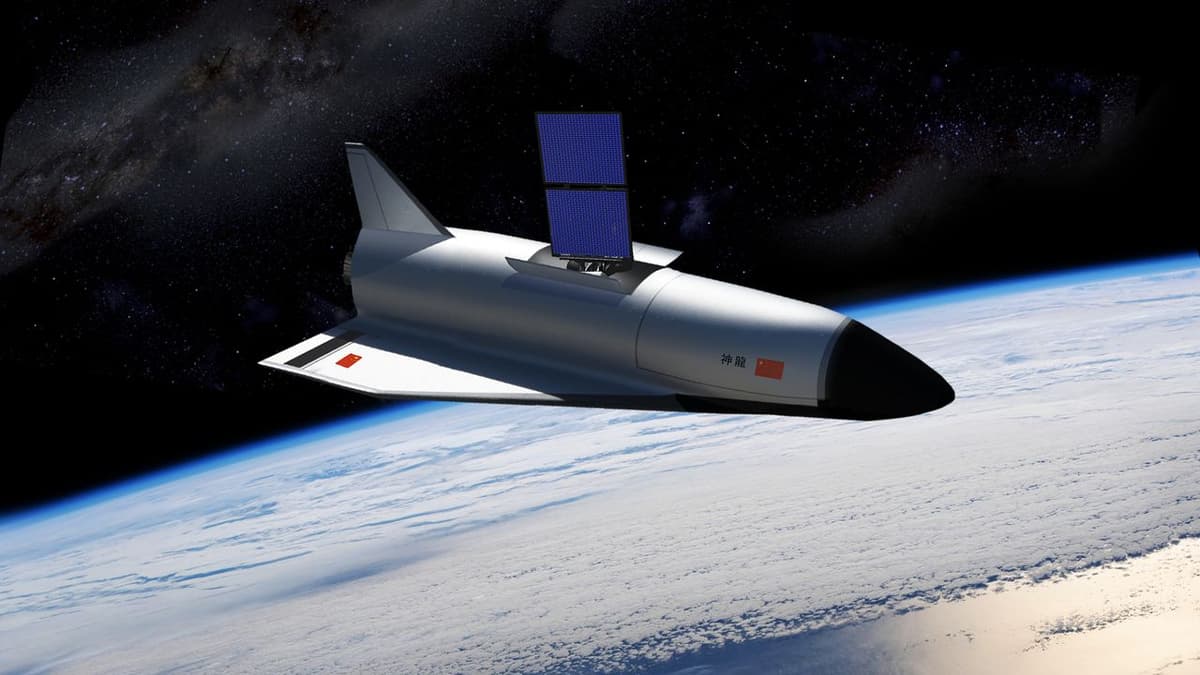
China's Mysterious Shenlong Space Plane Recently Launched on Its 4th Mission. What Is It Doing up There?
•February 23, 2026
0
Why It Matters
Shenlong’s RPO activities signal China’s growing competence in on‑orbit servicing and potential anti‑satellite tactics, reshaping space‑security dynamics. The technology could affect satellite longevity, market competition, and geopolitical stability.
Key Takeaways
- •Shenlong launched fourth orbital mission on Feb 6, 2026.
- •Previous flights lasted 2 days, 276 days, 266 days.
- •Vehicle conducts rendezvous and deploys satellites for RPO testing.
- •Shenlong mirrors US X‑37B size, but performs RPOs.
- •RPO capability could enable satellite servicing or anti‑satellite actions.
Pulse Analysis
The latest Shenlong flight underscores China’s commitment to reusable, autonomous spacecraft that can operate beyond simple payload delivery. By extending mission duration and repeatedly deploying small satellites, the program gathers data on long‑term thermal control, power management, and autonomous navigation—critical for future commercial space‑plane concepts. This incremental testing mirrors private sector trends, where companies seek cost‑effective, rapid‑turnaround access to low Earth orbit for constellations and on‑demand services.
What sets Shenlong apart is its demonstrated rendezvous and proximity operations (RPO). Each mission has released objects that the plane later approached, docked with, or maneuvered around, showcasing precise orbital control and potential satellite servicing capabilities. Such skills enable refueling, hardware upgrades, and de‑orbiting of defunct assets, promising to extend satellite lifespans and reduce space‑debris risk. However, the same technology could be repurposed for anti‑satellite actions, raising concerns among defense analysts about a new layer of space‑based coercion.
The strategic implications are profound. Mastery of RPOs positions China alongside the United States and Russia in a niche yet pivotal domain of space warfare and commercial servicing. As nations and private firms race to build resilient orbital infrastructure, transparency will become a diplomatic lever; clearer data on Shenlong’s payloads and objectives could mitigate escalation risks. For investors and policymakers, tracking Shenlong’s progress offers early insight into emerging markets for on‑orbit logistics and the evolving security calculus of the space domain.
China's mysterious Shenlong space plane recently launched on its 4th mission. What is it doing up there?
0
Comments
Want to join the conversation?
Loading comments...