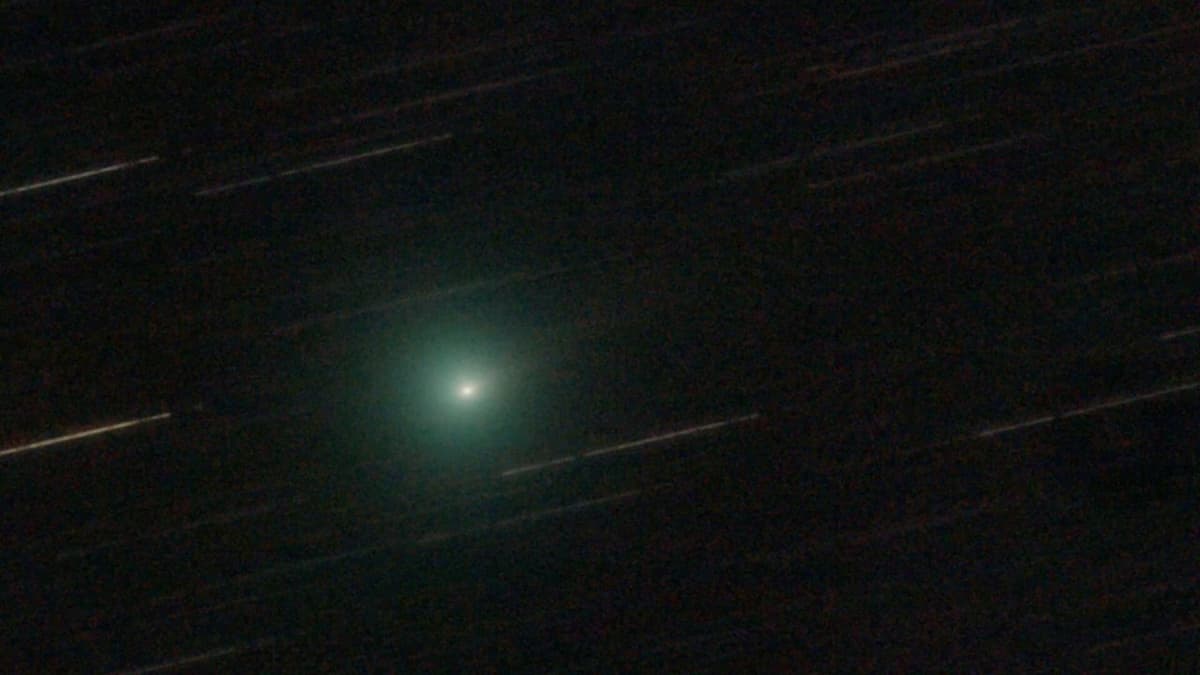
Comet 24P/Schaumasse Makes Its Closest Approach to the Sun Today: But Will You Be Able to See It?
•January 8, 2026
0
Companies Mentioned

NASA

Amazon
AMZN
Why It Matters
The perihelion offers a rare, observable window for amateur astronomers to engage with a short‑period comet, boosting public interest in skywatching and astrophotography. It also underscores the value of accessible telescope technology for broader space‑science outreach.
Key Takeaways
- •Perihelion on Jan 8, 2026 at 109.7 million miles.
- •Magnitude +10.8, far beyond naked‑eye threshold.
- •Minimum 6‑inch aperture needed to see hazy comet.
- •Predawn hours in Virgo, near star Vindemiatrix, optimal.
- •Waning gibbous Moon will brighten sky, reducing contrast.
Pulse Analysis
Comet 24P/Schaumasse, a short‑period visitor discovered in 1911, completes an eight‑year orbit that carries it from beyond Jupiter back toward the Sun. Its upcoming perihelion marks the point of maximum solar heating, causing volatile ices to sublimate and create a brightening coma. While the comet’s intrinsic activity can boost visibility, its current magnitude of +10.8 places it well outside the unaided eye’s range, positioning it as a classic target for dedicated amateur observers and astrophotographers.
For skywatchers, the key to spotting 24P lies in timing and equipment. A telescope with a 6‑inch (152 mm) aperture or larger can resolve the faint, diffuse head against a dark backdrop, but the waning gibbous Moon rising on Jan 8 will add skyglow that erodes contrast. The optimal window is the predawn hours when Virgo arches high in the southern sky; locating the +2.8 mag star Vindemiatrix provides a reliable reference point just five degrees east of the comet’s path. Modern smartphone apps streamline this hunt, overlaying real‑time coordinates and helping users align their instruments quickly.
Beyond the immediate viewing opportunity, 24P’s perihelion illustrates a broader trend: affordable, high‑quality telescopes like the Celestron NexStar 8SE are democratizing deep‑sky observation. As more hobbyists capture and share images, public enthusiasm for transient celestial events grows, feeding demand for educational content and community platforms. This cycle reinforces the relevance of amateur astronomy in the larger space ecosystem, where citizen observations can supplement professional surveys and inspire the next generation of scientists.
Comet 24P/Schaumasse makes its closest approach to the sun today: But will you be able to see it?
0
Comments
Want to join the conversation?
Loading comments...