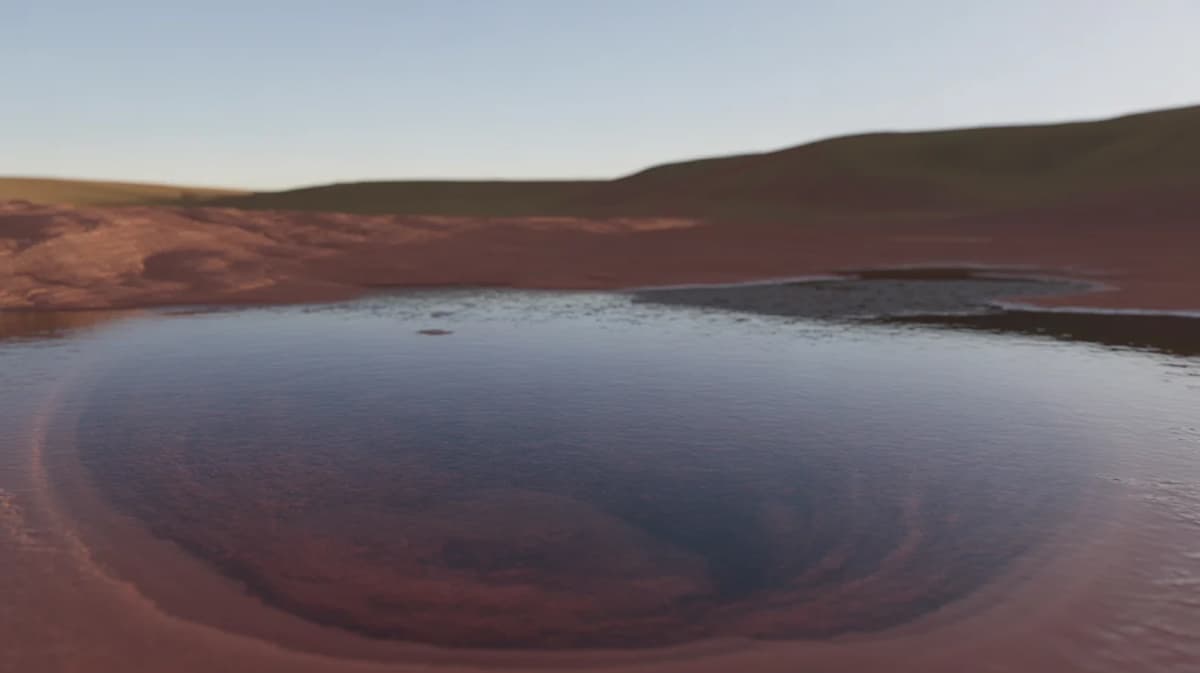
Computer Model: A Thin Ice Cap Can Preserve Liquid Water on Mars
•January 6, 2026
0
Companies Mentioned

Why It Matters
The finding reshapes expectations of habitable niches on Mars, informing future exploration strategies and the search for past life.
Key Takeaways
- •Thin ice caps can insulate Martian lakes
- •Simulated lakes persist over 100 years with minimal depth loss
- •Seasonal ice cover reduces water loss despite subfreezing air
- •Model merges Mars Weather Forecast data with Curiosity observations
- •Findings support hypotheses of subsurface liquid water on Mars
Pulse Analysis
The concept of a thin ice lid overturns the traditional view that Mars’ frigid climate precludes stable surface water. While average temperatures hover below freezing, a modest ice layer can trap heat, slowing heat loss and preventing complete freezing. This insulating effect, demonstrated through high‑resolution climate modeling, suggests that liquid reservoirs could survive seasonal cycles, creating micro‑environments that persist far longer than previously assumed.
The research hinges on coupling the Mars Weather Research & Forecasting (Mars‑WRF) general circulation model with in‑situ data from NASA’s Curiosity rover. By feeding realistic atmospheric pressures, temperature swings, and dust loading into the model, scientists recreated localized conditions at Gale Crater. The simulations showed that a lake only ten meters deep, receiving roughly 50 mm of water each month, could maintain a thin ice cover and retain its liquid volume for more than a century. Seasonal thawing under the ice allows sunlight to penetrate, further stabilizing the water column and limiting evaporative loss.
For planetary scientists and mission planners, these insights expand the catalog of potentially habitable sites on the Red Planet. If thin‑ice‑covered lakes can exist today or in the recent past, they become prime targets for subsurface sampling missions seeking biosignatures. However, the model’s reliance on assumptions about ice thickness, dust opacity, and geothermal heat introduces uncertainties that future rover or lander observations must resolve. Nonetheless, the study provides a compelling framework for interpreting Martian geomorphology and guiding the next generation of astrobiology investigations.
Computer model: A thin ice cap can preserve liquid water on Mars
0
Comments
Want to join the conversation?
Loading comments...