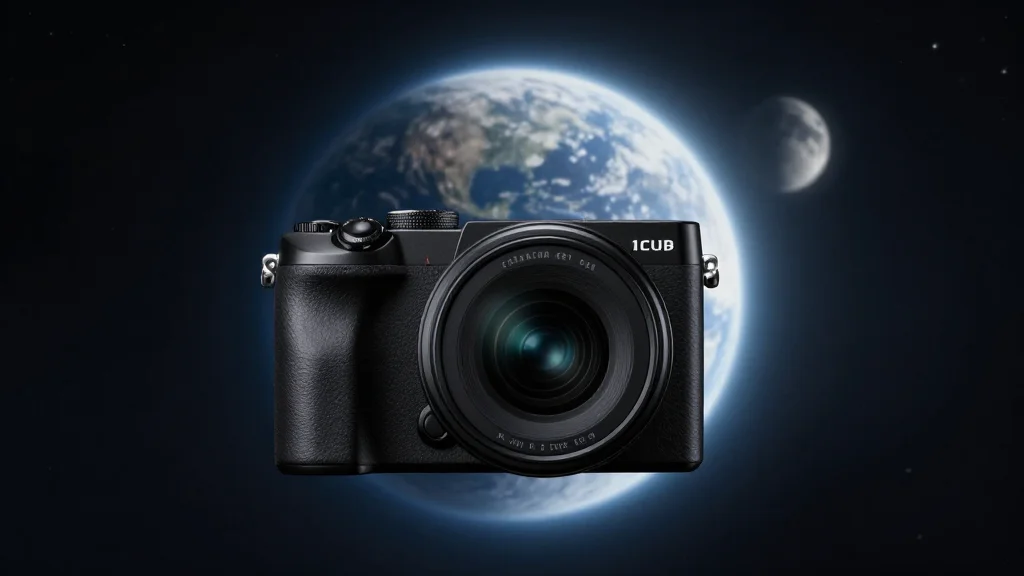
Contribution to Artemis II Moon Mission Sees Successful Test of a Space Camera Under Cosmic Ray Conditions
Companies Mentioned

Why It Matters
Demonstrating that commercial‑off‑the‑shelf imaging equipment can survive space radiation reduces development risk and cost for the Artemis program and future deep‑space missions.
Key Takeaways
- •GSI/FAIR simulated cosmic radiation using heavy‑ion beams in March 2025
- •Modified Nikon Z9 survived intense radiation, remained fully functional
- •Camera captured a 54‑minute total solar eclipse during Artemis II
- •Successful test paves way for COTS electronics on future Artemis missions
Pulse Analysis
Radiation testing has become a cornerstone of modern spacecraft design, especially as missions venture farther from Earth’s protective magnetosphere. At GSI/FAIR, researchers use high‑energy heavy‑ion accelerators to mimic the relentless bombardment of galactic cosmic rays that hardware will encounter on lunar or deep‑space trajectories. By exposing the Nikon Z9 camera to these conditions, engineers could assess degradation pathways, verify shielding effectiveness, and certify performance margins before committing the device to flight.
The Nikon Z9, a flagship professional mirrorless camera, was adapted with radiation‑hardening measures and then subjected to the simulated environment. Results showed no loss of image quality, sensor functionality, or electronic stability, proving that a commercial‑off‑the‑shelf (COTS) platform can meet NASA’s stringent reliability standards. During Artemis II, the camera captured a rare 54‑minute total solar eclipse as the Moon passed in front of the Sun from lunar orbit, providing both scientific data and public‑engagement imagery that underscored the success of the test.
Beyond Artemis II, this achievement signals a shift toward leveraging existing high‑performance consumer technology for space applications, accelerating development cycles and cutting costs. European facilities like GSI/FAIR are now integral partners in the U.S. Artemis program, offering unique capabilities that complement NASA’s own testing infrastructure. As Artemis aims to return humans to the Moon and eventually send crews to Mars, validated COTS components will be essential for building resilient, affordable spacecraft and habitats.
Contribution to Artemis II Moon mission sees successful test of a space camera under cosmic ray conditions
Comments
Want to join the conversation?
Loading comments...