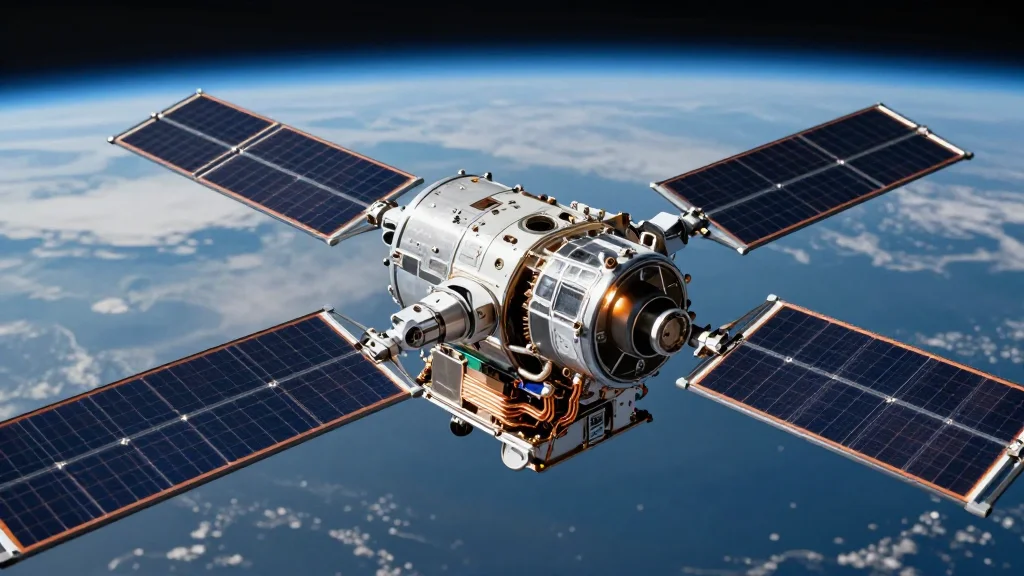
Could Space Become the Next Frontier for AI Data Centers?
Companies Mentioned
Why It Matters
Orbital compute could relieve Earth’s power‑grid bottlenecks and reduce costly bandwidth constraints, reshaping the economics of AI infrastructure. Success would create a new frontier for cloud providers and satellite operators alike.
Key Takeaways
- •NVIDIA unveiled Space-1 Rubin module delivering 25x AI compute boost for orbit
- •Google’s “Suncatcher” project explores solar-powered AI chips for space use
- •Space data centers could alleviate Earth grid strain and bandwidth bottlenecks
- •Cooling and radiation remain major engineering hurdles for orbital compute
- •Startups like Starcloud already launched GPU‑equipped satellites for AI inference
Pulse Analysis
The AI boom has turned data centers into voracious power consumers, exposing the limits of existing electrical grids and cooling infrastructure. As models grow larger and inference demands become continuous, providers are forced to seek alternatives that can deliver constant, clean energy. Space offers an attractive proposition: uninterrupted solar exposure and a virtually limitless thermal sink, eliminating the need for terrestrial power plants and massive chillers. This backdrop explains why industry leaders are now treating orbital compute as a strategic option rather than a sci‑fi fantasy.
Recent hardware announcements underscore the momentum. NVIDIA’s Space‑1 Rubin module, built on a custom GPU architecture, claims a 25‑fold increase in AI inference capability compared with its H100 counterpart, specifically engineered for the vacuum of space. Google’s internal “Suncatcher” effort is testing radiation‑hardened AI accelerators powered by solar arrays, while startups like Starcloud have already fielded satellites that run real‑time image‑recognition workloads. Parallel advances in memory—such as a USC‑developed chip that survives temperatures above 700 °C—further reduce the thermal constraints that have traditionally hampered orbital electronics.
Despite the hype, formidable challenges remain. Heat dissipation in a vacuum relies on radiators, which scale poorly with compute density, and radiation can degrade silicon far faster than on Earth, demanding costly hardening techniques. Launch costs, regulatory approvals, and the need for reliable on‑orbit power storage add layers of financial risk. Nonetheless, if these engineering hurdles are overcome, space‑based data centers could become a premium tier for latency‑critical, bandwidth‑heavy AI tasks—think real‑time geospatial analytics or autonomous spacecraft operations—while simultaneously easing the strain on Earth’s power grid. The next decade will likely see pilot projects mature into commercial services, marking the first tangible step toward a truly orbital cloud infrastructure.
Could Space Become the Next Frontier for AI Data Centers?
Comments
Want to join the conversation?
Loading comments...