Cowboy Space Secures $275 Million to Build Orbital Data‑Center Constellations

Companies Mentioned


Why It Matters
The financing of Cowboy Space highlights a shift in how investors view low‑Earth‑orbit assets: not just as communication relays but as platforms for high‑performance computing. By targeting a 2028 launch, the company is betting that the market for edge‑compute services will outpace the technical and regulatory challenges of operating data centers in space. A successful deployment could unlock new revenue streams for satellite operators, reduce dependence on terrestrial data‑center capacity, and create a competitive pressure point for incumbents like SpaceX and Blue Origin. Conversely, failure would reinforce the notion that the economics of orbital compute remain unproven, potentially slowing further capital inflows into similar ventures.
Key Takeaways
- •Cowboy Space raised $275 million in a financing round led by Index Ventures.
- •The round values the startup at approximately $2 billion.
- •Company rebranded from Aetherflux to emphasize its new orbital data‑center focus.
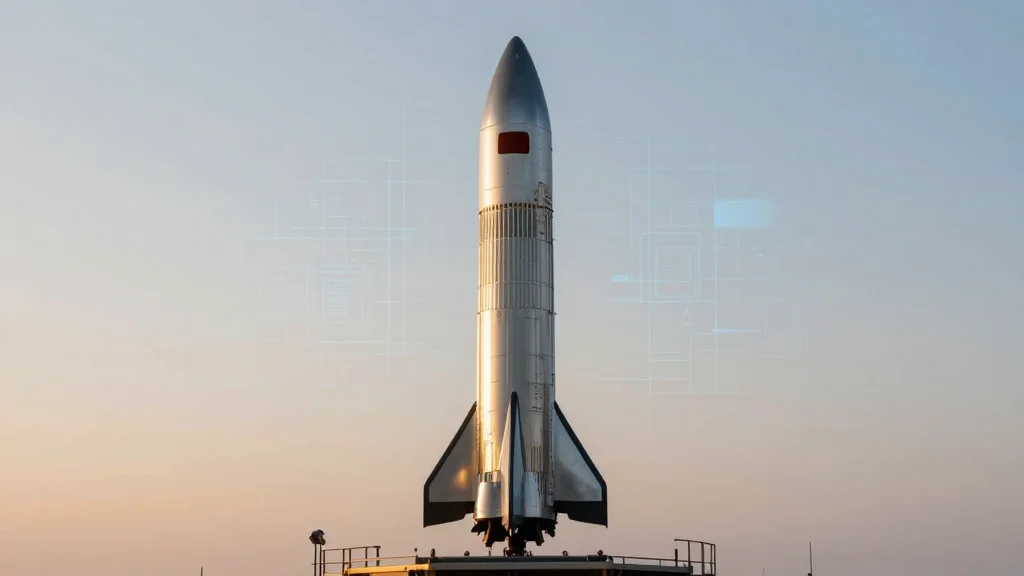
- •Plans to debut a proprietary rocket in 2028 that doubles as a data‑center satellite.
- •The venture aims to create a LEO compute network for cloud, telecom, and defense customers.
Pulse Analysis
Cowboy Space’s capital raise arrives at a moment when the LEO market is maturing from pure connectivity toward diversified services. The $275 million injection is not just a vote of confidence in a single startup; it signals that venture capital is willing to back the infrastructure layer needed for space‑based edge computing. Historically, satellite constellations have struggled to achieve profitability without a clear, recurring revenue model. By bundling launch capability with a data‑center payload, Cowboy attempts to capture both the supply and demand sides of the equation, potentially improving margins and reducing reliance on third‑party launch providers.
The competitive landscape, however, remains dominated by SpaceX and Blue Origin, both of which have deep pockets and proven launch records. Cowboy’s integrated rocket‑satellite design could be a differentiator, but it also raises the bar for reliability and safety certifications. If the company can demonstrate a successful test flight by 2028, it may force incumbents to reconsider their own data‑center strategies, accelerating a broader industry shift toward space‑borne compute.
Looking ahead, the regulatory environment will be a decisive factor. Spectrum allocation for high‑throughput data links, orbital debris mitigation, and export‑control compliance could all impact rollout timelines. Investors will likely monitor the company’s progress against these non‑technical hurdles as closely as they watch engineering milestones. In the short term, the $275 million raise provides Cowboy Space with the runway to prove its concept; in the long term, it could redefine the economics of LEO infrastructure and open a new frontier for cloud services.
Cowboy Space Secures $275 Million to Build Orbital Data‑Center Constellations
Comments
Want to join the conversation?
Loading comments...