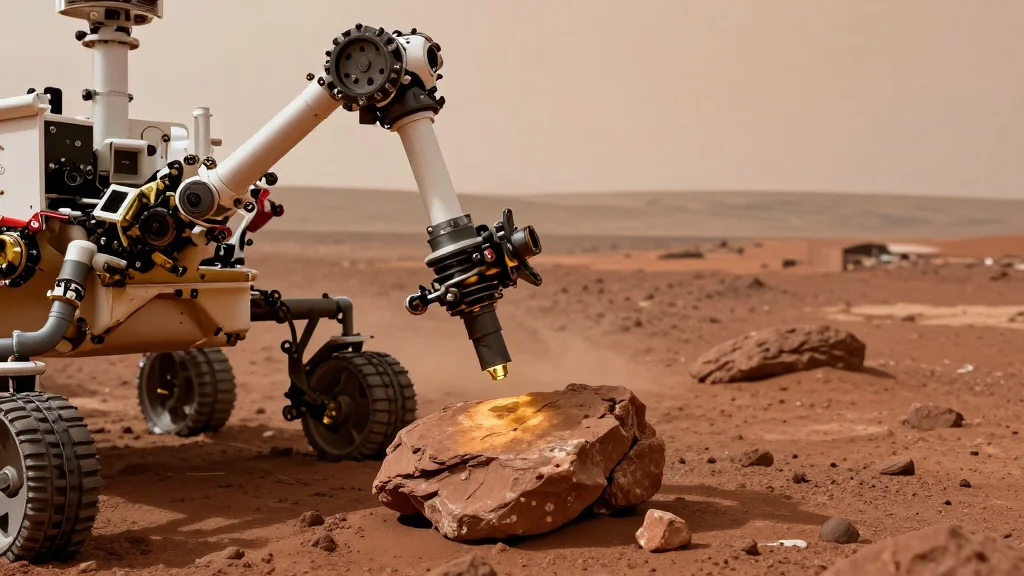
Curiosity Mars Rover: Life Associated Chemical Experiment Finding
Why It Matters
The discovery reshapes astrobiology by providing concrete evidence that key pre‑biotic chemistry existed on ancient Mars, influencing future exploration strategies and the search for extraterrestrial life.
Key Takeaways
- •Curiosity detected over 20 organic molecules in Glen Torridon
- •Molecules include carbon‑based compounds considered life’s building blocks
- •Findings stem from SAM instrument’s new chemical experiment
- •Results revive debate on ancient Martian habitability
Pulse Analysis
The Curiosity rover’s latest foray into Glen Torridon has yielded a rich catalog of organic compounds, thanks to the Sample Analysis at Mars (SAM) instrument suite. By drilling three separate sandstone samples and applying a newly designed chemical assay, scientists uncovered more than twenty distinct molecules, ranging from simple hydrocarbons to complex nitrogen‑bearing species. This achievement represents the first deployment of a novel experiment on another world, expanding the analytical toolkit available for planetary science.
These findings carry profound implications for our understanding of Mars’ early environment. Organic molecules are the essential scaffolding for life as we know it, and their presence in clay‑rich sediments suggests that ancient Gale crater once harbored conditions—such as liquid water and stable temperatures—capable of preserving or even synthesizing such chemistry. While previous missions, including Perseverance’s sample collection and earlier Curiosity analyses, hinted at organics, the breadth and diversity reported here intensify the debate over whether these compounds are indigenous or the result of meteoritic delivery.
Looking ahead, the data will shape the roadmap for upcoming missions, particularly the Mars Sample Return campaign slated for the late 2020s. By pinpointing sites with confirmed organic richness, NASA can prioritize sample retrieval that maximizes scientific return. Moreover, the discovery fuels broader discussions about planetary protection and the ethical considerations of contaminating potentially habitable worlds. In sum, Curiosity’s breakthrough not only enriches the catalog of Martian chemistry but also redefines the parameters for seeking life beyond Earth.
Curiosity Mars Rover: Life Associated Chemical Experiment Finding
Comments
Want to join the conversation?
Loading comments...