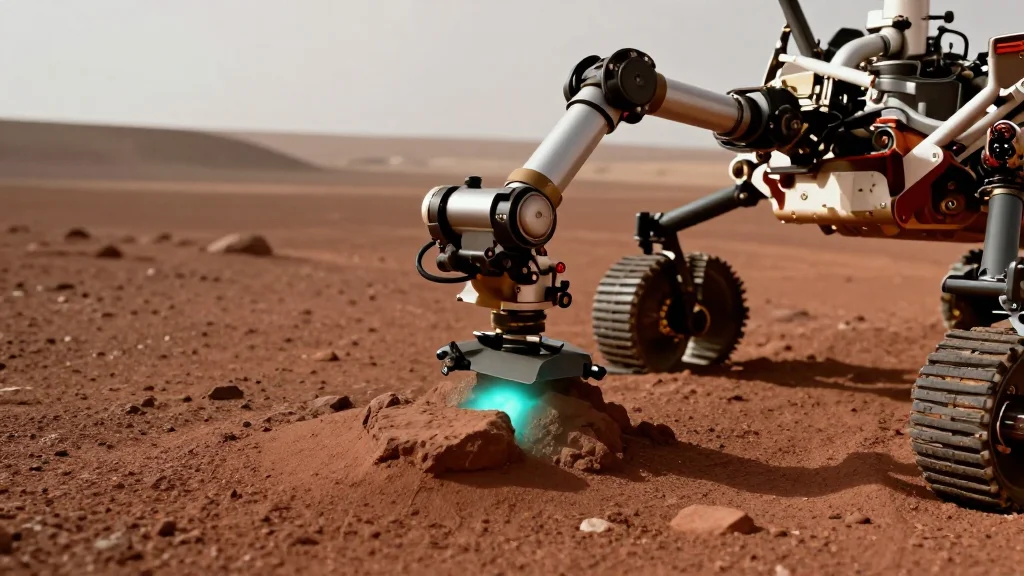
Curiosity Rover Uncovers New Organic Molecules on Mars, Fueling Habitability Debate

Why It Matters
The detection of complex organics on Mars directly informs the long‑standing question of planetary habitability. By confirming that nitrogen‑bearing molecules and meteorite‑derived compounds can survive for billions of years in the Martian subsurface, the Curiosity findings provide concrete evidence that the essential ingredients for life were present and preserved. This strengthens the scientific case for returning Martian samples to Earth, where high‑precision instruments can differentiate between abiotic chemistry and potential biosignatures. At the same time, the looming budget cuts underscore how political decisions can shape the trajectory of space science. A 23% reduction would not only delay the Mars Sample Return program but also signal a retreat from the United States' ambition to lead deep‑space exploration. The tension between groundbreaking scientific discovery and fiscal restraint could set a precedent for future planetary missions, influencing everything from telescope funding to lunar infrastructure projects.
Key Takeaways
- •Curiosity's SAM suite performed the first on‑planet chemistry experiment, detecting a nitrogen‑bearing molecule and benzothiophene.
- •More than 20 distinct organic chemicals were identified in the Glen Torridon region of Gale crater.
- •Amy Williams highlighted the significance of preserved organics for assessing ancient habitability.
- •A proposed 23% NASA budget cut threatens the Mars Sample Return program, according to Victoria Hamilton.
- •The findings bolster arguments for returning Martian rocks to Earth for definitive biosignature analysis.
Pulse Analysis
Curiosity's latest organic haul arrives at a pivotal moment for planetary science. Historically, the rover's discoveries—such as ancient riverbeds and methane spikes—have reshaped our view of Mars as a once‑wet world. The new organics push the narrative further, suggesting that not only water but also the molecular precursors to life were present and stable enough to survive eons. This shifts the scientific focus from merely proving past water to interrogating the chemistry that could have supported microbial ecosystems.
However, the scientific payoff hinges on the ability to conduct high‑resolution isotopic and structural analyses that only Earth‑based labs can provide. The Mars Sample Return mission, slated to launch in the late 2020s, was designed to close that loop. The current funding squeeze, while not quantified in dollar terms in the source material, represents a 23% cut that could delay or down‑scale the program. If the budget reduction proceeds, the community may face a prolonged gap between in‑situ detection and definitive proof, potentially ceding leadership to international partners who maintain robust planetary‑sample pipelines.
Strategically, the Curiosity data could become a rallying point for policymakers. The organic detections are tangible, headline‑worthy results that illustrate the tangible returns on investment in deep‑space missions. Leveraging this narrative could help reverse the proposed cuts, ensuring that the United States retains its edge in the emerging era of planetary exploration and commercial lunar and Martian ventures.
Curiosity rover uncovers new organic molecules on Mars, fueling habitability debate
Comments
Want to join the conversation?
Loading comments...