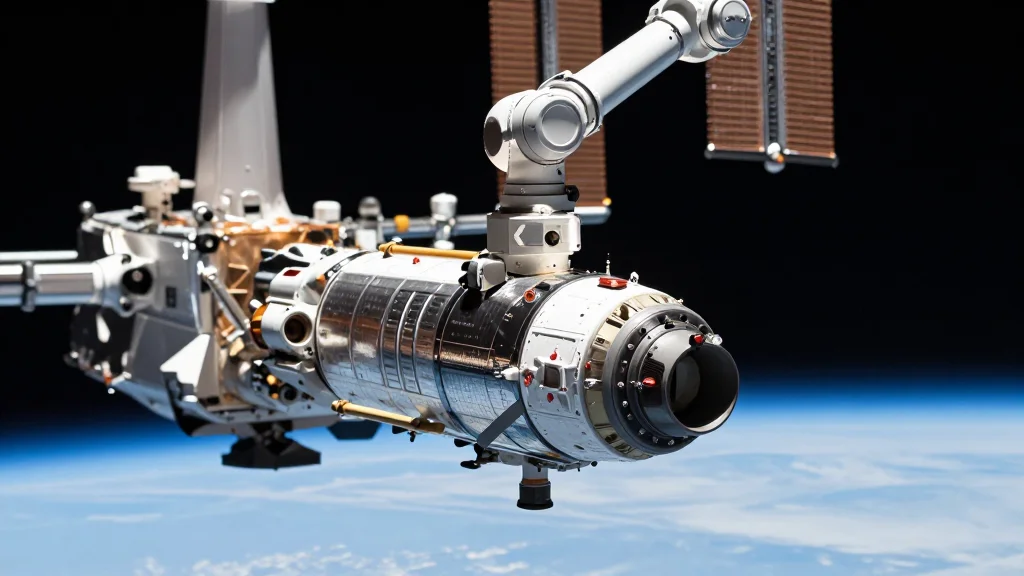
Cygnus Heads to the ISS as SpaceX Keeps up the Pace
Companies Mentioned

Why It Matters
The resupply flight sustains ISS operations while showcasing the continued relevance of multiple commercial partners in low‑Earth‑orbit logistics. It also highlights growing competition and diversification in launch services worldwide.
Key Takeaways
- •Cygnus NG‑24 launches April 8, delivering 11,000 lb to ISS
- •Payload includes Cold Atom Lab upgrade for quantum research
- •Cygnus uses Canadarm2 capture, unlike autonomous Dragon docking
- •Week features launches from US, China, and commercial providers
- •Artemis 2 lunar flyby continues first crewed Moon mission since 1972
Pulse Analysis
The upcoming Cygnus NG‑24 mission underscores the maturation of NASA’s Commercial Resupply Services (CRS) architecture, where multiple private firms share the burden of sustaining the orbiting laboratory. By delivering a diverse cargo manifest—including a Cold Atom Lab upgrade that pushes quantum‑physics experiments into microgravity—Cygnus not only replenishes consumables but also expands the scientific return of the ISS. The reliance on the Canadarm2 for capture reflects a hybrid approach that blends human‑in‑the‑loop operations with automated systems, preserving astronaut involvement while maintaining safety margins.
This week’s launch calendar illustrates an increasingly crowded low‑Earth‑orbit market. SpaceX continues to dominate with frequent Starlink deployments, while Northrop Grumman’s Minotaur IV supports defense‑related payloads. Meanwhile, China’s Long March series and emerging commercial rockets such as Jielong 3 signal a strategic push to capture a slice of the global launch demand. The parallel cadence of U.S. and Chinese missions highlights both competition and the potential for collaborative orbital traffic management, a critical concern as launch frequency climbs.
For the ISS, the steady flow of resupply missions like Cygnus NG‑24 is vital to extending its operational lifespan and enabling cutting‑edge research. The inclusion of biomedical hardware for stem‑cell production and gut‑microbiome studies could accelerate translational medicine breakthroughs. As Artemis 2 continues its historic lunar flyby, the ISS remains a testbed for technologies that will underpin future deep‑space habitats, making each cargo flight a stepping stone toward sustained human presence beyond low Earth orbit.
Cygnus heads to the ISS as SpaceX keeps up the pace
Comments
Want to join the conversation?
Loading comments...