Dark Lunar Craters Could Host Ultrastable Lasers for Moon Navigation
Why It Matters
Ultrastable lunar lasers would give Artemis a reliable navigation and timing backbone while opening a new venue for high‑precision physics experiments beyond Earth.
Key Takeaways
- •Dark polar craters offer 16 K environment for silicon cavities
- •Ultrastable lasers could provide GPS‑like navigation on the Moon
- •Network could enable lunar optical atomic clocks and gravitational‑wave detection
- •Deployment could be demonstrated in LEO within two years, lunar by 2029
Pulse Analysis
The Artemis program’s push toward the lunar south pole faces a navigation paradox: traditional radio‑based systems struggle in permanently shadowed terrain, yet precise positioning is essential for crewed landings and resource extraction. By embedding ultrastable lasers in these craters, NASA can generate a continuous, line‑of‑sight timing signal that mirrors Earth’s GPS architecture but operates at optical frequencies. This approach leverages the Moon’s natural advantages—minimal seismic activity and an almost perfect vacuum—to deliver a signal that is immune to atmospheric distortion and terrestrial interference.
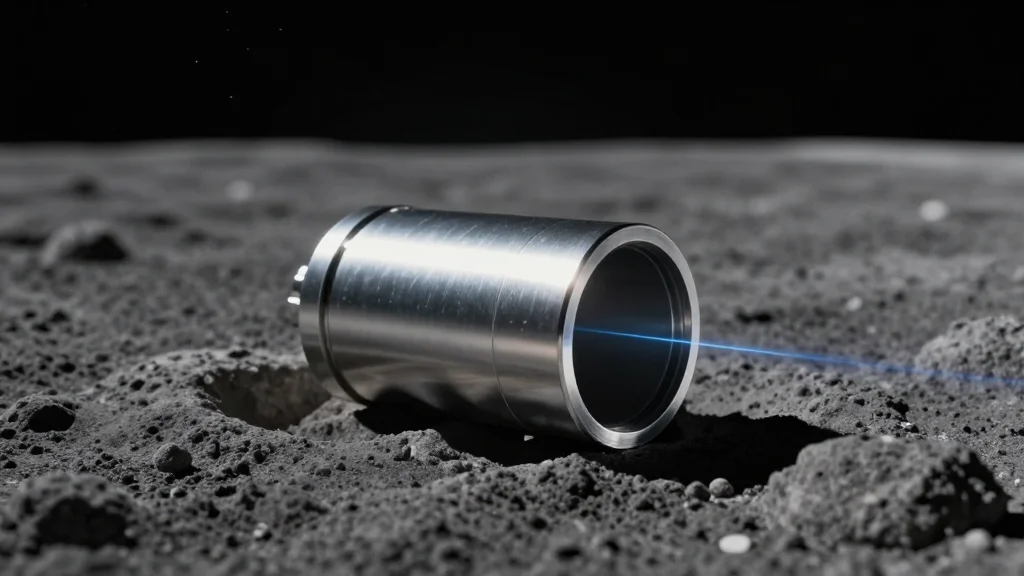
At the heart of the proposal is a silicon optical cavity, a block of crystalline silicon whose dimensions remain invariant at temperatures near 16 K. In such an environment, thermal expansion is essentially eliminated, allowing the cavity’s resonant frequencies to stay fixed within a few parts in 10^‑18. When a commercial laser is locked to these resonances, its output wavelength becomes a near‑perfect frequency reference. Compared with Earth‑bound systems that require bulky cryostats and active vibration isolation, the lunar cavity can rely on passive radiative cooling and the Moon’s low‑gravity environment, dramatically reducing mass, power, and complexity for future missions.
Beyond navigation, a lunar laser network could anchor the first extraterrestrial optical atomic clock, synchronizing timekeeping across the Moon and Earth with unprecedented accuracy. Such a clock would enable high‑resolution ranging experiments capable of detecting minute spacetime ripples—essentially turning the Moon into a giant gravitational‑wave observatory. The timeline outlined by Ye’s team—LEO validation within two years and surface deployment by 2029—aligns with multi‑agency roadmaps, positioning the technology as a cornerstone of long‑term lunar infrastructure and a catalyst for new scientific frontiers.
Dark lunar craters could host ultrastable lasers for moon navigation
Comments
Want to join the conversation?
Loading comments...