DARPA and Northrop Grumman to Launch First US On-Orbit Satellite Servicing Mission This Summer
Companies Mentioned
Why It Matters
On‑orbit servicing can dramatically reduce satellite replacement costs and enhance resilience of U.S. space infrastructure, giving American operators a strategic edge over rivals developing similar capabilities.
Key Takeaways
- •DARPA and Northrop Grumman target summer launch of RSGS mission.
- •Robotic spacecraft will service geosynchronous satellites for inspection, repair, refuel.
- •First U.S. on‑orbit servicing capability could extend satellite lifespans.
- •Flexible design supports both military and commercial satellite customers.
- •Mission positions U.S. to compete with foreign on‑orbit servicing programs.
Pulse Analysis
The RSGS mission reflects a broader shift in space operations from one‑off deployments to sustainable, service‑oriented architectures. By enabling in‑situ maintenance, the United States can keep high‑value geosynchronous assets functional far beyond their original design life, mitigating the risk of orbital congestion and costly replacements. DARPA’s investment underscores a strategic priority: ensuring that critical communications and weather satellites remain operational during geopolitical tensions or unexpected failures, a capability that has traditionally been the domain of ground‑based contingencies.
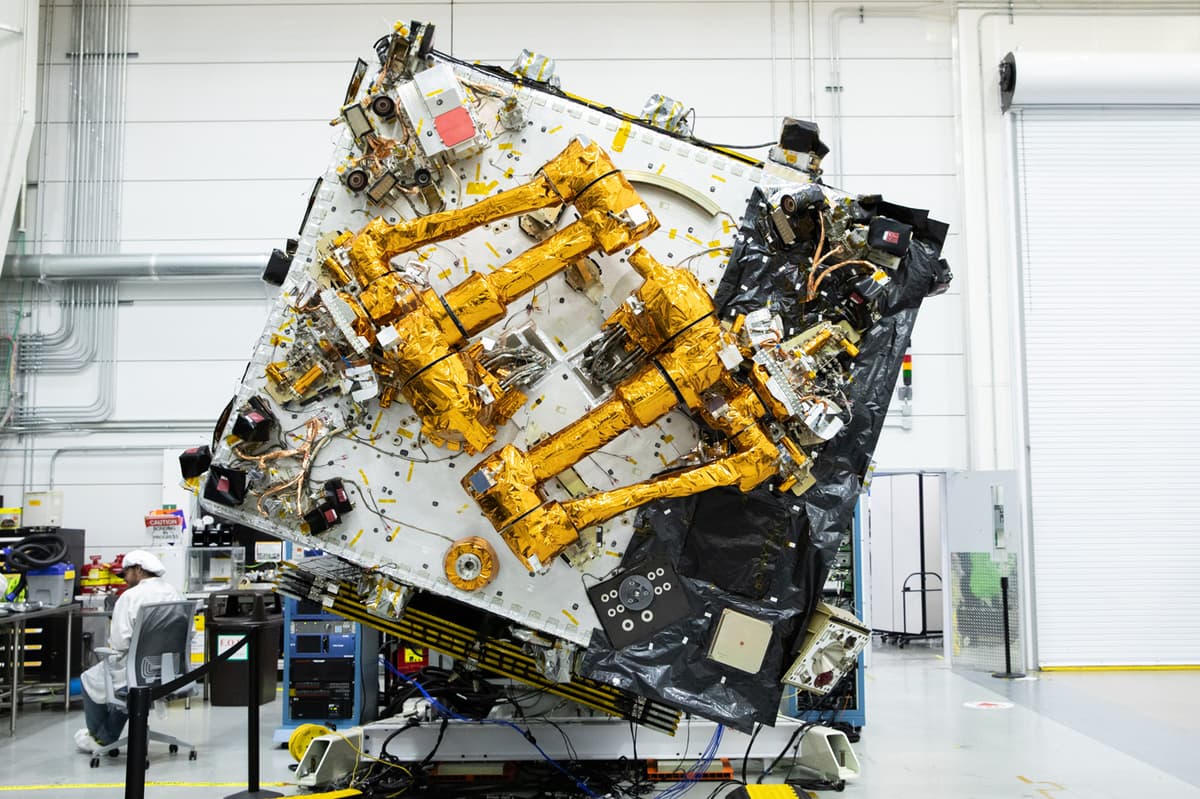
Technically, the RSGS spacecraft leverages advanced robotic manipulators, vision systems and autonomous navigation to interact with satellite components such as fuel valves and electrical connectors. These tools allow the vehicle to conduct tasks that previously required human‑in‑the‑loop missions or were deemed impossible for unmanned platforms. The flexibility to service both defense and commercial payloads opens new revenue streams for satellite operators, who can now plan mid‑life upgrades or refueling without launching replacement buses, thereby improving return on investment and reducing launch demand.
Strategically, the launch positions the U.S. to compete with emerging on‑orbit servicing programs from Europe, Japan and China, where similar capabilities are already in advanced stages of testing. A successful RSGS demonstration could accelerate policy development around space debris mitigation and licensing, fostering a commercial ecosystem for third‑party servicing providers. In the longer term, the technology may evolve into modular servicing stations, supporting larger constellations and enabling rapid response to threats in the high‑value geosynchronous belt.
DARPA and Northrop Grumman to Launch First US On-Orbit Satellite Servicing Mission This Summer
Comments
Want to join the conversation?
Loading comments...