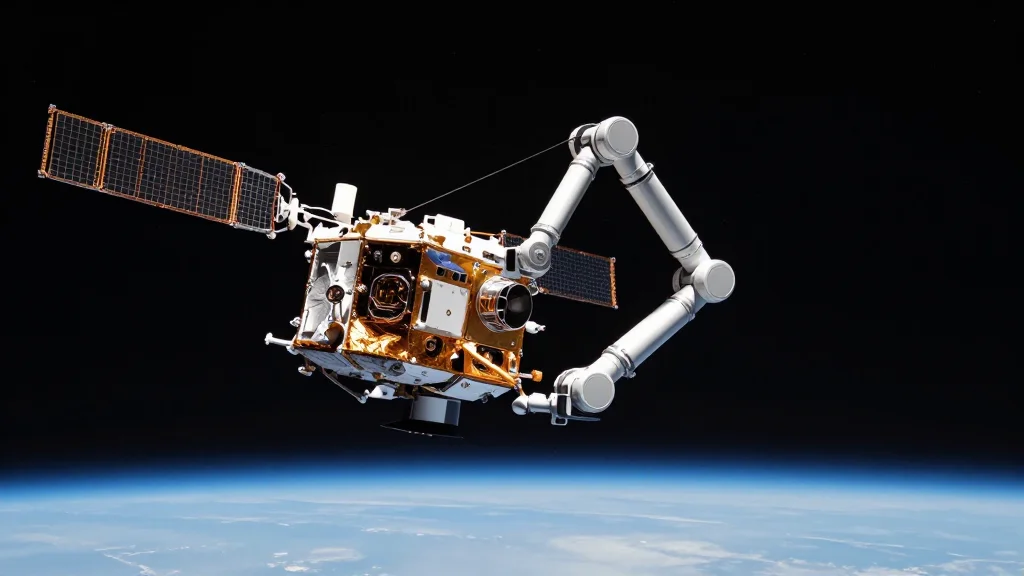
DARPA Readies Robotic Deep‑Space Repair Satellite for 2026 Launch

Companies Mentioned
Northrop Grumman
NOC

Maxar Technologies
Why It Matters
Extending the operational life of GEO satellites addresses two pressing challenges: the high cost of replacing multi‑billion‑dollar assets and the escalating risk of collisions in an increasingly congested orbital environment. By demonstrating autonomous refueling and repair, DARPA not only safeguards national security communications but also creates a template for commercial players to monetize on‑orbit servicing, potentially lowering launch costs and fostering a sustainable space economy. The program also serves as a strategic technology demonstrator for the U.S. defense establishment. Mastery of deep‑space robotic manipulation could translate to future capabilities such as on‑orbit assembly of large structures, debris removal, and even support for lunar or Martian logistics, reinforcing U.S. leadership in space operations.
Key Takeaways
- •DARPA's RSGS demonstrator scheduled for summer 2026 launch
- •Robotic suite designed for refueling, upgrades, inspections, and relocation of GEO satellites
- •10‑month electric‑propulsion transit to geosynchronous orbit
- •Program faced contractor changes and pandemic delays before reaching flight readiness
- •Success could unlock a $10 billion commercial on‑orbit servicing market by 2030
Pulse Analysis
DARPA’s RSGS launch represents a watershed moment for autonomous space logistics, shifting the narrative from speculative concepts to operational reality. Historically, on‑orbit servicing has been limited to low‑Earth‑orbit missions like NASA’s Hubble servicing or the recent Northrop Grumman Mission Extension Vehicle (MEV) dockings. By targeting GEO—a regime 90 times higher than the ISS—DARPA is tackling the most demanding environment for robotic manipulation, where latency, radiation, and thermal extremes are amplified.
The timing aligns with a broader industry push toward reusable and serviceable space assets. Companies such as Astroscale and Maxar are already fielding debris‑removal and satellite‑life‑extension services in LEO. RSGS could act as a catalyst, demonstrating that the same technology can be scaled to GEO, thereby expanding the addressable market. Moreover, the involvement of NASA and the Naval Research Laboratory provides a dual‑use framework that may accelerate policy development around licensing and liability for autonomous servicing.
Looking ahead, the key risk lies in the transition from demonstration to sustained operations. The 10‑month transit and subsequent servicing tasks will generate a wealth of data on robotic precision, power budgeting, and thermal management. If DARPA can validate these parameters, it will likely trigger a wave of private investment, similar to how the early success of SpaceX’s reusable rockets unlocked a new era of commercial launch economics. Conversely, any failure could reinforce skepticism about the feasibility of deep‑space robotics, slowing momentum. Stakeholders should watch the 2026 launch window closely, as its outcome will shape the strategic roadmap for both defense and commercial space infrastructure for the next decade.
DARPA Readies Robotic Deep‑Space Repair Satellite for 2026 Launch
Comments
Want to join the conversation?
Loading comments...