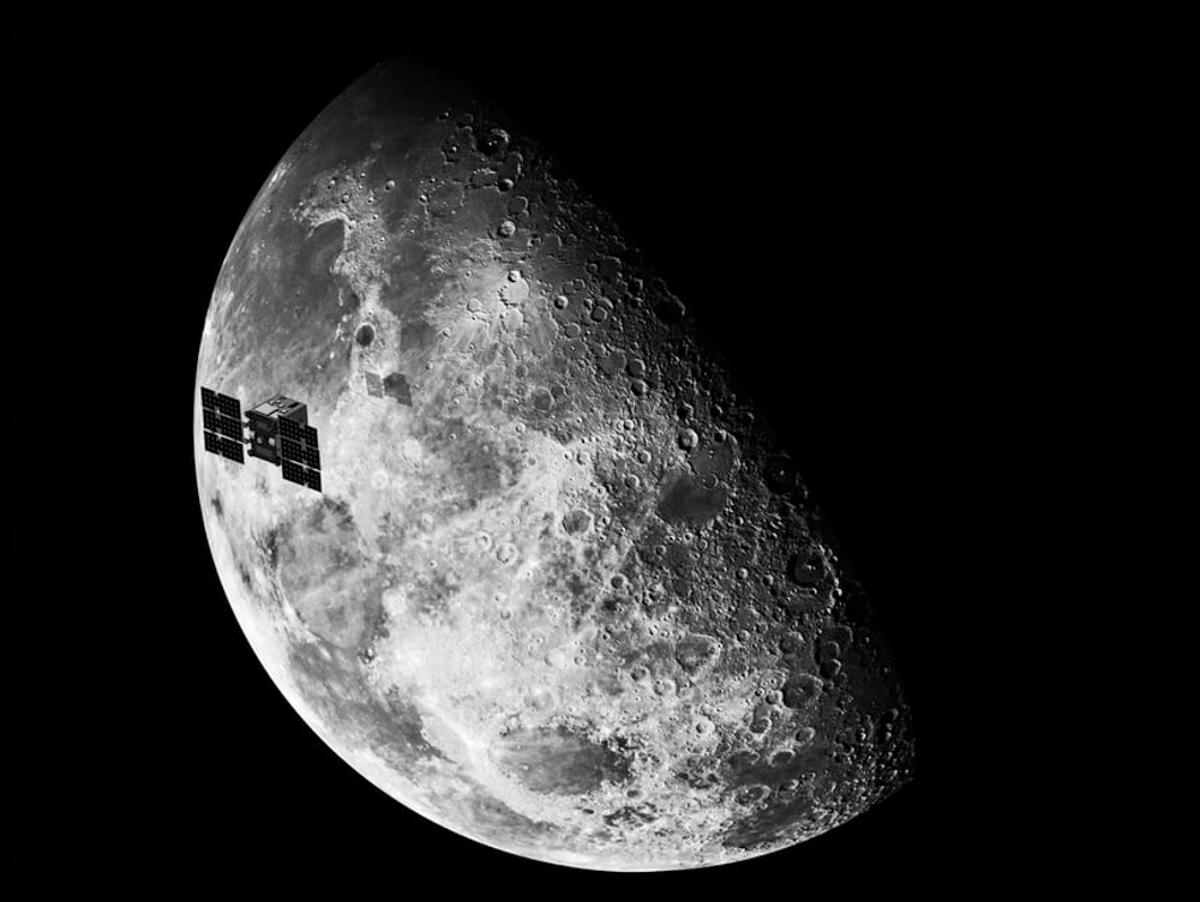
DARPA Selects Three Companies for Lunar Orbiter Studies
Why It Matters
Proving reliable low‑lunar‑orbit operations could unlock water‑ice extraction, strengthening U.S. national security and accelerating the commercial lunar economy.
Key Takeaways
- •DARPA selects Benchmark, Quantum, Revolution for LASSO Phase 1 studies.
- •Mission targets water ice >5% in ultra‑low lunar orbit.
- •Benchmark's Sapphire uses hybrid chemical‑electric propulsion and hazard avoidance.
- •Quantum's Ranger focuses on high maneuverability with hybrid thrusters.
- •Successful low‑orbit tech supports NASA and private lunar resource projects.
Pulse Analysis
The Defense Advanced Research Projects Agency’s LASSO initiative tackles one of spaceflight’s toughest challenges: maintaining a stable, very low orbit around the Moon. Such an orbit maximizes the resolution of remote‑sensing instruments, enabling the detection of water‑ice deposits at concentrations above five percent. Water ice is a linchpin for sustainable lunar operations, providing a source of propellant, life‑support consumables, and radiation shielding. By proving that a small satellite can linger in this environment, DARPA aims to de‑risk a critical capability for both government and private missions.
Benchmark Space Systems, Quantum Space and Revolution Space each bring distinct technical philosophies to the table. Benchmark’s Sapphire concept blends chemical and electric thrusters, offering the thrust needed for orbit‑raising maneuvers while preserving fuel efficiency for prolonged operations. Its integrated terrain‑navigation and hazard‑avoidance suite promises autonomous decision‑making in the Moon’s rugged landscape. Quantum’s Ranger leverages hybrid thrusters acquired from Phase Four, emphasizing rapid, precise attitude control to hop between observation points. Although Revolution Space has kept its design under wraps, its inclusion signals DARPA’s intent to foster a competitive ecosystem that could yield multiple viable low‑orbit architectures.
Beyond the immediate scientific payoff, the LASSO program has strategic implications. Data on ice distribution will inform NASA’s Artemis lander sites and guide private firms planning in‑situ resource utilization. Moreover, mastering low‑orbit maneuverability enhances U.S. presence in the cislunar domain, a priority for national security as more nations and commercial actors eye lunar opportunities. If Phase 1 succeeds, DARPA will move to detailed design and eventual hardware construction, potentially delivering a flight‑ready lunar orbiter that could catalyze a new era of lunar commerce and exploration.
DARPA selects three companies for lunar orbiter studies
Comments
Want to join the conversation?
Loading comments...