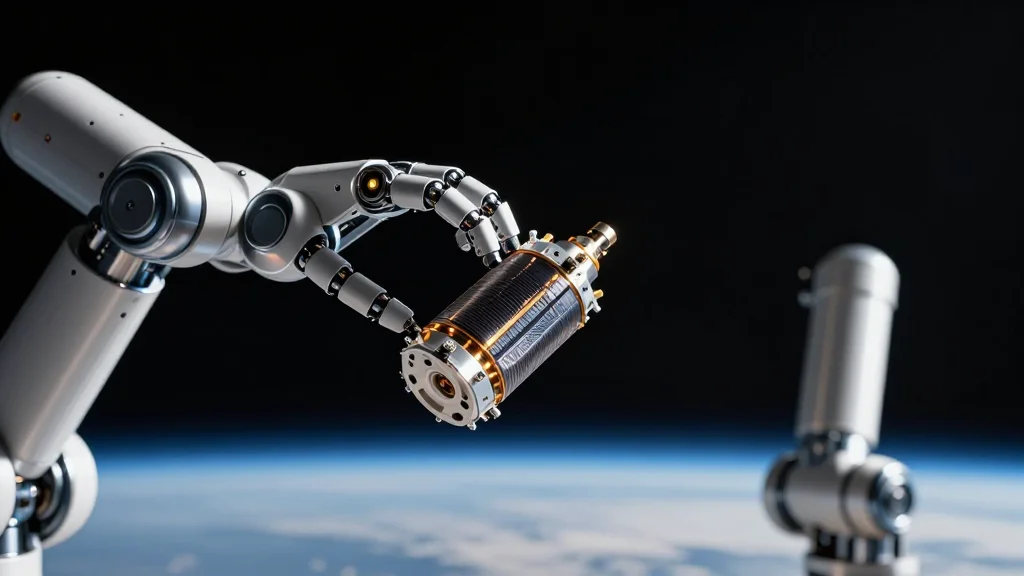
DARPA's Robotic Servicing Satellite Set for 2026 Launch

Companies Mentioned
Northrop Grumman
NOC

Maxar Technologies
Why It Matters
Extending the operational life of GEO satellites directly addresses two pressing challenges: the high cost of launching replacement assets and the escalating threat of space debris. By enabling refueling and repairs at 22,236 miles altitude, DARPA’s RSGS could lower the total cost of ownership for communications, weather, and intelligence satellites, making space more sustainable and affordable. Beyond economics, the technology bolsters national security. A robotic servicer that can intervene in real time reduces the vulnerability of critical defense satellites to fuel depletion or minor malfunctions, ensuring continuous coverage for missile warning, reconnaissance, and secure communications. The success of RSGS may also catalyze commercial interest, prompting private firms to develop competing servicing platforms and accelerating the emergence of an on‑orbit logistics market.
Key Takeaways
- •DARPA's RSGS demonstrator slated for summer 2026 launch, with GEO operations beginning in 2027.
- •Robotic suite can perform refueling, inspections, anomaly resolution, and satellite relocation in GEO.
- •Prime contractor is SpaceLogistics (Northrop Grumman subsidiary) after Maxar exited in 2019.
- •Program partners include NASA and the U.S. Naval Research Laboratory.
- •Successful demo could spawn a multi‑billion‑dollar on‑orbit servicing market and enhance defense resilience.
Pulse Analysis
DARPA’s RSGS marks the first serious attempt to bring robotic servicing to the GEO belt, a region historically treated as a one‑way street for satellites. The program leverages lessons from low‑Earth‑orbit servicing missions, such as Northrop Grumman’s Mission Extension Vehicle, but pushes the envelope with a ten‑month electric‑propulsion transfer and a suite of dexterous manipulators capable of fine‑grained tasks at 35,786 km. Historically, GEO satellites have been replaced rather than repaired due to the prohibitive cost of launch and the difficulty of reaching that altitude. By proving that a single servicer can extend the life of multiple assets, DARPA could shift the industry from a replace‑and‑discard model to a service‑and‑reuse paradigm.
The timing aligns with a broader policy push to secure the space domain. As the United States confronts a crowded GEO environment—home to over 400 operational communications satellites—the ability to mitigate debris and preserve orbital slots becomes a strategic imperative. RSGS also offers a template for future defense‑focused missions, where rapid on‑orbit intervention could be the difference between mission success and failure in contested scenarios. If the demonstrator meets its performance goals, we can expect a cascade of follow‑on contracts, both from the Department of Defense and commercial operators eager to protect their high‑value assets.
Looking forward, the next frontier will be autonomy. While RSGS relies on ground‑controlled commands, integrating AI‑driven decision‑making could reduce latency and enable real‑time response to unexpected anomalies. Such capabilities would not only improve efficiency but also open the door to servicing missions beyond GEO, including lunar gateways and deep‑space probes. DARPA’s investment thus serves as a catalyst, nudging the entire space ecosystem toward a more resilient, service‑oriented future.
DARPA's Robotic Servicing Satellite Set for 2026 Launch
Comments
Want to join the conversation?
Loading comments...