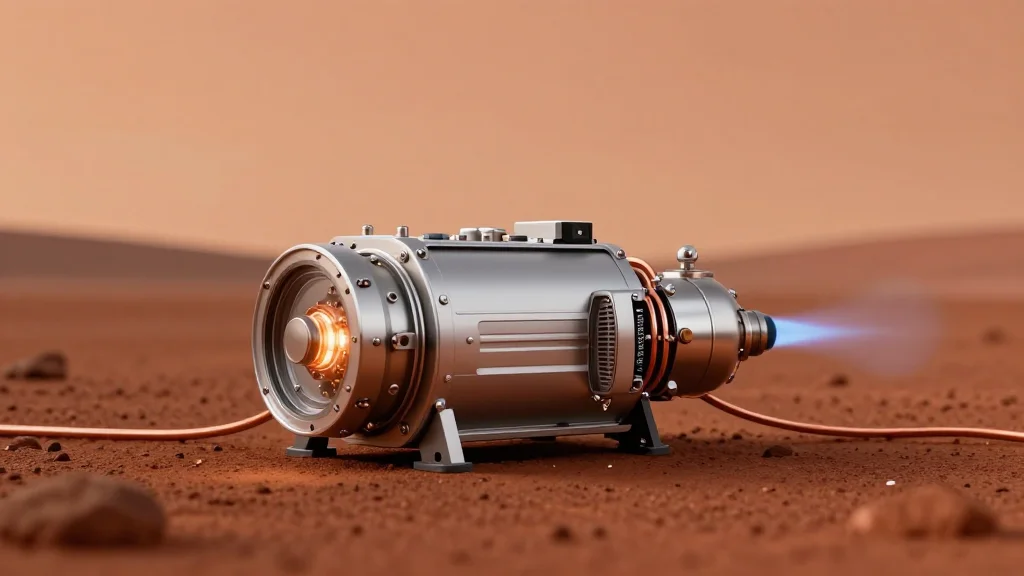
Designing in Situ Power Stations for Future Mars Missions
Why It Matters
By generating electricity and fuel from local resources, the concept could slash launch mass and mission costs, making sustainable human presence on Mars more feasible. It also provides a blueprint for integrating multiple ISRU technologies into a single power architecture.
Key Takeaways
- •Chinese researchers propose compressing Martian CO₂ for electricity
- •Micro‑nuclear reactor paired with lithium‑Mars‑gas batteries offers stable power
- •Sabatier reactor could convert waste into methane fuel and heat
- •ISRU could cut Earth‑to‑Mars logistics costs dramatically
Pulse Analysis
In‑situ resource utilization (ISRU) has moved from theoretical discussion to concrete engineering proposals as agencies and private firms eye crewed Mars missions in the 2030s. The latest contribution comes from a Chinese team whose paper in National Science Review outlines a multimodal power station that harvests the planet’s CO₂‑rich atmosphere. By capturing and compressing the thin air—using mechanical, cryogenic, or temperature‑adsorption methods—the system creates a denser gas feedstock suitable for downstream energy conversion, addressing one of the most persistent challenges of off‑world power generation.
The design couples the compressed atmosphere with a compact micro‑nuclear reactor, delivering continuous heat that drives a Sabatier reactor and charges novel lithium‑Mars‑gas batteries. The Sabatier unit, an upscaled version of the technology already used on the International Space Station, would transform CO₂ and nuclear by‑products into methane, a viable propellant and heating source. Meanwhile, the specialized batteries store excess electricity, smoothing out the intermittent output typical of nuclear‑thermal cycles. Although each component is still in early testing—mechanical compressors lack long‑term data and cryogenic traps are experimental—the integrated architecture promises a self‑sustaining energy loop that could power habitats, life‑support systems, and scientific payloads.
If realized, this power station could dramatically reduce the mass of supplies launched from Earth, lowering mission costs and increasing payload flexibility. The approach also aligns with broader industry trends toward modular, scalable ISRU solutions that can be adapted to varying mission profiles. Future work will focus on prototype validation, long‑duration performance testing, and integration with other Mars infrastructure such as water‑ice extraction and 3D‑printed construction. Successful demonstration would mark a pivotal step toward a truly autonomous human outpost on the Red Planet.
Designing in situ power stations for future Mars missions
Comments
Want to join the conversation?
Loading comments...