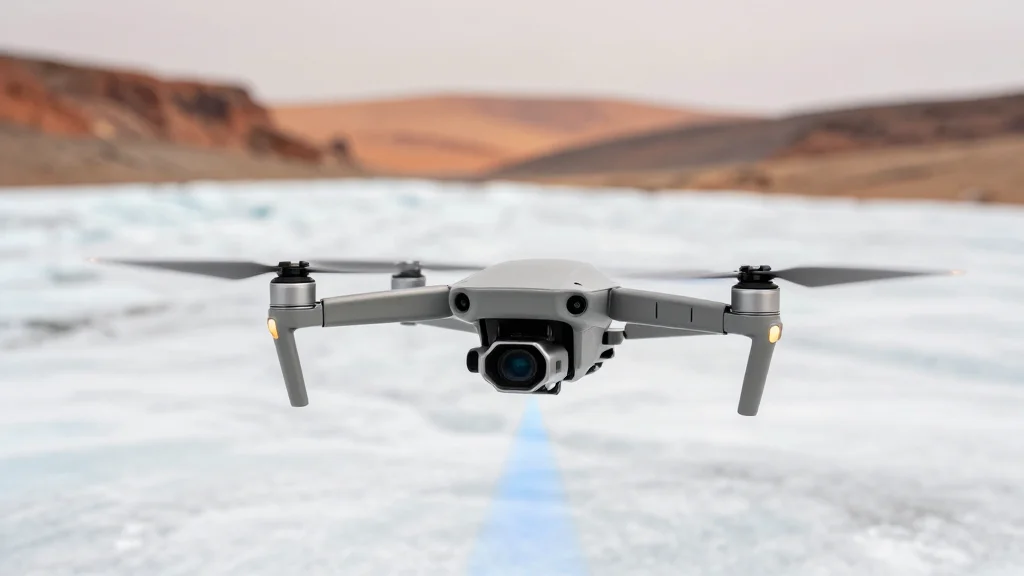
Drone Radar on Earth Guides the Search for Water on Mars
Why It Matters
Accurate radar analogs accelerate the identification of subsurface water on Mars, reducing mission risk and guiding future human exploration.
Key Takeaways
- •Drone radar mapped hidden glaciers with centimeter‑scale precision
- •Earth analog data calibrates Martian subsurface radar readings
- •Ice thickness insights improve models of planetary water cycles
- •NASA can prioritize landing zones with confirmed underground ice
Pulse Analysis
The University of Arizona’s recent field campaign demonstrates how drone‑borne ground‑penetrating radar can uncover hidden glacial deposits in some of Earth’s most inaccessible terrains. By flying low‑altitude missions over permafrost‑laden valleys, researchers captured three‑dimensional reflections that differentiate between rock, soil, and ice. This level of detail surpasses traditional satellite radar, offering a portable, cost‑effective tool for geoscientists studying cryospheric dynamics and climate change.
Beyond Earth, the technology holds strategic value for planetary science. Mars missions rely on orbital radar to infer subsurface structures, yet distinguishing ice from mineral deposits remains challenging. The Arizona team’s analog dataset provides a ground‑truth library of radar signatures, enabling scientists to refine algorithms that parse Martian echo patterns. When applied to data from orbiters like Mars Reconnaissance Orbiter, these calibrated models can pinpoint locations where water ice is most likely preserved beneath the regolith, informing both robotic and crewed mission planners.
The broader implication is a faster, more reliable pathway to locating extraterrestrial water resources, a critical factor for in‑situ resource utilization and long‑duration habitation. By bridging terrestrial fieldwork with interplanetary exploration, drone radar technology not only advances Earth science but also accelerates the timeline for sustainable human presence on Mars. Stakeholders across aerospace, energy, and environmental sectors should watch these developments closely as they reshape the economics of space exploration.
Drone Radar on Earth Guides the Search for Water on Mars
Comments
Want to join the conversation?
Loading comments...