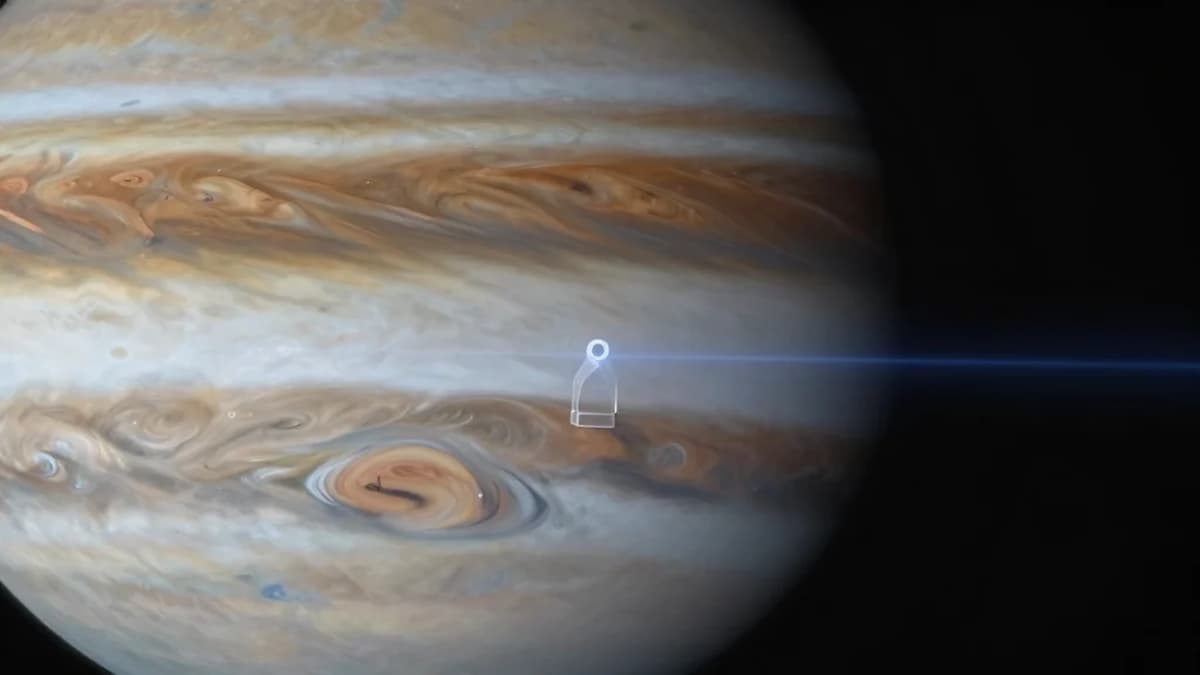
Dumb Science: Researchers Claim Jupiter Is 0.0028% Thinner than Previously Measured
•February 3, 2026
0
Why It Matters
Even a fractional adjustment improves models of Jupiter’s interior and atmospheric dynamics, aiding future mission planning and comparative planetology.
Key Takeaways
- •Jupiter's equatorial radius reduced by 4 km.
- •Polar flattening decreased by 12 km.
- •Revision changes radius by 0.0028%.
- •Precise shape informs interior dynamics models.
- •Juno data refines gas‑giant atmospheric studies.
Pulse Analysis
Accurate planetary dimensions are foundational to astrophysics, influencing everything from gravitational calculations to interior composition models. Jupiter, the solar system’s largest gas giant, has long served as a benchmark for giant‑planet theory. By tightening the margin of error on its radius and flattening, scientists can better calibrate equations of state that describe how hydrogen and helium behave under extreme pressures, sharpening our understanding of not only Jupiter but also exoplanets with similar make‑ups.
The Juno orbiter, equipped with a suite of radio‑science and gravity‑mapping instruments, provided the high‑resolution data that enabled this refinement. Researchers analyzed subtle variations in the spacecraft’s trajectory and radio signal timing to infer minute differences in the planet’s shape. This methodology surpasses earlier Earth‑based observations and highlights how long‑duration orbital missions can yield incremental yet critical insights, turning what seems like a negligible 4‑km adjustment into a meaningful scientific advancement.
For industry and space agencies, the updated measurements have practical implications. Precise radius and flattening values improve navigation models for future probes, reduce uncertainties in flyby trajectories, and inform the design of instruments that must operate within Jupiter’s intense radiation belts. Moreover, the findings feed into broader comparative studies of gas giants, supporting more accurate simulations of atmospheric dynamics and magnetic field generation, which are essential for both academic research and commercial ventures exploring the outer solar system.
Dumb science: Researchers claim Jupiter is 0.0028% thinner than previously measured
0
Comments
Want to join the conversation?
Loading comments...