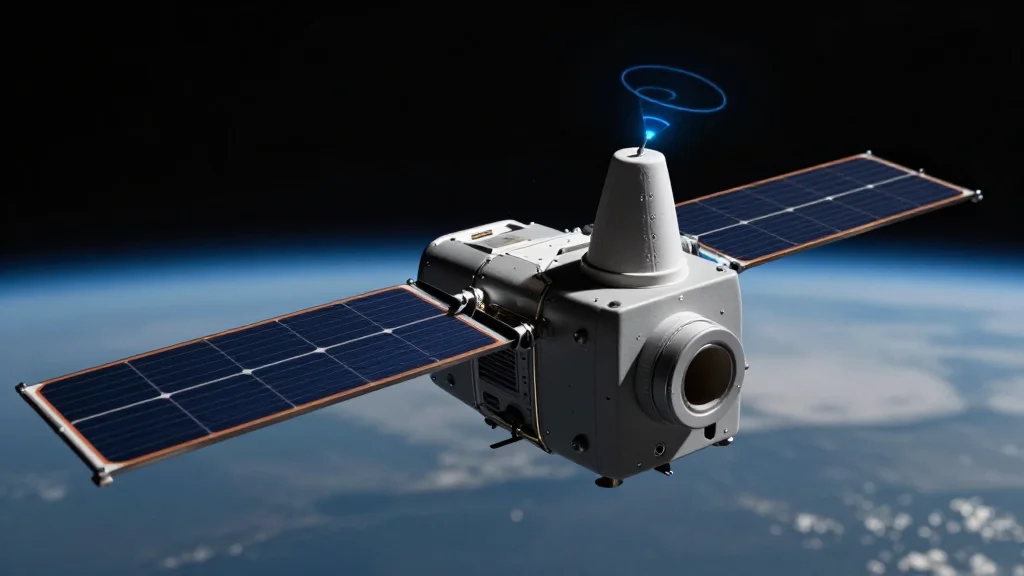
EnduroSat and Shield Space Strike European Partnership for Defense Missions
Companies Mentioned
Why It Matters
The collaboration shortens the timeline and reduces cost for sovereign European defense capabilities, giving NATO allies faster access to on‑orbit counter‑threat assets. It also signals a shift toward autonomous, drone‑like space operations that could reshape military strategy.
Key Takeaways
- •Partnership enables European defense missions within nine months.
- •Broadsword will test autonomous rendezvous and proximity operations in 2027.
- •Project Nexus will use 200‑500 kg cubesats as orbital interceptor motherships.
- •Combined services aim to cut costs versus traditional defense satellite providers.
- •Shield Space’s autonomy mirrors rapid drone warfare seen in Ukraine.
Pulse Analysis
The war in Ukraine has underscored how quickly unmanned systems can alter the battlefield, prompting European defense planners to look beyond traditional launch timelines. Governments across the EU are now prioritizing sovereign space capabilities that can be fielded on demand, rather than relying on long‑lead‑time programs run by legacy contractors. In this climate, EnduroSat—a Bulgarian end‑to‑end satellite services firm—and Shield Space, a UK developer of autonomous guidance modules, announced a joint venture aimed at delivering “counter‑threat” missions in under a year.
The partnership leverages Shield Space’s autonomous guidance and effectors with EnduroSat’s fixed‑cost, software‑flexible satellite bus, promising a nine‑month turnaround from contract to orbit. Their inaugural Broadsword mission, slated for the second quarter of 2027, will perform a full rendezvous and proximity‑operations (RPO) sequence using an autonomous chaser against a co‑deployed target, effectively proving the end‑to‑end workflow. Following that, the companies will roll out Project Nexus, a mothership‑based architecture built around 200‑500 kg cubesats that can launch, command and support multiple interceptor drones in low Earth orbit.
If successful, the model could force established defense contractors to accelerate their own development cycles and re‑price services, as the EnduroSat‑Shield offering promises lower cost per kilogram and reduced operational overhead. European ministries may view the solution as a path to maintain strategic autonomy without dependence on U.S. or Russian launch assets, aligning with broader EU initiatives on space security. Analysts also expect the autonomous RPO capability to spawn a new market segment for “space‑based interceptors,” potentially attracting venture capital and further government funding. The ripple effect may extend to commercial constellations seeking rapid on‑orbit servicing.
EnduroSat and Shield Space Strike European Partnership for Defense Missions
Comments
Want to join the conversation?
Loading comments...