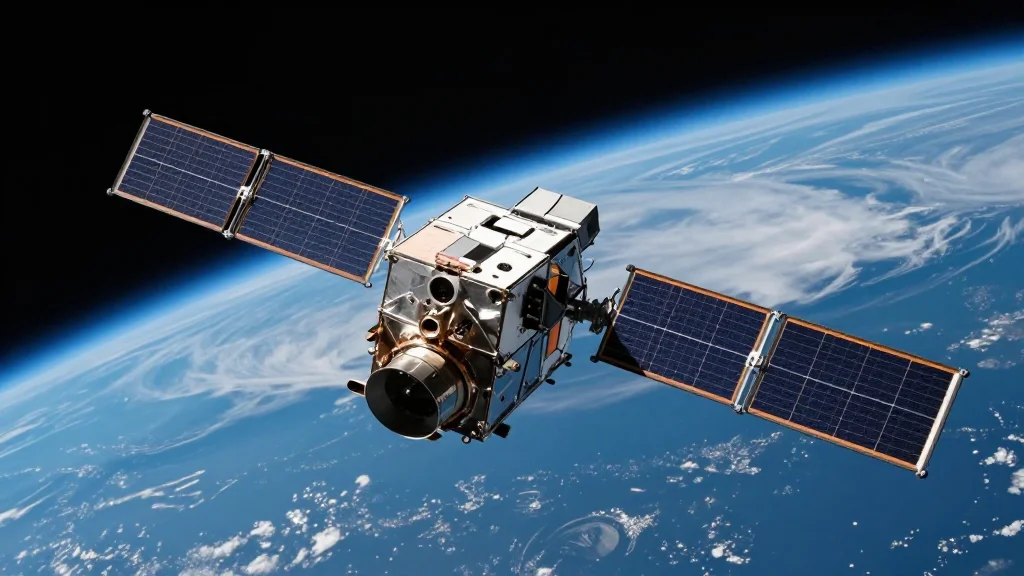
ESA Selects Two New Scout-Class Missions
Why It Matters
Fast, low‑budget satellites like Hibidis and SOVA‑S can deliver critical environmental data sooner, enhancing climate models and biodiversity monitoring while demonstrating a cost‑effective path for future Earth science missions.
Key Takeaways
- •ESA selects Hibidis and SOVA‑S for Earth observation
- •Missions target biodiversity health and atmospheric gravity waves
- •Scout-class budget capped at €35 million (~$38 million) with three‑year launch window
- •Both will likely launch via rideshare from Vandenberg into sun‑synchronous orbit
- •Scout missions showcase rapid, low‑cost innovation for climate science
Pulse Analysis
ESA’s decision to fund Hibidis and SOVA‑S underscores a strategic shift toward nimble, budget‑constrained satellites that can still produce high‑impact science. The scout‑class framework, part of the agency’s FutureEO initiative, deliberately limits development time to three years and caps spending at roughly $38 million per mission. This model contrasts with traditional flagship programs, allowing ESA to respond quickly to emerging scientific questions and to experiment with novel technologies such as the SPARK electric propulsion system and compact hyperspectral sensors.
Hibidis will employ a hyper‑spectral payload to peer into forest understories, delivering unprecedented data on species composition, stress indicators, and ecosystem health across tropical and temperate biomes. Meanwhile, SOVA‑S focuses on short‑wave infrared imaging of atmospheric gravity waves—rippling patterns that transport energy from the lower atmosphere upward. By capturing these phenomena with higher temporal resolution, SOVA‑S promises to refine weather forecasting models and improve our understanding of climate dynamics. Both missions leverage the Empyreum small‑sat bus, a versatile platform that reduces mass and cost while supporting diverse payloads.
The broader impact extends beyond scientific insight. Rapid rideshare launches from Vandenberg’s polar range will place the satellites into sun‑synchronous orbits, ensuring consistent lighting for global coverage. This approach demonstrates how public agencies can partner with commercial launch providers to achieve cost efficiencies. As climate urgency intensifies, the success of Hibidis and SOVA‑S could inspire similar low‑cost, high‑frequency missions worldwide, reshaping the economics of Earth observation and accelerating data‑driven policy decisions.
ESA selects two new scout-class missions
Comments
Want to join the conversation?
Loading comments...