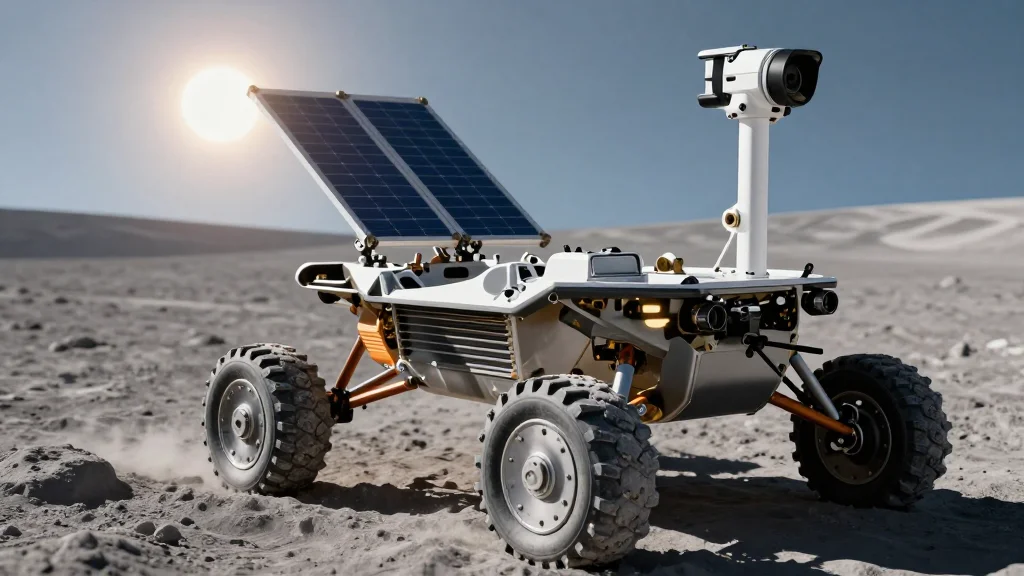
ESA Selects Venturi Space for a Study on Future Lunar Rover Technologies
Why It Matters
The partnership fast‑tracks European lunar capability by maturing critical rover subsystems, reducing risk for upcoming crewed and cargo missions. It also showcases how private‑industry innovation aligns with ESA’s strategic roadmap.
Key Takeaways
- •ESA contracts Venturi Space for lunar rover technology study
- •Hyperdeformable wheels and high‑energy batteries to be tested
- •LUNA facility provides lunar‑analogue environment for validation
- •Study targets heavy rovers up to several tonnes
- •Egress system testing addresses critical lander‑rover deployment
Pulse Analysis
Europe’s renewed focus on lunar exploration hinges on reliable surface mobility, and ESA’s selection of Venturi Space reflects a strategic push to secure that capability. By embedding the study within the LUNA analogue facility, ESA leverages a controlled environment that mimics the Moon’s vacuum, dust, and extreme temperature swings. This approach enables rapid iteration and risk mitigation, essential for meeting the agency’s aggressive timeline for crewed landings and sustained surface operations.
Venturi’s MONA LUNA rover serves as a versatile testbed for several breakthrough technologies. Hyper‑deformable wheels promise superior traction on regolith, while the high‑energy battery suite addresses the challenge of powering rovers through the 14‑day lunar night. An advanced suspension system and a novel egress mechanism—critical for transitioning from lander to surface—are also under rigorous evaluation. Together, these subsystems aim to support rovers weighing multiple tonnes, a scale required for future logistics hubs and habitat construction.
The collaboration signals a broader shift toward public‑private partnerships in the space sector, positioning Europe to compete with emerging lunar initiatives worldwide. Successful validation will feed directly into ESA’s lunar exploration roadmap, informing design requirements for upcoming missions such as the Argonaut lander. Moreover, the technology maturation pathway reduces development costs and timelines for downstream commercial operators, fostering a robust European lunar ecosystem that can sustain long‑term scientific and economic activities on the Moon.
ESA selects Venturi Space for a study on future lunar rover technologies
Comments
Want to join the conversation?
Loading comments...