Companies Mentioned

Why It Matters
Accelerating Europe’s space funding and streamlining regulations are essential to maintain competitiveness, safeguard security, and capture emerging market opportunities against better‑funded global rivals.
Key Takeaways
- •ESA secured record 2025 funding, yet trails US, China
- •Director General calls for doubled European space investment
- •EU Space Act aims to halve contract signing time
- •Resilience from Space will test shared infrastructure model
- •Push for rapid satellite mass‑production and industry transformation
Pulse Analysis
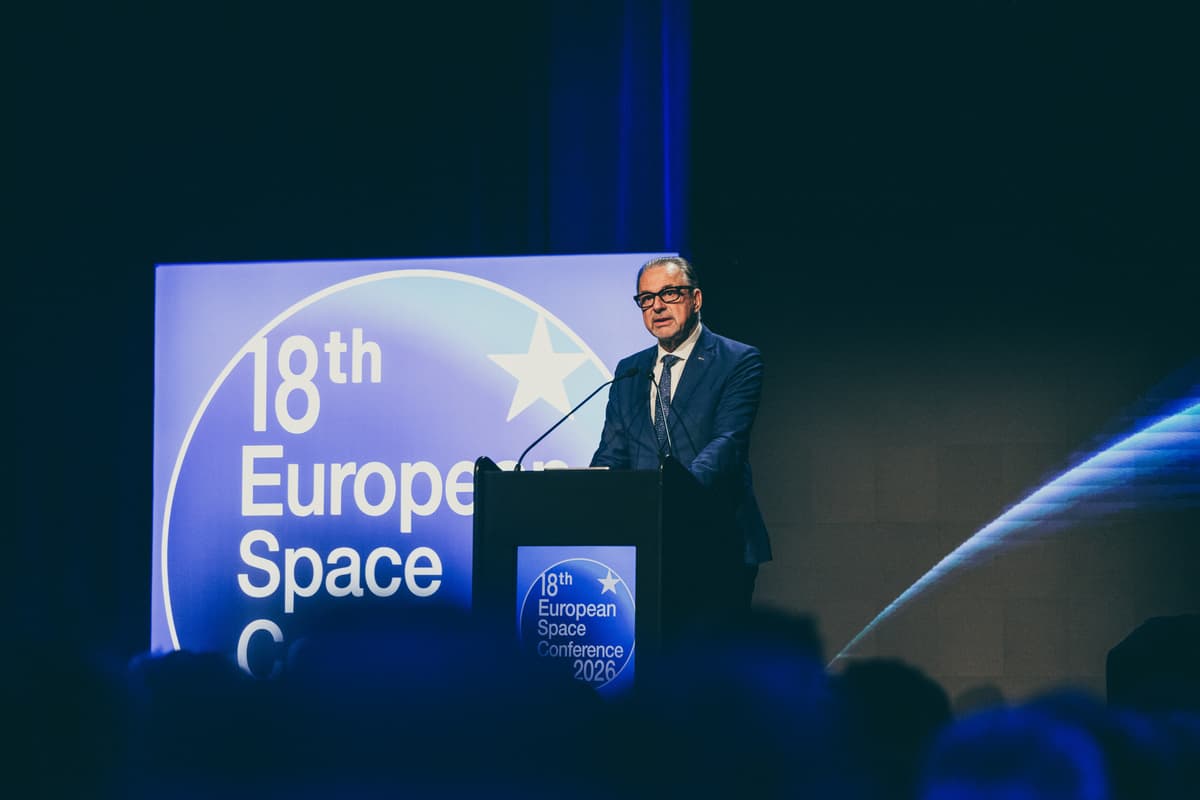
The European Space Agency closed 2025 with its strongest budgetary commitments on record, yet the aggregate European space purse remains a fraction of the United States and China’s allocations. This funding gap threatens Europe’s ability to lead in emerging domains such as low‑Earth‑orbit constellations, lunar exploration, and defense‑grade navigation. Josef Aschbacher’s keynote in Brussels underscored that past successes cannot substitute for sustained capital, urging member states to treat space as a strategic asset comparable to national security. Without a decisive boost, Europe risks ceding market share to better‑funded rivals.
To bridge the disparity, the ESA director highlighted two policy levers: the forthcoming EU Space Act and the Resilience from Space (ERS) framework. The Space Act is designed to slash bureaucratic lag, already cutting contract‑to‑signature cycles by 50 percent, and promises further automation of procurement processes. ERS, meanwhile, proposes a hybrid model where sovereign constellations share ground infrastructure, reducing duplication and fostering collaborative research. Together, these initiatives aim to unlock the targeted funding level of roughly one‑third U.S. spending—effectively doubling current European contributions.
The industry response is already taking shape. Private firms across the continent have expanded satellite‑manufacturing lines, positioning themselves to deliver market‑leading constellations once financing materializes. Faster industrialization, combined with streamlined regulations, could accelerate the rollout of broadband, Earth‑observation, and defense payloads, reinforcing Europe’s economic resilience and strategic autonomy. Aschbacher’s call for a “quantum leap” in innovation signals that future contracts will favor firms capable of rapid, high‑volume production, making the next few years pivotal for Europe’s space competitiveness.
ESA Urges Europe to Keep Up the Momentum in Brussels
0
Comments
Want to join the conversation?
Loading comments...