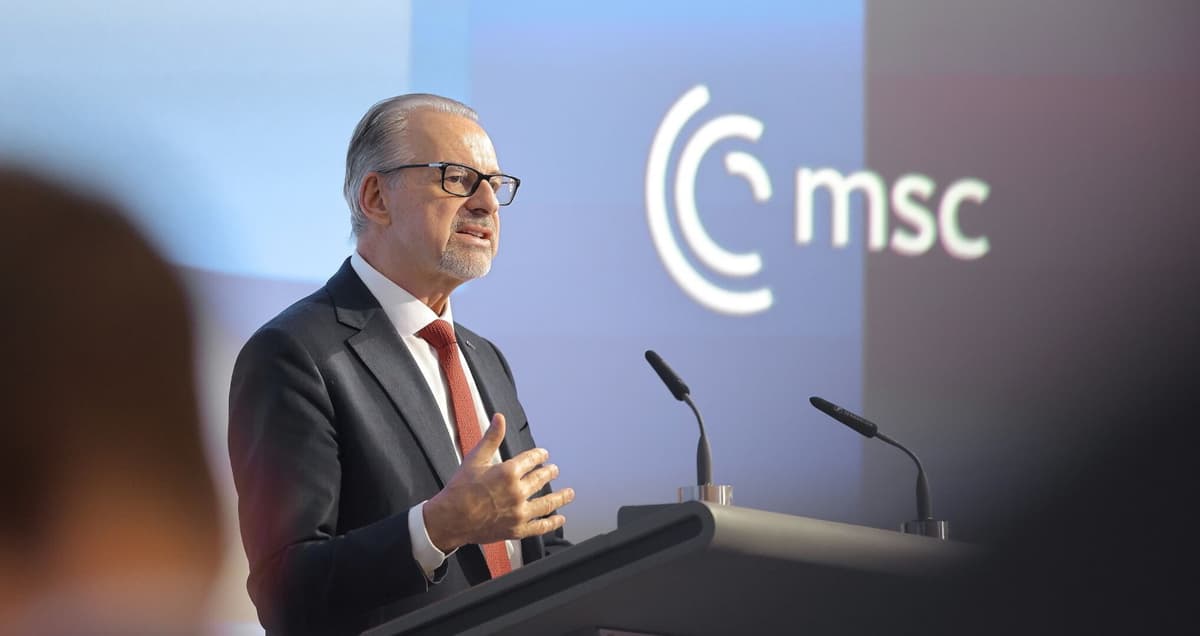
ESA Will Engage Global Leaders at the Munich Security Conference 2026
•February 11, 2026
0
Why It Matters
ESA’s presence signals that space is now a core pillar of European security policy, influencing funding, regulation and cross‑border cooperation. It underscores the continent’s push for strategic autonomy amid rising geopolitical tensions.
Key Takeaways
- •ESA joins MSC 2026 to discuss space security
- •Director General Aschbacher highlights European resilience from space
- •ESA's Strategy 2040 and ERS initiative drive autonomy
- •Over 1,000 leaders attend MSC, focusing on lunar security
- •Space innovation reshapes Europe’s strategic competitiveness
Pulse Analysis
The Munich Security Conference has evolved from a diplomatic gathering into a premier platform where security, technology and policy intersect. ESA’s decision to send its Director General reflects a broader consensus that space assets—satellites, navigation, and Earth observation—are integral to national defense and crisis response. By positioning space at the heart of MSC discussions, Europe signals its intent to treat orbital capabilities as critical infrastructure, comparable to cyber and energy sectors.
Within ESA, the European Resilience from Space (ERS) initiative and the ambitious Strategy 2040 roadmap provide the strategic scaffolding for this shift. ERS focuses on hardening satellite constellations, ensuring data continuity, and fostering rapid launch capabilities, while Strategy 2040 outlines a vision for a self‑sufficient European space industry. Together they aim to reduce reliance on non‑European suppliers, protect supply chains, and nurture home‑grown innovation, thereby strengthening the EU’s strategic autonomy in a contested geopolitical environment.
For industry and policymakers, ESA’s MSC participation offers a clear signal: investment, regulation and collaboration will increasingly align with security objectives. Companies developing reusable launchers, lunar exploration technologies, and AI‑driven analytics can expect heightened demand from defense budgets. Simultaneously, governments may craft new export controls and joint research programs to safeguard critical space assets. The convergence of security and space at MSC thus sets the stage for a new era of European competitiveness and resilience in the orbital domain.
ESA will engage global leaders at the Munich Security Conference 2026
0
Comments
Want to join the conversation?
Loading comments...