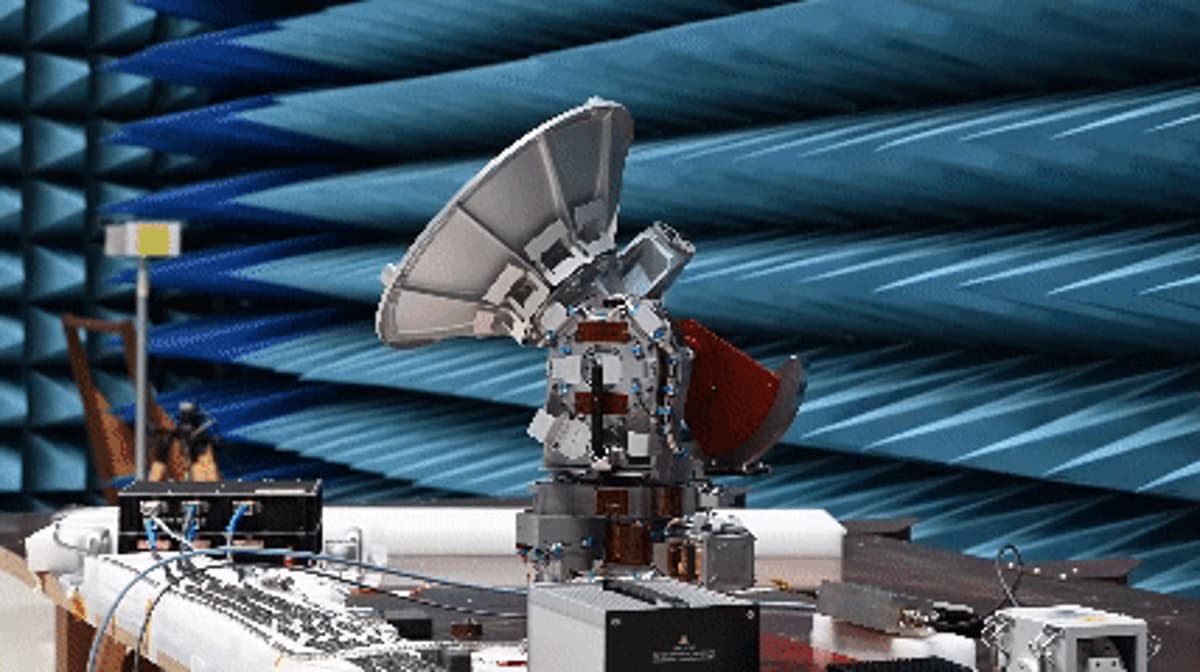
ESA’s Galileo Antennas Will Reorient Themselves 12 Million Times: Here’s How They Are Tested
Companies Mentioned
Why It Matters
The new inter‑satellite links eliminate dependence on ground stations, enhancing Galileo’s resilience, timing precision, and service continuity for global navigation users.
Key Takeaways
- •Antennas rotate every 40 seconds, totaling ~12 million reorientations over 15 years
- •Thales Alenia Space completed 15 million rotations in a seven‑month endurance test
- •Inter‑satellite links will enable data relay without ground station visibility
- •New links boost Galileo’s timing accuracy and resilience against signal loss
Pulse Analysis
Europe’s Galileo system is entering a new era with the rollout of inter‑satellite links that allow satellites to talk directly to each other. By removing the need for a ground‑visible pass, these links can relay timing and positioning data across the constellation, reducing latency and improving coverage in high‑latitude or obstructed regions. The technology also adds a layer of redundancy, ensuring that a single ground‑station outage won’t cripple the network, a critical advantage as navigation services become increasingly mission‑critical for finance, transport, and autonomous systems.
The reliability of these links hinges on the antenna pointing mechanism, which must swivel to a new target every 40 seconds. To prove endurance, Beyond Gravity in Switzerland ran a seven‑month test that logged 15 million rotations—well beyond the projected 12 million over a satellite’s 15‑year life. Complementary electromagnetic compatibility and micro‑vibration tests at ESA’s Noordwijk centre verified that the mechanisms won’t interfere with other spacecraft subsystems. Such rigorous validation mirrors aerospace best practices and underscores ESA’s commitment to delivering hardware that can survive the harsh thermal and radiation environment of low‑Earth orbit.
For the broader navigation market, the upgraded Galileo constellation promises tighter timing accuracy and more robust positioning, directly challenging GPS and China’s BeiDou. Industries that rely on precise timestamps—such as high‑frequency trading, grid management, and autonomous vehicle fleets—stand to benefit from reduced error margins and higher service availability. As Europe positions Galileo as a sovereign alternative, the successful integration of inter‑satellite links could accelerate adoption in sectors seeking diversification from US‑controlled systems, potentially reshaping the competitive landscape of global GNSS services.
ESA’s Galileo Antennas Will Reorient Themselves 12 Million Times: Here’s How They Are Tested
Comments
Want to join the conversation?
Loading comments...