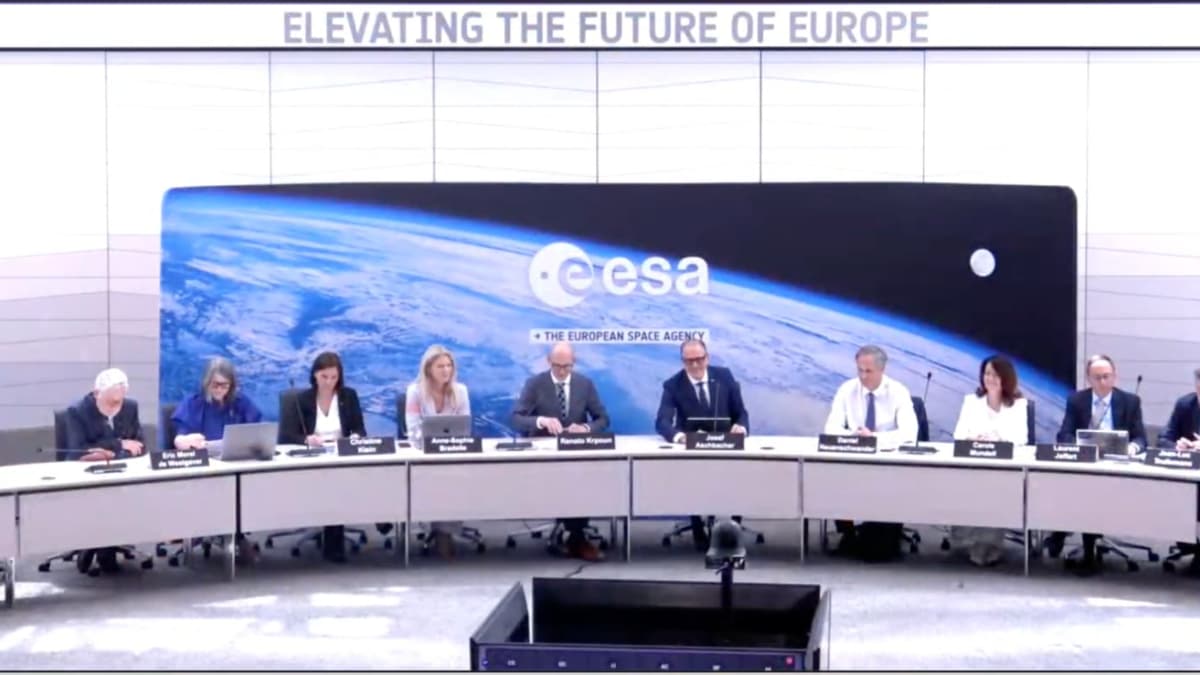
Europe Maps Out New Astronaut Missions and Global Space Partnerships at Council Meeting
Companies Mentioned
Why It Matters
The approvals create new flight opportunities for Canadian astronauts and deepen trans‑Atlantic and Indo‑European collaborations, while the expanded Earth‑observation and sustainability focus address global food security and space‑debris challenges.
Key Takeaways
- •ESA launches EPIC, targeting one‑month astronaut missions with partners
- •ESA extends UN‑FAO Earth observation partnership through 2031
- •ESA‑ISRO agreement now covers human, robotic, space‑weather, sustainability
- •Canada gains flight slots and data sharing under new security pact
- •New ESA directors appointed to steer finance and strategy
Pulse Analysis
The European Space Agency’s endorsement of the ESA Provided Institutional Crew (EPIC) concept marks a decisive step toward a European‑centric human‑spaceflight capability. EPIC is designed to field one‑month missions in low‑Earth orbit, allowing ESA member states and international partners to rotate professional astronauts on a regular schedule. By opening slots for non‑European flyers, the program directly benefits the Canadian Space Agency, which has been negotiating flight opportunities for its astronauts under a newly signed security‑data sharing pact. EPIC also positions Europe to compete with NASA’s Artemis and private low‑Earth‑orbit providers by offering a predictable, state‑backed crew service.
Equally significant is the extension of ESA’s collaboration with the United Nations Food and Agriculture Organization through 2031. The partnership leverages ESA’s high‑resolution satellite constellations to deliver near‑real‑time crop‑health indices, soil‑moisture maps and climate‑trend analyses that feed into global food‑security dashboards. For policymakers, this data stream reduces the lag between on‑the‑ground observations and actionable intelligence, improving early‑warning systems for droughts and pest outbreaks. The continuation of this effort underscores the growing recognition that space‑based Earth observation is a cornerstone of sustainable agriculture and climate‑resilience strategies worldwide.
ESA’s broadened agreement with the Indian Space Research Organisation adds another layer of strategic depth, encompassing joint human and robotic exploration, coordinated space‑weather monitoring, and shared standards for orbital sustainability. The collaboration taps India’s cost‑effective launch capabilities and ESA’s expertise in deep‑space instrumentation, creating a synergistic platform for missions beyond low‑Earth orbit. Meanwhile, the appointment of Christine Klein and Jean‑Luc Trullemans to senior director roles signals a focus on financial discipline and legal‑strategic alignment as ESA prepares its long‑term exploration roadmap. For Canada, participation in these multilateral frameworks amplifies its influence in shaping the future of the global space economy.
Europe maps out new astronaut missions and global space partnerships at Council meeting
Comments
Want to join the conversation?
Loading comments...