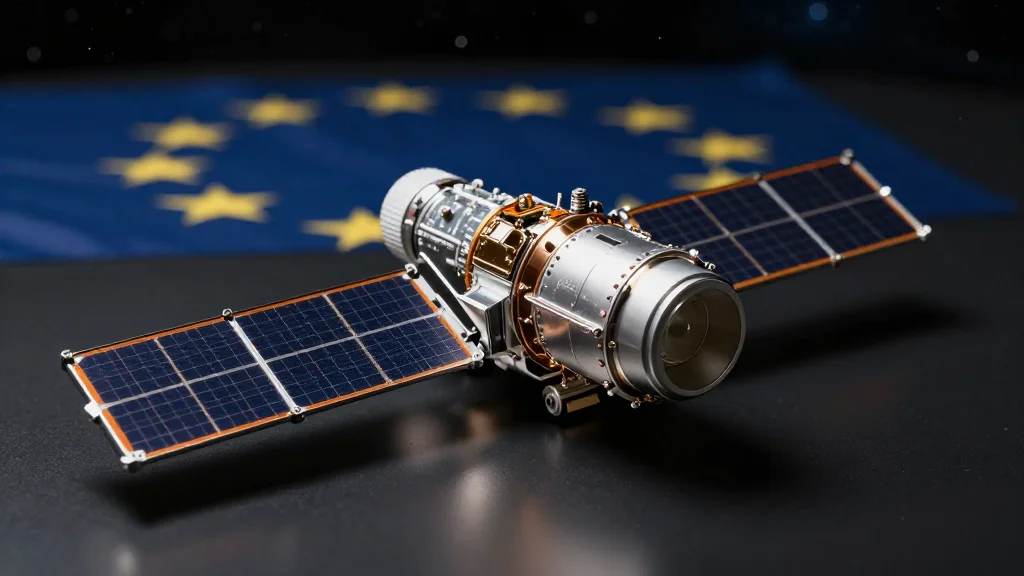
Europe Must Make Big Changes to Compete with US, Space Chief Warns
Companies Mentioned
Why It Matters
Europe’s lag in space capabilities threatens its strategic autonomy and economic competitiveness, especially as satellite services become essential for defense and communications.
Key Takeaways
- •ESA chief calls Europe “sleeping beauty” needing faster funding.
- •U.S. provides 60% of global public space funding, Europe 10%.
- •Aschbacher urges Europe to double or triple space investment.
- •Fragmented European space programs hinder competition with SpaceX.
- •Autonomy in satellite communications critical after Ukraine war.
Pulse Analysis
Europe’s space ecosystem, anchored by programs like Galileo and Copernicus, has long been a source of technological pride but suffers from chronic underinvestment. With the United States commanding roughly 60% of global public space funding, Europe’s 10% share translates into fewer launch opportunities, slower development cycles, and a fragmented industrial base. This disparity not only limits Europe’s ability to innovate in launch vehicles and satellite constellations but also reduces its leverage in shaping international space policy.
The strategic stakes have sharpened after Russia’s invasion of Ukraine, which exposed the continent’s dependence on U.S. low‑Earth‑orbit services such as Starlink for critical communications. While Starlink has provided vital connectivity, its dominance raises concerns about supply chain resilience and data sovereignty. European leaders now view autonomous satellite capabilities as a national security imperative, prompting calls for a coordinated response that aligns defense, civil, and commercial objectives under a unified funding framework.
Aschbacher’s plea for a two‑ to three‑fold increase in European space spending signals a shift toward consolidation and faster decision‑making. Potential reforms include merging overlapping national agencies, creating a pan‑European launch service, and incentivizing private‑sector partnerships to accelerate technology transfer. If Europe can mobilize the necessary capital and streamline its governance, it could close the gap with the United States, safeguard critical infrastructure, and re‑establish itself as a competitive player in the rapidly evolving space economy.
Europe must make big changes to compete with US, space chief warns
Comments
Want to join the conversation?
Loading comments...