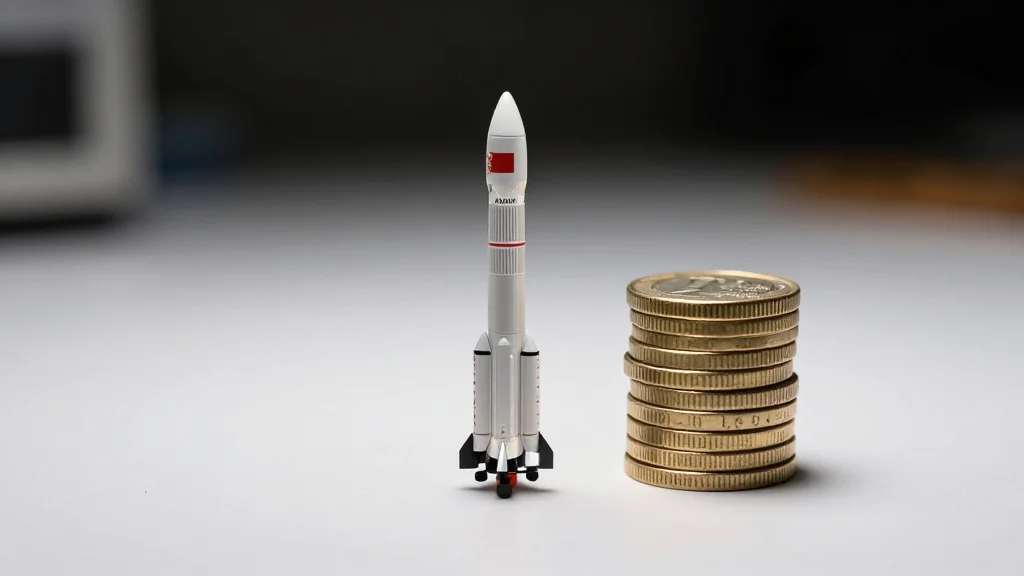
Europe’s Ariane 6 Still Trails SpaceX’s Falcon 9 on Cost, Even at $96 Million Price

Companies Mentioned
Why It Matters
The pricing gap between Ariane 6 and SpaceX’s Falcon 9 threatens Europe’s strategic autonomy in space. If European launch services cannot achieve cost parity without perpetual subsidies, the continent risks losing commercial market share to private U.S. providers, undermining long‑term industrial competitiveness and the viability of European satellite programs. Moreover, the reliance on public funds raises political questions about the allocation of taxpayer money in an era where private capital dominates launch economics. A sustained disadvantage could also ripple into related sectors—ground‑segment services, satellite manufacturing, and downstream data analytics—by limiting the cost‑effectiveness of European payloads. The situation forces policymakers to confront a choice: double down on subsidies, pursue consolidation with private players, or accelerate the development of next‑generation, lower‑cost launch technologies.
Key Takeaways
- •Ariane 62 launch cost ESA $96 million in November 2025, near SpaceX’s $94 million Falcon 9 price for a similar mission.
- •SpaceX’s estimated launch cost is $15 million, yielding an 86 % gross margin on a $105 million price point.
- •ESA secured a $410 million annual subsidy in 2024 to keep Ariane 6 prices marketable.
- •Ariane’s cost premium is roughly $100 million per flight compared with SpaceX.
- •Future ESA budgets will determine whether Europe can sustain subsidies or must restructure its launch strategy.
Pulse Analysis
SpaceX’s dominance stems from a business model that decouples cost from price, leveraging vertical integration, rapid reusability, and a willingness to underprice to lock in market share. Europe’s approach, anchored in the Ariane 6 family, still carries legacy cost structures—high labor intensity, fragmented supply chains, and a regulatory environment that limits rapid iteration. The $410 million subsidy is a stopgap that masks structural inefficiencies rather than resolves them.
Historically, Europe has relied on government‑backed programs to sustain its launch capability, a strategy that worked when the market was less price‑sensitive. Today, with over 165 Falcon 9 launches annually and a growing constellation of low‑cost small‑sat launchers, the economics have shifted dramatically. Unless Ariane can achieve true cost reductions—perhaps through increased reusability, shared European procurement, or strategic partnerships with private firms—its market share will erode.
Looking forward, the next decisive factor will be policy. If the EU decides to channel additional public funds into Ariane, it may preserve a sovereign launch option but at the expense of fiscal prudence. Conversely, a pivot toward public‑private partnerships could inject the needed agility and cost discipline, but would require a cultural shift in how European space programs are governed. The outcome will shape not only the launch market but also Europe’s broader strategic posture in space.
Europe’s Ariane 6 Still Trails SpaceX’s Falcon 9 on Cost, Even at $96 Million Price
Comments
Want to join the conversation?
Loading comments...