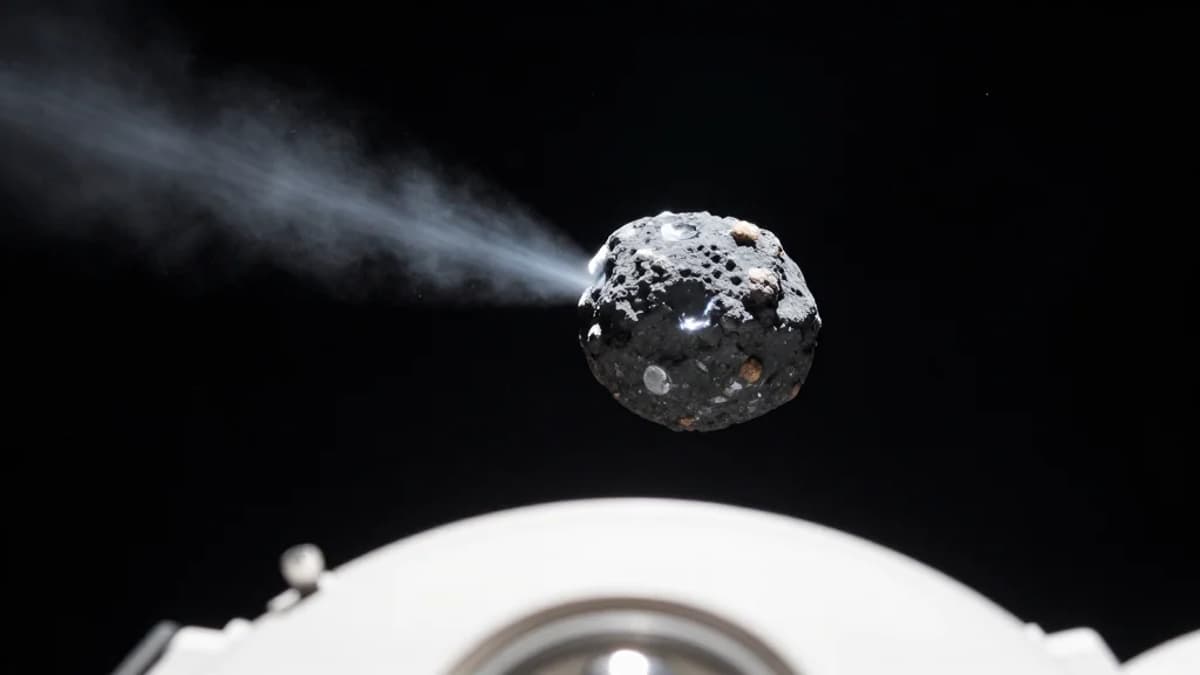
Europe’s Jupiter Probe Juice Releases Its First Image of Interstellar Comet 3I/Atlas
•February 27, 2026
0
Why It Matters
The image provides the first close‑up, spacecraft‑borne view of an interstellar comet, offering direct comparative data that can refine models of cometary physics and solar‑system formation.
Key Takeaways
- •Juice captured comet 3I/Atlas on Nov 6, 2025.
- •Image shows typical cometary dust and gas behavior.
- •Data delayed due to Sun obstruction, now transmitted.
- •Full dataset analysis slated for next month.
- •Interstellar comet observations aid comparative solar system studies.
Pulse Analysis
The detection of an interstellar visitor by a spacecraft originally destined for the Jovian system marks a milestone in planetary science. While 1I/'Oumuamua and 2I/Borisov were observed only from Earth‑based telescopes, Juice’s close‑up imaging of 3I/Atlas provides unprecedented detail on the morphology of a comet that formed around another star. By comparing the coma structure, jet activity, and dust composition with those of native solar‑system comets, researchers can test whether the processes that shape cometary evolution are universal or environment‑specific.
Juice’s science camera, designed to study icy moons, proved versatile enough to capture high‑resolution frames of a fast‑moving interstellar object. The mission stored 120 images during a brief window when the comet was brightest, but solar glare prevented immediate downlink. Once the spacecraft cleared the Sun’s interference, the data were transmitted, illustrating the challenges of deep‑space communication and the value of opportunistic observations. This episode also highlights how multi‑purpose instruments can extend a mission’s scientific return beyond its primary goals.
The forthcoming analysis of 3I/Atlas will feed into broader questions about planetary system formation and the distribution of volatile materials across the galaxy. By establishing baseline physical characteristics for an extra‑solar comet, ESA and the international community can refine models of protoplanetary disk chemistry and assess the likelihood of similar bodies delivering water and organics to nascent worlds. The results may also influence the design of future missions targeting interstellar objects, encouraging dedicated flyby or rendezvous concepts that capitalize on the unexpected opportunities presented by such visitors.
Europe’s Jupiter probe Juice releases its first image of interstellar comet 3I/Atlas
0
Comments
Want to join the conversation?
Loading comments...