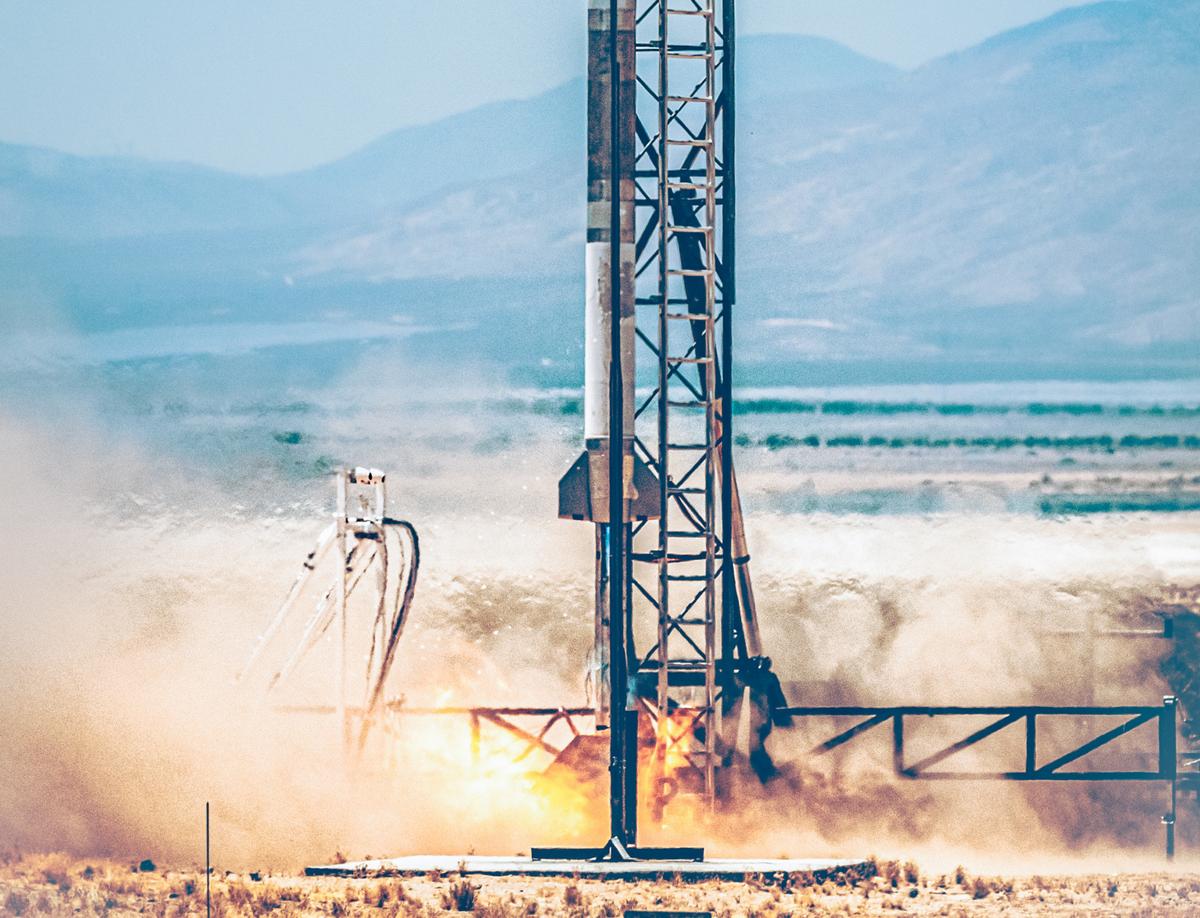
Exclusive: LEAP Launches Its First Rocket
Why It Matters
The successful flight proves LEAP’s core technologies are launch‑ready, unlocking a new logistics niche that could disrupt traditional satellite and cargo delivery models. It also signals a competitive entry into the burgeoning suborbital and low‑cost orbital market.
Key Takeaways
- •Bullfrog reached ~40km altitude, could have hit ~175km
- •Dual-mode engine merges boost and vacuum stages in one unit
- •Fuel tanks cost about $5,000 each using proprietary forming method
- •LEAP aims 30 rockets/year, six global factories
- •Bighorn targets $5‑10M launches delivering 1,000 kg to 7,000 km
Pulse Analysis
The suborbital launch sector has accelerated as governments and private firms chase rapid, low‑cost access to near‑space. LEAP’s Bullfrog entry arrives at a time when demand for agile, point‑to‑point payload delivery is rising, driven by defense logistics and humanitarian response needs. By demonstrating a suborbital flight that could have exceeded regulatory limits, LEAP shows that its platform can operate within existing range constraints while still delivering meaningful performance, a balance that many newcomers struggle to achieve.
Technically, Bullfrog showcases several innovations that could reshape small‑rocket economics. Its dual‑mode engine compresses what traditionally requires two stages into a single unit, simplifying integration and reducing mass. The in‑house fuel tanks, fabricated for roughly $5,000 each, undercut industry averages and illustrate how proprietary manufacturing can drive cost efficiencies. Moreover, the containerized launch system enabled the vehicle to be ready for flight within 30 hours of arrival, with future turnarounds projected at 12‑24 hours—an operational cadence that rivals reusable launch providers.
From a business perspective, LEAP is targeting a logistics market that blends aerospace capability with rapid delivery, a segment still largely untapped. The forthcoming Bighorn vehicle promises 1,000 kg payloads to 7,000 km or 350 kg to low Earth orbit for $5‑10 million per launch, pricing that could attract customers seeking dedicated, on‑demand access. With ambitions to produce 30 rockets annually and establish up to six global factories, LEAP aims to scale quickly and compete with established players. Its roadmap, which includes a single‑use spaceplane and a medium‑lift vehicle, signals a long‑term strategy to capture both suborbital and orbital logistics markets.
Exclusive: LEAP Launches its First Rocket
Comments
Want to join the conversation?
Loading comments...