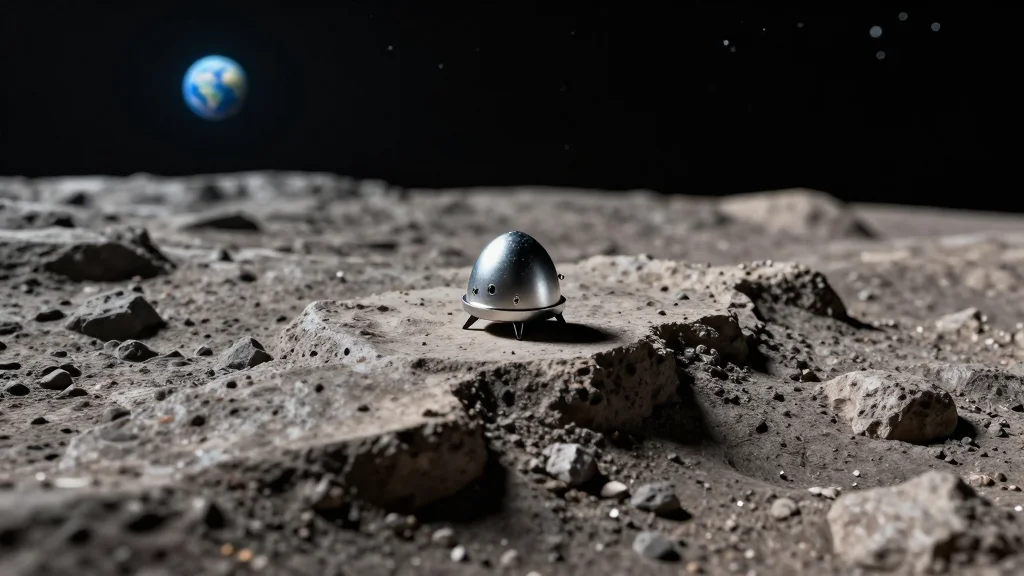
ExLabs and ChibaTech Team up to Land Student CubeLanders on Asteroid Apophis
Companies Mentioned
Why It Matters
The mission democratizes deep‑space exploration by giving universities and small innovators affordable access to asteroid science, potentially accelerating technology development and planetary defense capabilities.
Key Takeaways
- •First commercial deep‑space rideshare targeting asteroid Apophis
- •Student‑built CubeLanders will land on asteroid in 2029
- •Mission reduces cost barriers for university and commercial payloads
- •Collaboration includes ExLabs, ChibaTech, NASA JPL, and Caltech
- •Apophis flyby will be visible to billions on Earth
Pulse Analysis
The ApophisExL initiative marks a turning point in how deep‑space missions are funded and executed. By leveraging a commercially operated spacecraft as a rideshare platform, ExLabs sidesteps the multi‑billion‑dollar budgets traditionally required for asteroid exploration. This model not only cuts launch costs but also creates a repeatable cadence of inner‑solar‑system opportunities, attracting a broader spectrum of scientific, defense, and commercial customers. The partnership with NASA’s Jet Propulsion Laboratory ensures that the mission adheres to rigorous deep‑space standards, lending credibility to the commercial approach and encouraging further private‑sector participation.
Beyond economics, the program reshapes engineering education. Chiba Institute of Technology students are designing, building, and testing CubeLanders that will physically touch an asteroid’s surface—an experience once reserved for a handful of national agencies. The hands‑on involvement accelerates talent development, bridges the gap between classroom theory and real‑world spaceflight, and cultivates a new generation of engineers versed in CubeSat heritage and planetary science. This educational thrust also amplifies public interest, as the 2029 Apophis flyby will be visible to billions, turning a scientific event into a global outreach platform.
Strategically, the mission underscores a growing convergence of commercial agility and academic innovation in planetary defense. Rapid‑response capabilities demonstrated by student‑led hardware could inform future deflection or mitigation strategies, while the affordable rideshare framework opens pathways for niche instruments and experiments that would otherwise languish in cleanrooms. As ExLabs plans a series of similar deep‑space flights, the industry may see a shift toward modular, cost‑effective missions that democratize access to the solar system, fostering a more resilient and diversified space ecosystem.
ExLabs and ChibaTech team up to land student CubeLanders on asteroid Apophis
Comments
Want to join the conversation?
Loading comments...