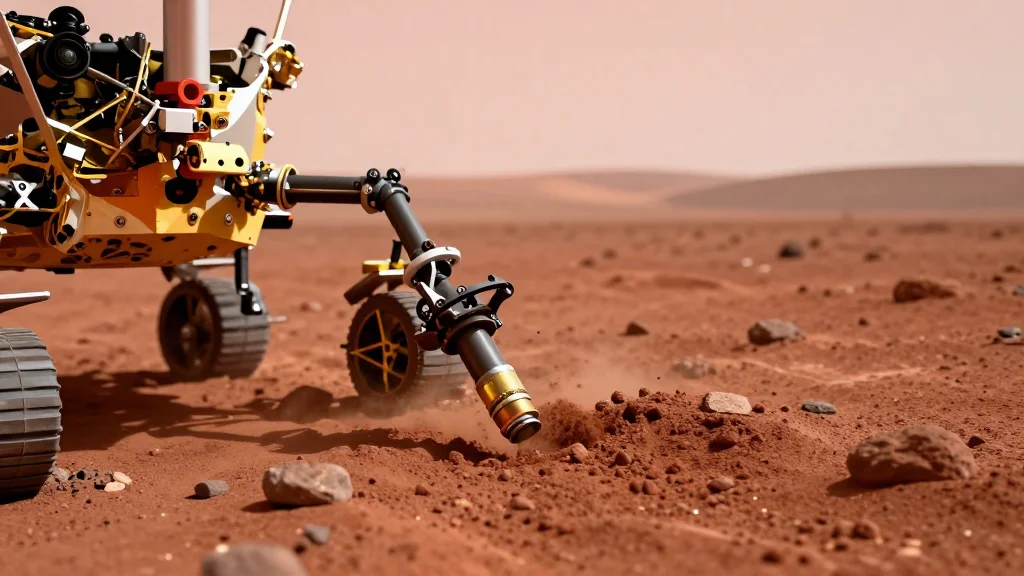
ExoMars Rover Targets Vast Bed of Clay in Search for Life
Why It Matters
Identifying preserved biosignatures in Martian clays could answer the fundamental question of whether life ever arose beyond Earth, shaping future planetary protection policies and guiding subsequent exploration investments.
Key Takeaways
- •Rover will drill up to 2 meters into clay-rich Oxia Planum
- •Spectrometers target organic molecules and mineralogy for biosignature detection
- •Mission scheduled for 2028 launch, ESA‑Roscosmos partnership
- •Clay deposits formed >3 billion years ago, indicating ancient water activity
- •Data will inform next‑generation sample‑return strategies
Pulse Analysis
The ExoMars rover’s focus on Oxia Planum reflects a strategic shift toward geologically promising sites where water once altered the Martian crust. Clay minerals, formed through prolonged interaction with liquid water, can trap and protect organic compounds from radiation and oxidation. By drilling beneath the surface, Rosalind Franklin aims to bypass the harsh oxidative environment that degrades surface organics, increasing the odds of detecting authentic biosignatures.
Beyond the scientific allure, the mission underscores Europe’s growing autonomy in deep‑space exploration. After the 2022 partnership with Roscosmos was restructured, ESA secured new launch arrangements and a dedicated rover platform, reinforcing its capability to deliver complex payloads. The rover’s payload, including the Mars Organic Molecule Analyzer (MOMA) and the MicrOmega spectrometer, represents cutting‑edge instrumentation that can characterize both molecular and mineral contexts, essential for interpreting any potential biological signals.
Success on Oxia Planum would have cascading effects on the broader Mars exploration roadmap. Positive detections could accelerate international consensus on a Mars sample‑return mission, influencing funding allocations and collaborative frameworks. Even a null result refines models of habitability, guiding future site selections for both robotic and, eventually, crewed missions. In either case, ExoMars positions Europe at the forefront of astrobiology, delivering data that will shape scientific discourse and policy for years to come.
ExoMars Rover Targets Vast Bed of Clay in Search for Life
Comments
Want to join the conversation?
Loading comments...