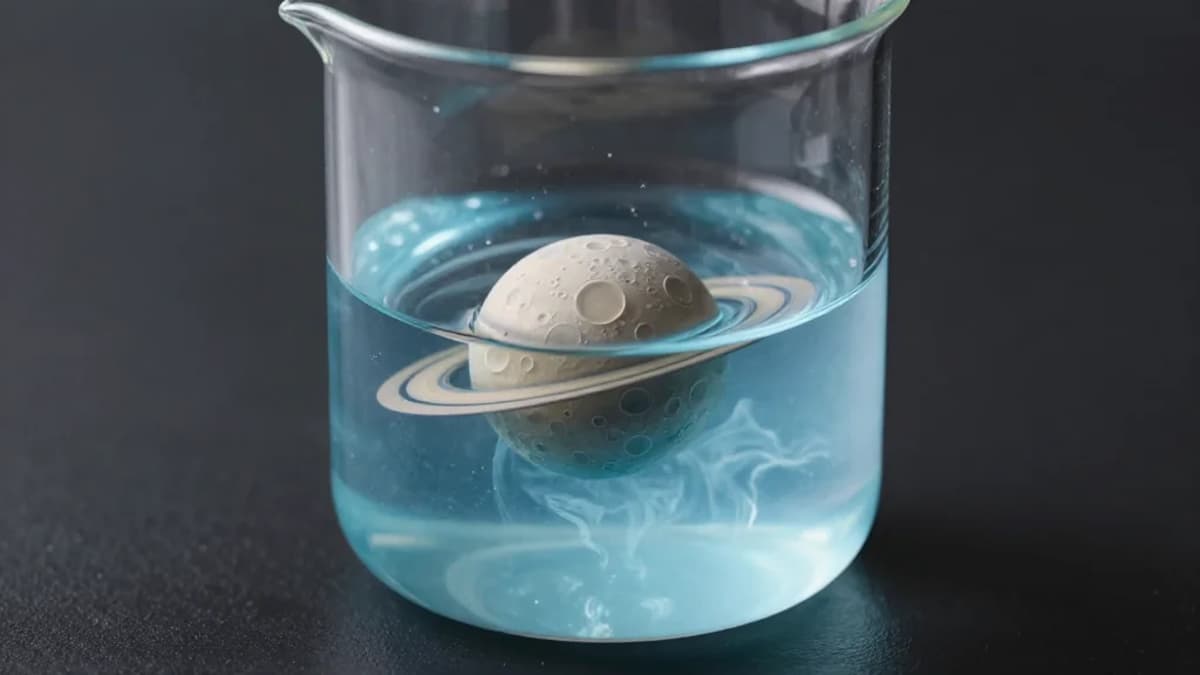
Experiments Bring Enceladus' Subsurface Ocean Into the Lab
•January 18, 2026
0
Why It Matters
The findings validate that Enceladus’ hidden ocean is chemically fertile, sharpening the interpretation of plume data for upcoming habitability missions. They also provide a tangible experimental framework to bridge past spacecraft observations with future exploration strategies.
Key Takeaways
- •Researchers simulated Enceladus ocean with high‑pressure reactor
- •Hydrothermal cycles produced amino acids, aldehydes, nitriles
- •Freezing steps favored simple amino acid glycine formation
- •Experimental spectra matched many Cassini‑detected organics
- •Missing larger molecules suggest hotter or ancient sources
Pulse Analysis
Enceladus has long captivated planetary scientists because its icy plumes carry a chemical fingerprint of a deep, liquid reservoir. Cassini’s fly‑bys revealed a rich mixture of simple gases and complex organics, but without an in‑situ laboratory reference it was impossible to determine whether those molecules formed inside the moon or were inherited from primordial material. By recreating the moon’s oceanic conditions on Earth, the new study provides that missing link, offering a controlled environment where the same analytical tools used in space can be applied to freshly synthesized samples.
The experimental setup combined a high‑pressure autoclave with rapid heating and cryogenic freezing cycles that emulate the tidal flexing Enceladus experiences. Starting with a cocktail of ammonia, hydrogen cyanide and other plume‑identified species, the researchers induced hydrothermal reactions that yielded amino acids such as glycine, a range of aldehydes, and nitrile compounds. A laser‑based mass spectrometer, calibrated to mimic Cassini’s Cosmic Dust Analyzer, recorded spectra that overlapped with the satellite’s original data, confirming that many of the detected organics can arise from straightforward chemistry under Enceladus‑like conditions.
These results have immediate implications for mission planning. Future probes equipped with advanced mass spectrometers or chromatography could target the specific biomarkers—amino acids and nitriles—shown to be producible in situ, distinguishing ongoing synthesis from ancient, exogenous material. Moreover, the absence of larger, more complex molecules in the laboratory hints at either higher temperature zones or catalytic surfaces not captured in the experiment, guiding the design of instruments capable of probing deeper thermal gradients. By demonstrating that Enceladus’ ocean is a viable crucible for prebiotic chemistry, the work reinforces the moon’s status as a prime target in the search for extraterrestrial life and informs broader models of habitability across ocean worlds.
Experiments bring Enceladus' subsurface ocean into the lab
0
Comments
Want to join the conversation?
Loading comments...