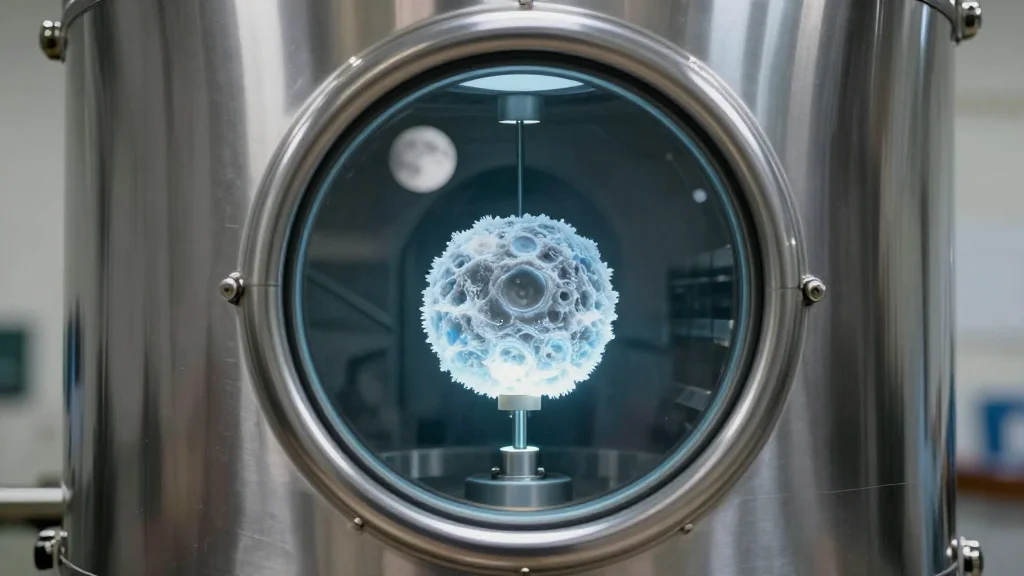
Extreme Lunar Conditions Need an Extreme Test Rig
Companies Mentioned

NASA
Why It Matters
LESTR provides a faster, safer way to validate hardware for Artemis and beyond, reducing development risk and cost for lunar and Martian exploration programs.
Key Takeaways
- •LESTR reaches 40 K to 125 K, replicating lunar night vacuum.
- •First test rig eliminates liquid cryogens, using dry mechanical cooling.
- •Shape‑memory alloy development targets functionality at 40 K for rovers.
- •Testing includes yarns for suits and potential rover tire materials.
- •Results will inform Artemis hardware and future Mars surface missions.
Pulse Analysis
The Moon’s thermal environment is one of the harshest in the solar system, with surface temperatures plunging to ‑250 °C in permanently shadowed craters. Traditional testing has relied on liquid cryogens, a process that is both cumbersome and costly. LESTR’s breakthrough lies in its dry vacuum chamber, which can sustain temperatures as low as 40 K without any liquid nitrogen or helium. This capability not only accelerates test cycles but also removes the logistical bottlenecks associated with handling cryogenic fluids, giving engineers rapid feedback on material performance under true lunar conditions.
At the heart of LESTR’s current program is the development of a next‑generation shape‑memory alloy capable of retaining its actuation properties at 40 K. Such an alloy could enable rovers to self‑repair or adjust wheel geometry on the fly, mitigating the risk of flat tires on uneven terrain. Simultaneously, the rig is evaluating high‑performance yarns for spacesuits and potential polymer composites for habitat structures. By exposing these candidates to a vacuum and extreme cold simultaneously, researchers can identify failure modes—such as embrittlement or loss of conductivity—well before flight hardware is built.
The implications extend beyond the Artemis program. As NASA and commercial partners eye sustained lunar presence, especially at the resource‑rich south pole, validated materials will be a prerequisite for habitats, power systems, and life‑support equipment. Moreover, the same test parameters are relevant for Mars, where low‑temperature operations are critical for surface science payloads and future crewed missions. LESTR therefore positions the United States to lead in next‑generation space‑grade materials, shortening development timelines and lowering costs for both government and private sector ventures.
Extreme Lunar conditions need an extreme test rig
Comments
Want to join the conversation?
Loading comments...