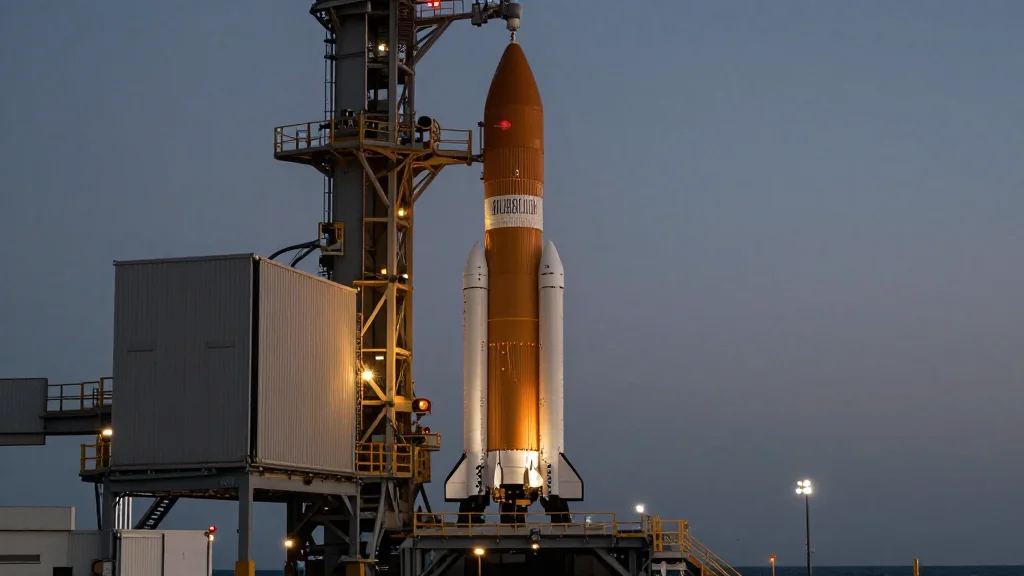
FAA Grounds Blue Origin’s New Glenn After Satellite Mis‑orbit

Companies Mentioned

Why It Matters
The grounding of New Glenn underscores the regulatory and technical challenges of scaling reusable heavy‑lift launchers. A successful first‑stage recovery had positioned Blue Origin as a credible competitor to SpaceX’s Falcon Heavy and Starship, but the upper‑stage failure reveals that reusability must be achieved across the entire launch stack. For AST SpaceMobile, the loss of BlueBird 7 delays its rollout of a satellite‑based cellular network, a service that could disrupt traditional telecom providers and accelerate the direct‑to‑device market. Regulators are signaling that safety oversight will not be relaxed for reusable systems, meaning future launch providers must demonstrate end‑to‑end reliability. The FAA’s decisive action may prompt tighter certification processes industry‑wide, influencing investment decisions and contract awards in the burgeoning commercial space sector.
Key Takeaways
- •FAA grounded New Glenn on April 19, 2026 after upper‑stage placed AST SpaceMobile’s BlueBird 7 into an off‑nominal orbit.
- •The mission was New Glenn’s third flight and the first reuse of its heavy‑lift booster.
- •Blue Origin’s first stage landed successfully on the company’s ocean recovery platform.
- •AST SpaceMobile expects insurance to cover the loss of BlueBird 7, delaying its broadband constellation.
- •The FAA classified the event as a mishap and will not allow further New Glenn launches until a company‑led investigation is approved.
Pulse Analysis
Blue Origin’s setback illustrates the fragile balance between ambitious reusability goals and the unforgiving physics of upper‑stage propulsion. While the successful first‑stage recovery was a headline‑grabbing achievement, the mission’s ultimate failure shows that a single under‑performance can negate the entire value proposition for a customer. In the competitive heavy‑lift market, SpaceX’s iterative development of Starship and United Launch Alliance’s Vulcan have already demonstrated more consistent mission success rates, giving them a strategic edge in securing both commercial and defense contracts.
The FAA’s swift grounding also sends a clear message that regulatory bodies will enforce rigorous safety standards, even for companies that have demonstrated partial reusability. This could accelerate the adoption of more robust verification regimes across the industry, potentially raising development costs but improving overall launch reliability. For investors, the incident may prompt a reassessment of Blue Origin’s timeline for achieving full‑scale reusable operations and its ability to capture market share in the next five years.
Looking forward, Blue Origin’s path to regaining flight clearance will hinge on transparent root‑cause analysis and demonstrable corrective actions. If the company can quickly resolve the upper‑stage issue, it may still leverage its unique seven‑meter fairing capacity to attract large‑payload customers. However, prolonged grounding could erode confidence among satellite operators like AST SpaceMobile, who may turn to alternative launch providers to meet aggressive deployment schedules for next‑generation broadband services.
FAA Grounds Blue Origin’s New Glenn After Satellite Mis‑orbit
Comments
Want to join the conversation?
Loading comments...