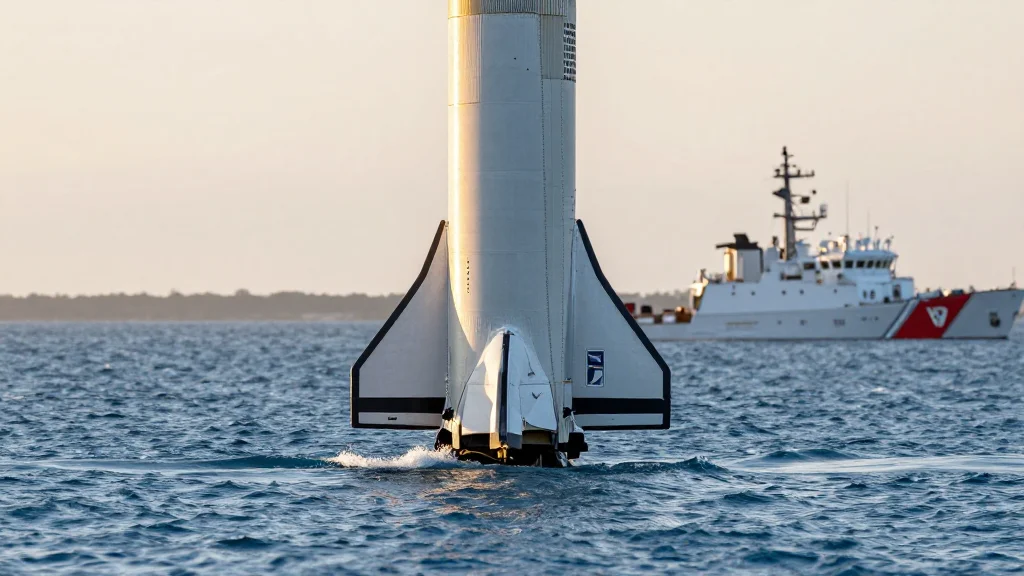
FAA Requires SpaceX-Led Mishap Investigation Before Resumption of Starship Launches
Companies Mentioned
Why It Matters
The mandated investigation could push back SpaceX’s launch cadence, jeopardizing its timeline for deploying next‑generation Starlink V3 satellites and impacting its upcoming IPO.
Key Takeaways
- •FAA mandates SpaceX mishap investigation before Flight 13 launch
- •One Raptor V3 engine failed 102 seconds into ascent
- •Partial boostback burn caused early splashdown in Gulf of America
- •Investigation may delay Starship cadence, affecting Starlink V3 rollout
Pulse Analysis
The Federal Aviation Administration’s decision to require a formal mishap investigation underscores the growing regulatory scrutiny of commercial launch providers. While SpaceX has historically worked closely with the FAA, the agency’s oversight role expands when safety‑critical anomalies arise, such as the engine-out event on Super Heavy booster B19. By mandating a step‑by‑step review and final approval of corrective actions, the FAA aims to protect public safety and maintain confidence in the burgeoning U.S. space launch ecosystem, a precedent that could shape future licensing for other private rockets.
Technically, the loss of a Raptor V3 engine at T+1:42 and the subsequent staggered shutdown disrupted the planned boostback profile, resulting in a truncated burn and a hard splashdown in the Gulf of America. The partial engine reignition also prevented the intended landing sequence, highlighting potential reliability gaps in the newest Raptor iteration. Engineers will likely scrutinize combustion stability, turbopump performance, and software sequencing to isolate the root cause. Any design revisions or additional static‑fire tests could extend the development timeline, especially as SpaceX prepares Booster 20 and Ship 40 for Flight 13.
From a business perspective, the delay reverberates through SpaceX’s broader growth strategy. The company’s S‑1 filing ties Starship’s rapid cadence to the rollout of Starlink Version 3 satellites and future in‑orbit AI compute services. A prolonged investigation could compress launch windows, strain supply‑chain logistics, and temper investor enthusiasm ahead of the anticipated IPO. Competitors watching the regulatory response may adjust their own timelines, while customers seeking high‑capacity rides could explore alternative launch options, adding market pressure on SpaceX to resolve the issue swiftly and transparently.
FAA requires SpaceX-led mishap investigation before resumption of Starship launches
Comments
Want to join the conversation?
Loading comments...