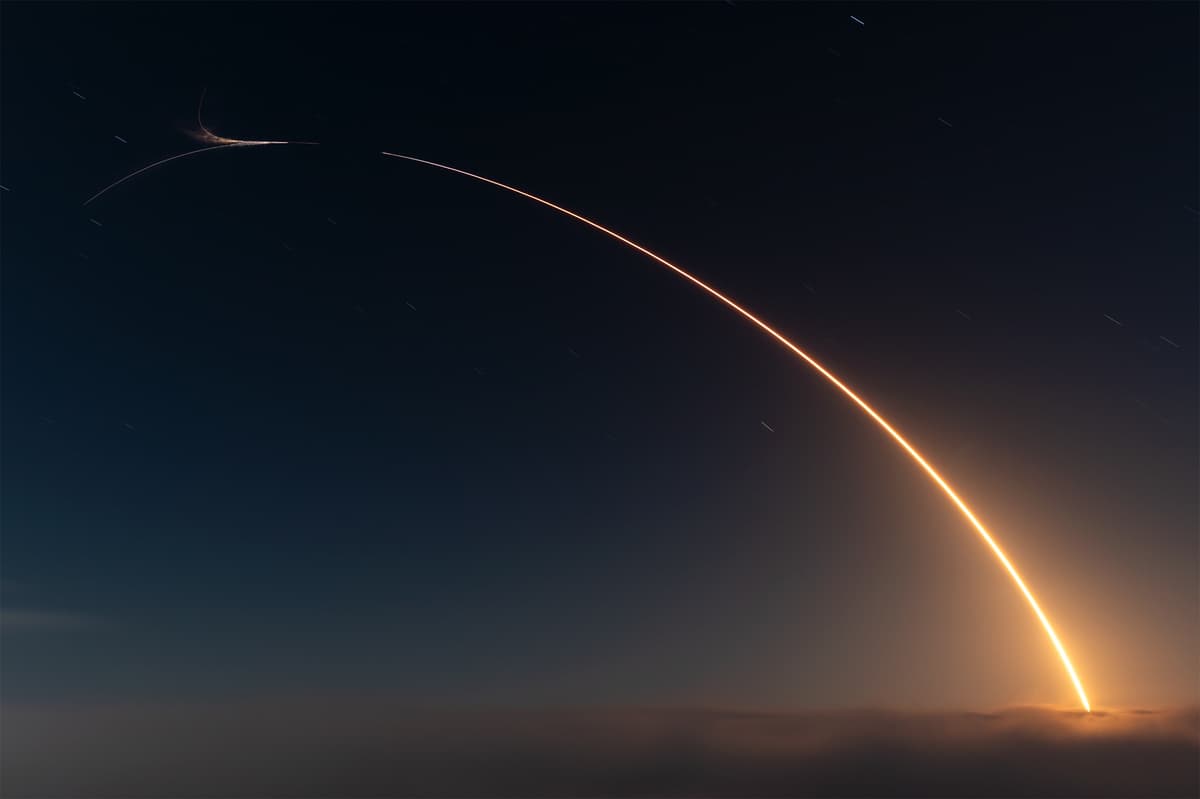
Falcon 9 Launches South Korean Satellite and 45 Rideshare Payloads
Companies Mentioned
Why It Matters
The flight demonstrates SpaceX’s ability to combine a single primary payload with a large, diverse rideshare manifest, offering cost‑effective access for both government and commercial customers. This model accelerates satellite constellations worldwide, intensifying competition in the low‑Earth‑orbit market.
Key Takeaways
- •SpaceX's Falcon 9 completed its 33rd flight, landing first stage.
- •South Korea's CAS500‑2 imaging satellite launched alongside 45 rideshare payloads.
- •Planet's Pelican satellites serve Swedish Armed Forces under low nine‑figure deal.
- •Italy's IRIDE constellation received seven HEO satellites, backed by €1 bn (~$1.08 bn) investment.
- •GalaxEye debuted the first OptoSAR satellite, merging optical imaging with SAR.
Pulse Analysis
SpaceX’s latest Falcon 9 mission illustrates how rideshare launches have evolved from bulk‑carrier flights to highly tailored services. By pairing a single primary satellite—South Korea’s CAS500‑2—with a curated set of 45 secondary payloads, SpaceX maximizes launch efficiency while meeting the specific orbital requirements of diverse customers. The booster’s 33rd flight and rapid pad landing further cement its reliability, a critical factor for satellite operators seeking predictable access to sun‑synchronous orbits for Earth‑observation and intelligence missions.
The secondary payload roster reads like a snapshot of the global space economy’s priorities. Planet’s Pelican trio, contracted by the Swedish Armed Forces under a low nine‑figure agreement, highlights the growing reliance on commercial high‑resolution imagery for defense. Italy’s IRIDE constellation, now bolstered by seven Argotec HEO satellites, benefits from a €1 billion (≈$1.08 billion) government investment aimed at expanding broadband and remote‑sensing capabilities. Meanwhile, GalaxEye’s OptoSAR satellite, the first to fuse optical and synthetic‑aperture‑radar sensors, signals a push toward multimodal data that can operate in all weather conditions, a valuable asset for both commercial analytics and national security.
The broader implication is a deepening market segmentation where large constellations and niche players alike depend on flexible launch solutions. SpaceX’s ability to accommodate a wide array of payload sizes, technologies, and customer profiles gives it a competitive edge over emerging launch providers that may focus on either dedicated rideshares or single‑payload missions. As satellite constellations proliferate and demand for rapid, cost‑effective deployment intensifies, rideshare platforms like SpaceX’s will likely become the default gateway to low‑Earth orbit, shaping the next decade of space‑based services.
Falcon 9 launches South Korean satellite and 45 rideshare payloads
Comments
Want to join the conversation?
Loading comments...