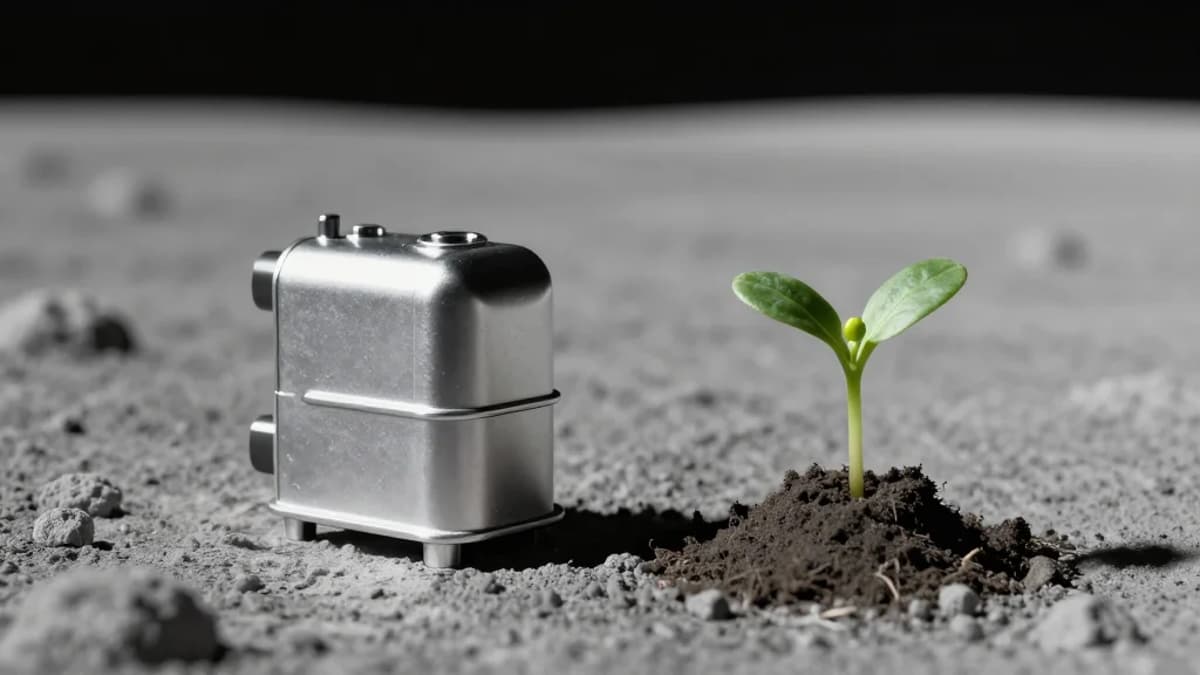
Farming on the Moon or Mars? How Recycled Sewage Could Turn Regolith Into Crop Soil
•February 25, 2026
0
Why It Matters
The breakthrough demonstrates a viable pathway for closed‑loop agriculture on the Moon and Mars, reducing reliance on Earth‑supplied fertilizers and supporting long‑duration human habitats.
Key Takeaways
- •Sewage-derived effluent enriches lunar simulant nutrients.
- •Weathering creates less abrasive, soil-like particles.
- •BLiSS system demonstrates bioregenerative life support potential.
- •Real regolith may behave differently; further tests required.
- •Nutrient release includes sulfur, calcium, magnesium.
Pulse Analysis
Extraterrestrial colonization hinges on in‑situ resource utilization, and turning barren regolith into fertile soil is a critical hurdle. By integrating recycled human and plant waste into a bioregenerative life‑support loop, NASA’s BLiSS system transforms sewage into a nutrient‑dense solution. This approach aligns with sustainability goals for space habitats, minimizing cargo mass and enabling autonomous food production. The recent ACS Earth and Space Chemistry study provides the first experimental evidence that such effluent can chemically weather lunar and Martian simulants, unlocking essential macro‑nutrients.
The experiment mixed BLiSS effluent with regolith simulants and agitated the mixture for 24 hours. Results showed substantial desorption of sulfur, calcium, and magnesium, while microscopic imaging revealed pitting on lunar particles and nanoparticle coatings on Martian analogs. These micro‑structural changes reduce abrasiveness and mimic natural soil formation processes, suggesting that waste‑derived solutions can act as both fertilizer and physical conditioner. Importantly, the rapid nutrient release indicates that a closed‑loop system could sustain crops with minimal external inputs, a prerequisite for self‑sufficient outposts.
Looking ahead, the research underscores the need to validate findings with authentic lunar and Martian soils, which may exhibit different chemical reactivity. Scaling the BLiSS process for continuous operation will involve engineering robust bioreactors and filtration units capable of handling variable waste streams. Commercial partners and space agencies are likely to invest in this technology, as it promises to lower launch costs and extend mission durations. Ultimately, mastering regolith conditioning through recycled sewage could become a cornerstone of sustainable extraterrestrial agriculture, reshaping how humanity expands beyond Earth.
Farming on the moon or Mars? How recycled sewage could turn regolith into crop soil
0
Comments
Want to join the conversation?
Loading comments...