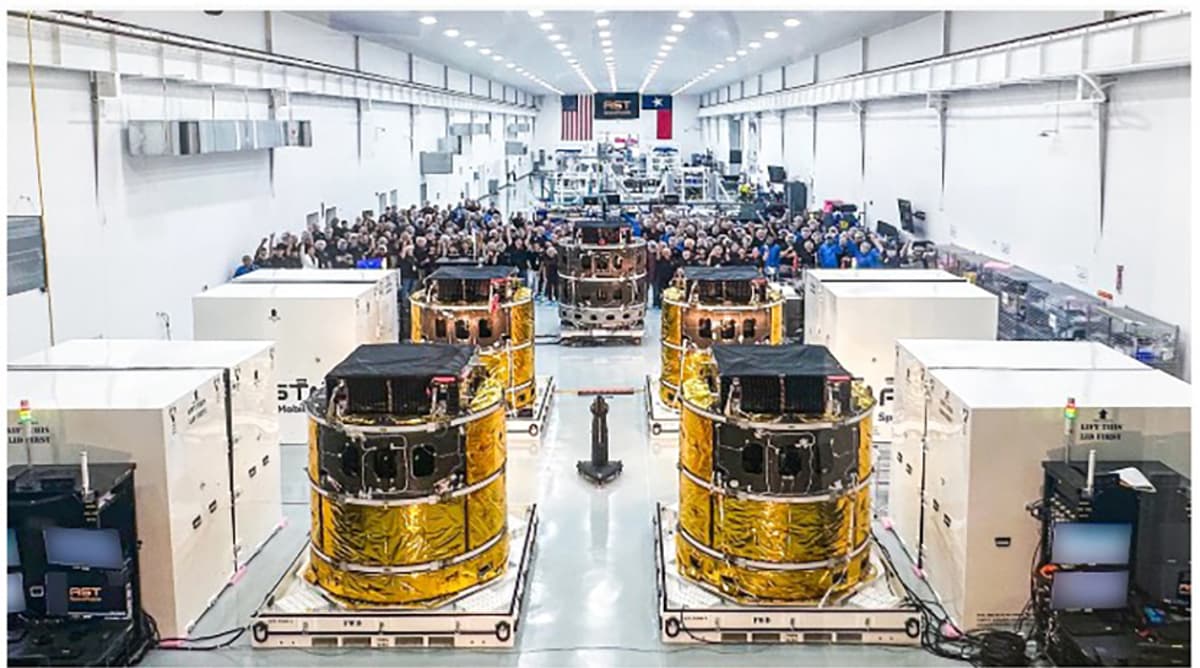
FCC Grants AST SpaceMobile Authority for 248-Satellite Constellation and Direct-to-Cell Service
Why It Matters
The decision clears a regulatory hurdle, allowing satellite‑enabled cellular coverage across the U.S., which could dramatically reduce dead zones and bolster public‑safety communications. It also signals the FCC’s support for large, software‑defined constellations competing for mobile spectrum.
Key Takeaways
- •FCC authorizes 248-satellite AST SpaceMobile constellation for direct-to-cell
- •Enables smartphones to connect via satellite without extra hardware
- •Partners AT&T, Verizon, FirstNet to fill U.S. coverage gaps
- •Launch schedule targets 90 satellites by 2027 for initial service
- •Strict interference rules mirror Starlink licensing, protecting terrestrial networks
Pulse Analysis
The FCC’s approval of AST SpaceMobile marks a pivotal shift in how mobile connectivity is delivered in the United States. By allowing a 248‑satellite non‑geostationary network to use terrestrial mobile frequencies, the agency is effectively turning every smartphone into a satellite terminal. This eliminates the need for dedicated hardware, lowering barriers for consumers and expanding reach into remote or disaster‑stricken areas where traditional cell towers are unavailable. The partnership with major carriers AT&T and Verizon, along with FirstNet, underscores a strategic push to integrate satellite backup into the core of the nation’s communications infrastructure.
From a market perspective, the authorization positions AST SpaceMobile as a direct competitor to SpaceX’s Starlink and other emerging satellite‑cellular services. The FCC’s stringent power‑flux‑density (PFD) limits and mandatory interference mitigation echo the regulatory framework applied to Starlink, ensuring that the new constellation coexists with existing terrestrial networks. This regulatory parity reduces uncertainty for investors and accelerates the rollout timeline, with the company aiming to deploy 90 satellites by 2027 to achieve initial global service. The multi‑shell orbital design—spanning 520 km to 690 km altitudes—optimizes coverage density while balancing launch costs.
Beyond commercial implications, the inclusion of FirstNet highlights the public‑safety dimension of supplemental coverage from space (SCS). First responders will gain a resilient communication layer that operates independently of ground‑based infrastructure, a critical advantage during natural disasters or large‑scale emergencies. As the FCC continues to refine its space modernization policies, the AST SpaceMobile approval could set a precedent for future satellite‑cellular collaborations, driving innovation in both the telecom and aerospace sectors while delivering tangible benefits to end users across the country.
FCC Grants AST SpaceMobile Authority for 248-Satellite Constellation and Direct-to-Cell Service
Comments
Want to join the conversation?
Loading comments...