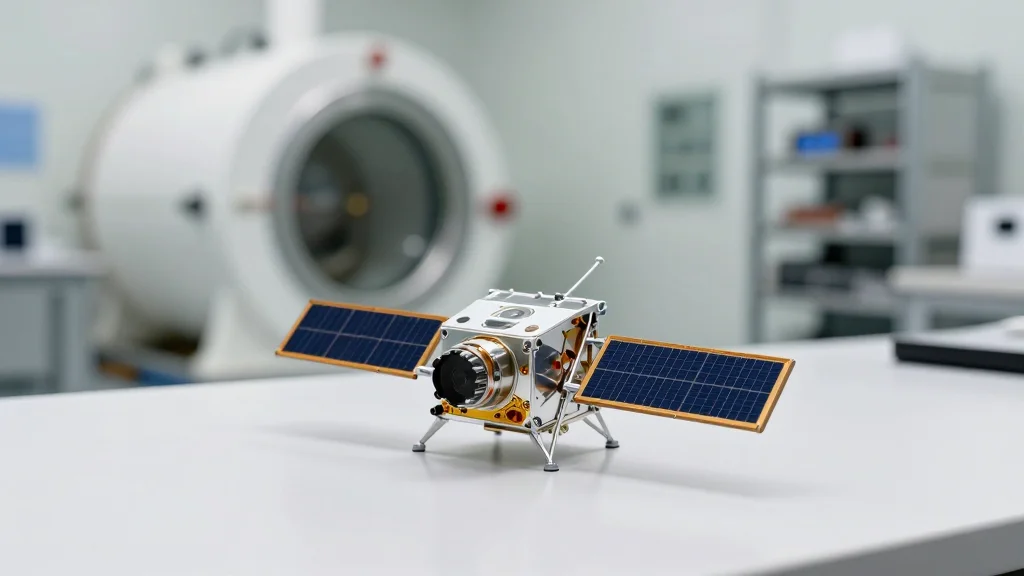
Final Ground Testing Begins of Katalyst’s Swift Rescue Spacecraft
Companies Mentioned
Why It Matters
Extending Swift’s orbit preserves a key astrophysics platform while proving that private firms can execute rapid, high‑stakes satellite rescue missions, reshaping the space‑service market.
Key Takeaways
- •Swift telescope’s orbit decays, re‑entry expected by 2029
- •Katalyst delivered LINK spacecraft to NASA for final testing
- •LINK will undergo vibration and thermal tests at Goddard
- •Launch slated on Pegasus rocket from Wallops later this year
- •Success would validate commercial satellite‑repair business model
Pulse Analysis
The Gehrels‑Swift space telescope, launched in 2004, has been a workhorse for gamma‑ray burst detection and multi‑wavelength astronomy. Its low Earth orbit is now deteriorating, and without a boost the satellite will re‑enter the atmosphere by 2029, forcing NASA to suspend its science program. Preserving Swift is not just about salvaging data; it safeguards a decades‑long investment in instrumentation and maintains continuity for researchers worldwide.
Katalyst’s rapid pivot from a technology demonstrator to an operational rescue vehicle underscores the agility of the emerging commercial space‑service sector. By repurposing the LINK platform—originally built to showcase robotic repair techniques—the startup compressed a typical multi‑year development cycle into seven months. The spacecraft now heads to Goddard for vibration and thermal qualification, after which it will hitch a ride on Northrop Grumman’s Pegasus launch vehicle from Wallops Island. This schedule, if kept, could see Swift’s orbit raised before the end of 2024, delivering a high‑visibility win for a company still in its infancy.
Beyond the immediate mission, Katalyst’s effort signals a broader shift toward on‑orbit servicing, refueling, and life‑extension services that could become a staple of satellite economics. Investors are watching closely as NASA’s contracts demonstrate a viable revenue stream for private firms capable of low‑cost, rapid response. Meanwhile, public fascination with space history—evident in new releases like Robert Zimmerman’s "Genesis"—helps sustain interest and funding for such endeavors, linking past milestones to future capabilities.
Final ground testing begins of Katalyst’s Swift rescue spacecraft
Comments
Want to join the conversation?
Loading comments...