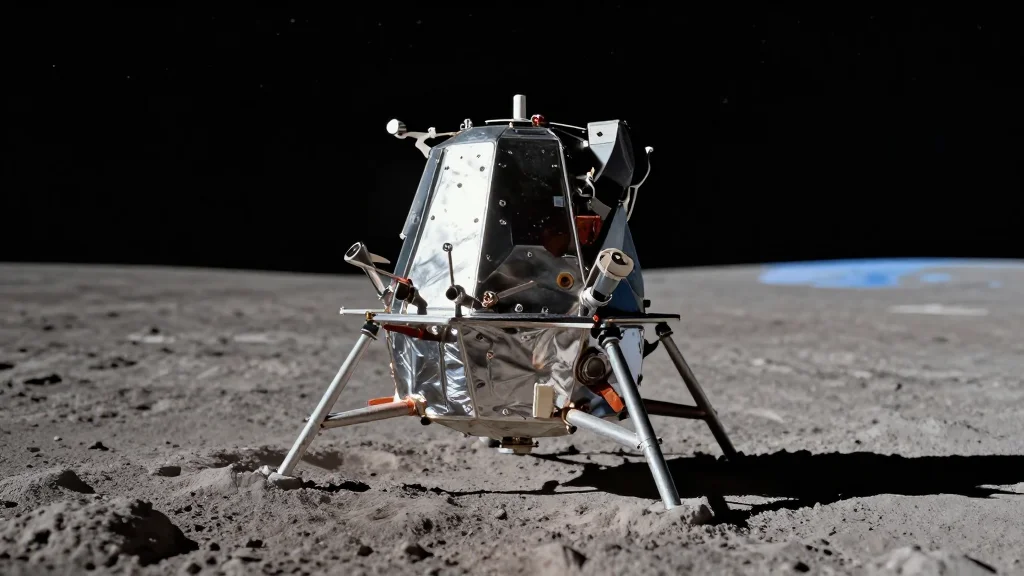
Firefly Aerospace to Receive Space Pioneer Award at the National Space Society’s ISDC Conference
Why It Matters
The successful private lunar landing validates the CLPS model, accelerating commercial participation in deep‑space missions and lowering barriers for future payloads. It signals a shift toward sustained, profit‑driven lunar operations, reshaping the space‑industry landscape.
Key Takeaways
- •Firefly earned the Space Pioneer Award at NSS’s ISDC 2026
- •Blue Ghost Mission 1 achieved the first private soft lunar landing
- •Mission operated NASA instruments for a full lunar day, proving endurance
- •Success validates NASA’s CLPS program and encourages more commercial payloads
- •Firefly’s launch vehicle advancements aim to lower cost of orbital access
Pulse Analysis
Firefly Aerospace’s receipt of the Space Pioneer Award at the National Space Society’s International Space Development Conference underscores a watershed moment for commercial lunar exploration. Blue Ghost Mission 1, launched under NASA’s Commercial Lunar Payload Services (CLPS) initiative, achieved the first private soft‑landing on the Moon on March 2, 2025, and sustained operation of NASA‑provided science instruments for an entire lunar day. The award not only celebrates technical prowess but also signals confidence from the broader space community in private firms delivering high‑risk, high‑value missions traditionally reserved for government agencies.
The mission’s success carries profound implications for the CLPS ecosystem. By demonstrating that a commercial entity can reliably deliver and operate payloads on the lunar surface, Firefly reduces perceived risk for future NASA contracts and opens the door for a wider array of scientific, commercial, and even tourism payloads. Competitors such as Astrobotic and Intuitive Machines now face a higher benchmark, prompting accelerated development cycles and cost‑reduction strategies across the sector. Investors are taking note, with venture capital flowing into lunar‑focused startups that see a viable market for in‑situ resource utilization, communications relays, and surface mobility services.
Looking ahead, Firefly’s broader portfolio—spanning small and medium‑lift launch vehicles, orbital platforms, and advanced rocket engine designs—positions the company to capitalize on the growing demand for affordable, flexible access to both low‑Earth orbit and deep‑space destinations. The award amplifies Firefly’s brand credibility, likely easing future financing and partnership opportunities. As the industry coalesces around a new era of private lunar infrastructure, Firefly’s demonstrated capability may become a cornerstone for collaborative ventures, from lunar mining consortia to multinational research outposts, cementing its role in the emerging space economy.
Firefly Aerospace to Receive Space Pioneer Award at the National Space Society’s ISDC Conference
Comments
Want to join the conversation?
Loading comments...