Firefly’s Delays Launch of Its Eclipse Rocket to 2027
Why It Matters
The postponement reshapes the competitive landscape for medium‑lift launch services, potentially boosting SpaceX’s market share while testing Firefly’s ability to deliver on its reusability promise. Investors and satellite operators will watch how the delay affects contract pipelines and the broader cadence of U.S. launch capacity.
Key Takeaways
- •Eclipse launch pushed to no earlier than 2027, delaying 2026 target
- •Partnership with Northrop Grumman aims to compete in medium‑lift market
- •Delay may open additional Falcon 9 contracts for ISS Cygnus missions
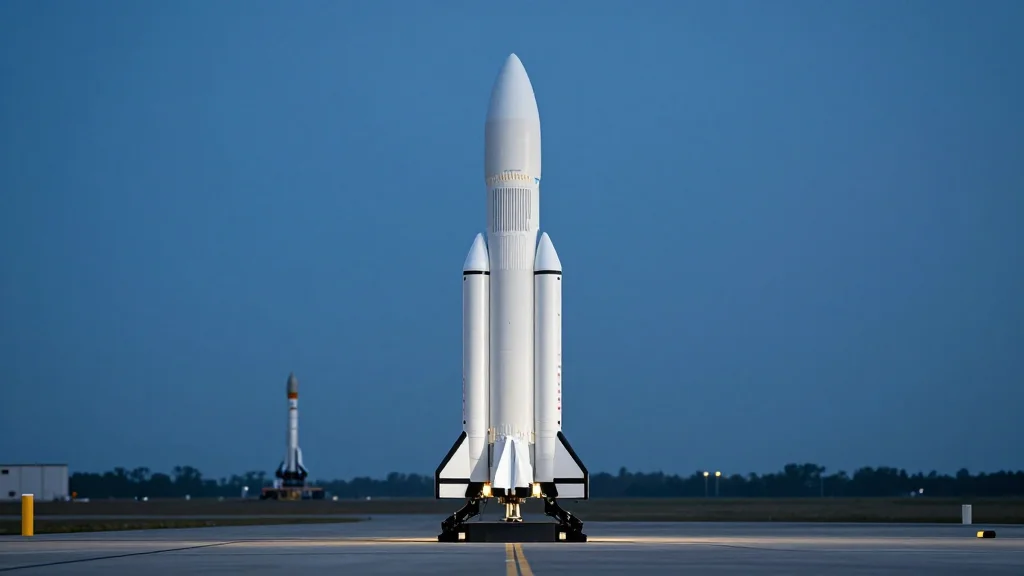
- •Eclipse shows grid fins, no landing legs, raising reusability doubts
Pulse Analysis
Firefly Aerospace’s Eclipse rocket was positioned as a game‑changing, partially reusable medium‑lift vehicle that could challenge SpaceX’s dominance in the commercial launch arena. Developed alongside defense contractor Northrop Grumman, the vehicle promised a payload capacity of roughly 7,500 kg to low‑Earth orbit and a design that would recover the first stage using aerodynamic grid fins. By moving the maiden flight to 2027, Firefly signals that technical integration and reusability testing are taking longer than anticipated, a common hurdle for newcomers attempting to match the rapid iteration cycles of established players.
The timing shift has immediate market repercussions. With the Eclipse now unavailable for 2026, satellite operators seeking launch slots may turn to SpaceX’s Falcon 9, which already enjoys a robust pipeline of contracts, including Northrop Grumman’s Cygnus resupply missions to the International Space Station. This extra capacity could translate into higher revenue for SpaceX while giving Firefly a narrower window to secure new customers. Analysts will likely adjust revenue forecasts for both firms, factoring in the delayed cash flow from Eclipse‑related services and the potential upside for Falcon 9’s backlog.
From a technical perspective, the publicly released graphics of Eclipse raise questions about its reusability strategy. The presence of grid fins suggests a controlled descent similar to SpaceX’s first‑stage recovery, yet the absence of visible landing legs hints that a propulsive landing system may still be under development or that the vehicle could rely on a mid‑air capture technique. Clarifying these design choices will be critical for investors, as true reusability drives lower launch costs and can be a decisive factor for customers weighing long‑term procurement strategies. Firefly’s ability to resolve these engineering challenges before 2027 will determine whether the company can fulfill its promise of a cost‑effective alternative in the increasingly crowded launch market.
Firefly’s delays launch of its Eclipse rocket to 2027
Comments
Want to join the conversation?
Loading comments...